2025 Amazon FBA Private Label Playbook

Sarah Johnson
2025 Guide to Amazon FBA Private Label: An Sellers Playbook

A hypothetical case that repeats weekly: a seller launches an amazon fba private label item, hits page one for a couple of long-tail terms in week two, then spends the next eight weeks slowly bleeding margin while “optimizing” copy. The post-mortem is usually not creative. It’s arithmetic: landed cost, defect rate, and conversion rate were never stress-tested against Amazon’s fee stack, returns, and the actual traffic mix the listing ended up buying.
This guide treats amazon private label like a system design problem. Not “how to start,” but what to validate, in what order, and what tends to break in real life in 2025.
The one thing to internalize about an amazon private label business (2025 reality)
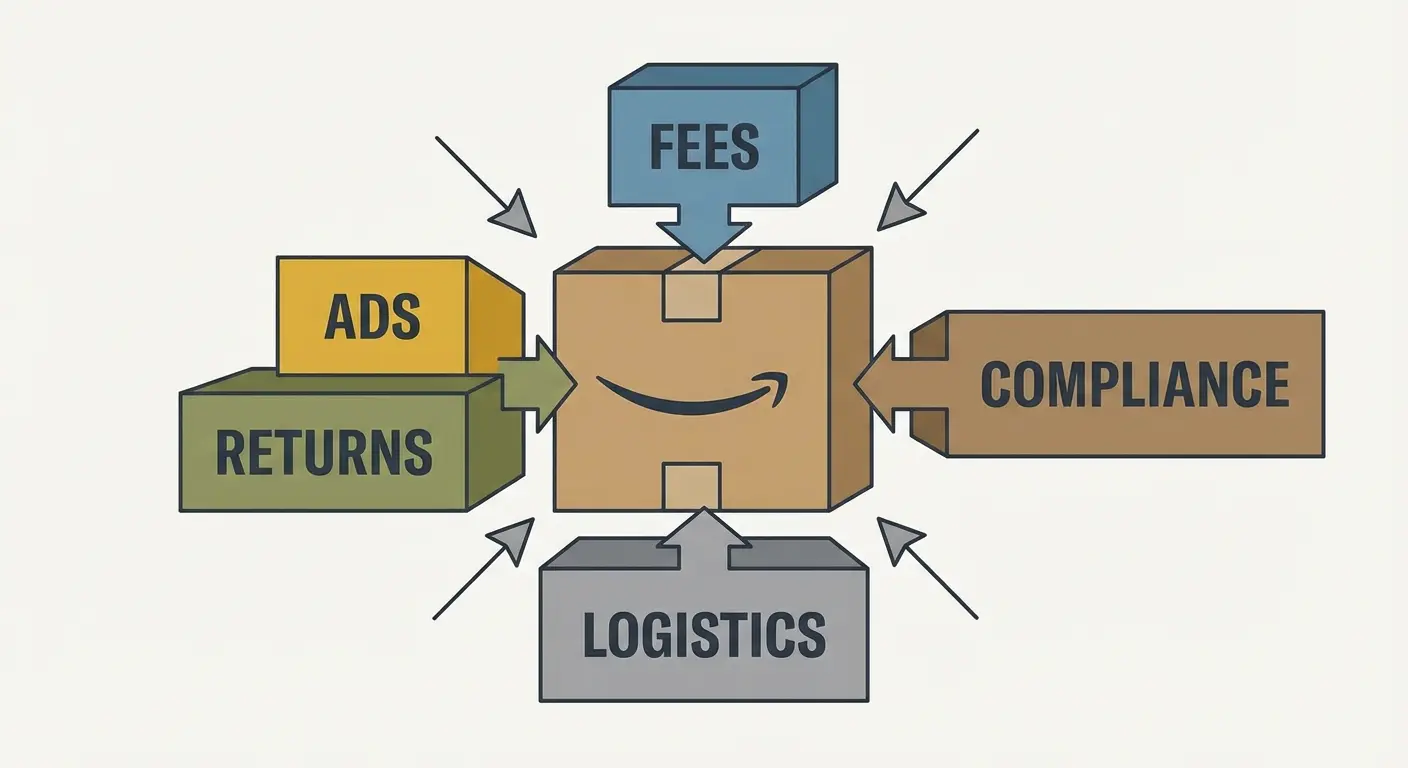
The constraint is not “finding a product.” The constraint is building a listing plus supply chain combo that can survive:
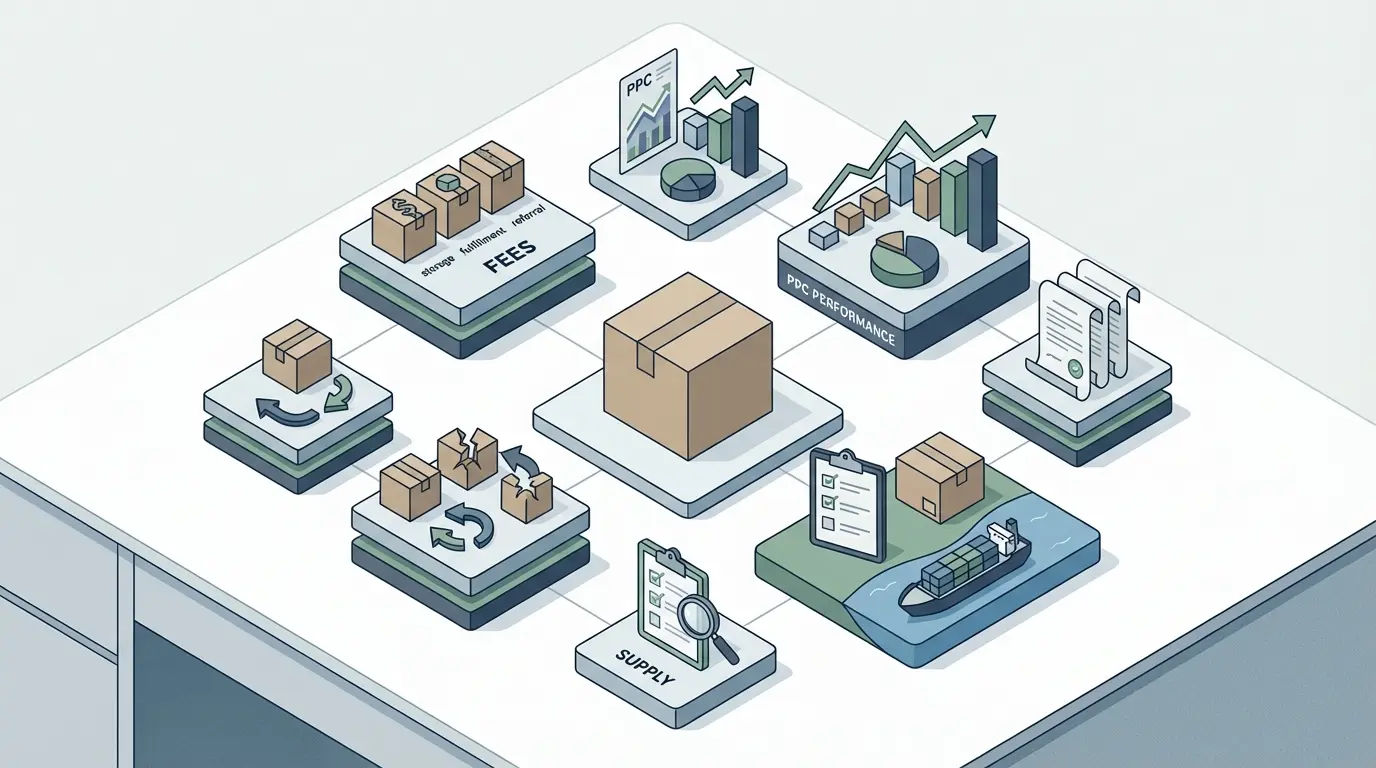
fee compression (FBA fees, referral fees, storage, removals/returns processing, and any inbound-related charges that apply)
conversion friction (review velocity, content quality, pricing, variation decisions)
traffic cost (PPC inflation on obvious keywords; limited organic lift without defensible CTR and CVR)
compliance and IP risk (claims, restricted products, packaging and labeling rules, trademark conflicts)
operational entropy (lead times, stockouts, QC drift, stranded inventory)
If you don’t model those constraints up front, private label on amazon becomes an expensive way to learn accounting.
What is Amazon private label (and what it is not)
You already know the definition, so here’s the operational definition that matters.
What is amazon private label: you control the brand-facing layer (brand name, packaging, positioning) and you control the supply-side inputs (spec, supplier, QC), so you can influence conversion and margin more than a reseller typically can.
What it is not:
Not automatically “defensible.” If your differentiation is mostly cosmetic, the market will often price-match you.
Not automatically Brand Registry. You can sell without it, but your ability to control content, reduce listing tampering, and manage certain brand protections is usually weaker.
Not automatically scalable. Scaling bottlenecks are often cash conversion cycle, inventory risk, and operational capacity—not creativity.
Expectation vs Reality: the three places amazon private label fails

1) Expectation: “If the product is good, Amazon will reward it.”
Reality: Amazon’s retail search and merchandising systems react primarily to measurable shopper behavior (CTR, conversion, price competitiveness, and customer experience signals), and PPC can buy traffic without fixing unit economics.
Seller heuristic: If your target ACOS—working backwards—requires a conversion rate you haven’t observed in the niche, the launch plan is probably a spreadsheet story, not an operating plan.
2) Expectation: “FBA means Amazon handles the hard parts.”
Reality: FBA handles pick/pack/ship and customer service for many order issues, but you still own:
inbound accuracy, labeling, and prep decisions (whether done by you, a prep provider, or paid Amazon services)
packaging survivability (damage drives returns; returns drive margin loss and shopper trust)
stranded inventory cleanup and catalog hygiene
cash tied up in lead time plus check-in variability
Seller heuristic: If you can’t survive a 30–45 day delay between paying a supplier and having sellable inventory, you don’t have a business—you have a timing bet. (And in some lanes, “delay” can be longer; build buffers.)
3) Expectation: “Branding = moat.”
Reality: Branding is a conversion lever. A moat usually requires at least one of:
proprietary demand (off-Amazon audience, repeat buyers, community, subscriptions where appropriate)
meaningful product advantage (spec, bundle architecture, compatibility ecosystem, measurable performance)
structural listing advantage (variation strategy, review depth, media quality, compliance cleanliness)
distribution advantage (cost, lead time, or multi-supplier redundancy)
amazon private label requirements (what actually blocks you)
Sellers ask about amazon private label requirements as if it’s a checklist. In practice, it’s a dependency graph. The blockers differ by category, but the gating items tend to be consistent.
Core requirements you will run into
Brand and packaging consistency: your product and packaging should match the brand presented on the listing. Mismatches can trigger authenticity complaints, customer confusion, and content conflicts.
Product identifiers: many categories require GTIN/UPC compliance, a valid exemption, or other accepted identifiers. Treat identifier strategy as a risk decision, not an afterthought.
Compliance documentation: depending on category (topicals, ingestibles, kids, electronics, medical-like claims, batteries, etc.), Amazon may require test reports, safety documentation, warnings/labels, or claim substantiation. Plan as if documentation can be requested at any time.
Trademark and Brand Registry path (recommended, not always immediate): without stronger brand control, listing edits and attribution problems are harder to manage. Plan your timeline even if you don’t start there.
FBA prep and labeling rules: incorrect prep increases inbound problems and can create delays or rework costs.
Policy reality note: enforcement can be uneven across categories and time, so operating as if you’ll be reviewed at the worst possible moment is usually the safer posture.
The playbook: build an Amazon FBA private label launch in the right order
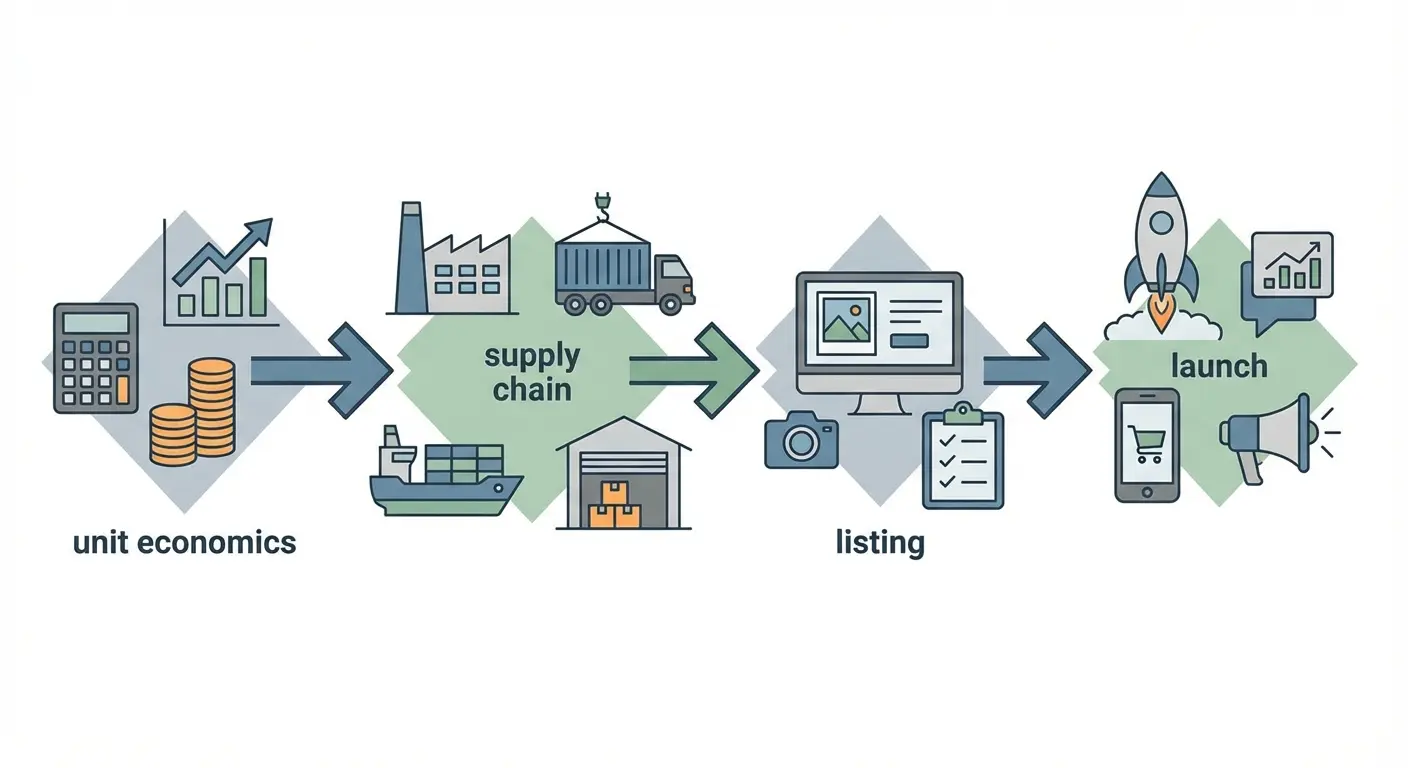
Step 1: Start with unit economics under stress, not “product ideas”
You’re not estimating profit. You’re testing fragility.
Model:
landed cost (product, packaging, freight, duties/taxes where applicable, inspections, and any supplier-side fees)
Amazon fees (referral, fulfillment, storage; plus expected returns, removals, and disposal if relevant)
ad cost range (best case / base case / worst case)
break-even price and break-even conversion assumptions
Seller insight (decision rule): If you need “perfect PPC” and “perfect conversion” to clear your target margin, the SKU is unlikely to survive contact with reality. Pick one dependency to be imperfect and see if the math still holds.
Step 2: Choose differentiation that changes shopper behavior, not your ego
Differentiation needs to show up in at least one of:
primary image comprehension (instant “why this one”)
bullets and PDP clarity (less return risk, clearer fit, fewer compatibility errors)
review content (customers mention the differentiator unprompted)
variation architecture (sizes/colors/packs that reduce comparison shopping and decision friction)
Avoid “differentiation” that only exists in A+ content; many shoppers won’t reach it, and A+ is not guaranteed to be displayed in every context.
Step 3: Engineer the supply chain for repeatability (QC > creativity)
Most failures in private labeling amazon are quality drift, not demand.
Minimum viable controls:
written spec sheet (dimensions, materials, tolerances, packaging)
pre-shipment inspection criteria tied to known failure modes (not generic “looks good” checks)
packaging testing logic (damage risk drives returns and write-offs; consider drop, compression, and moisture exposure relevant to your lane)
second-source planning once the SKU proves demand (not before), with comparable specs and QA standards
Gotcha: your best sample is not your production run. Treat the first bulk order like a controlled test with limited downside.
Step 4: Listing architecture: prevent future constraints
Make early decisions you can live with:
variation strategy (parent/child structures done wrong can become long-term operational debt)
claim language (avoid medical or regulated claims you can’t substantiate; avoid implying approvals you don’t have)
compatibility statements (wrong fit drives returns and negative reviews)
brand name consistency across packaging, invoices, and listings
This is where private label on amazon becomes either an asset (clean catalog footprint) or a constant firefight (content conflicts, suppressed content, brand confusion, and avoidable policy risk).
Step 5: Launch strategy: separate ranking activity from profitability activity
Experienced sellers still mix these and lose the plot.
Ranking activity: drives keyword discovery, CTR/CVR learning, initial review velocity. It can be temporarily inefficient, within a capped budget and within policy.
Profitability activity: stabilizes TACOS and protects inventory. This begins as soon as you have reliable signals on converting search terms and return rates.
Seller heuristic: don’t judge a launch by ACOS alone. Judge by net contribution margin after returns and by inventory risk. A “profitable” SKU that goes out of stock every 30 days will struggle to compound.
what is private label amazon in 2025: the control points that matter
If you want the short answer that isn’t marketing:
what is private label amazon in 2025: a competition for control over three surfaces:
1) Catalog control (content, variations, brand consistency)
2) Traffic control (PPC efficiency plus organic conversion resilience)
3) Supply control (quality, lead time, cash conversion cycle)
You don’t need perfection in all three. You do need at least one that competitors can’t copy quickly.
Risk management for an amazon private label business (the parts you only notice after you get burned)
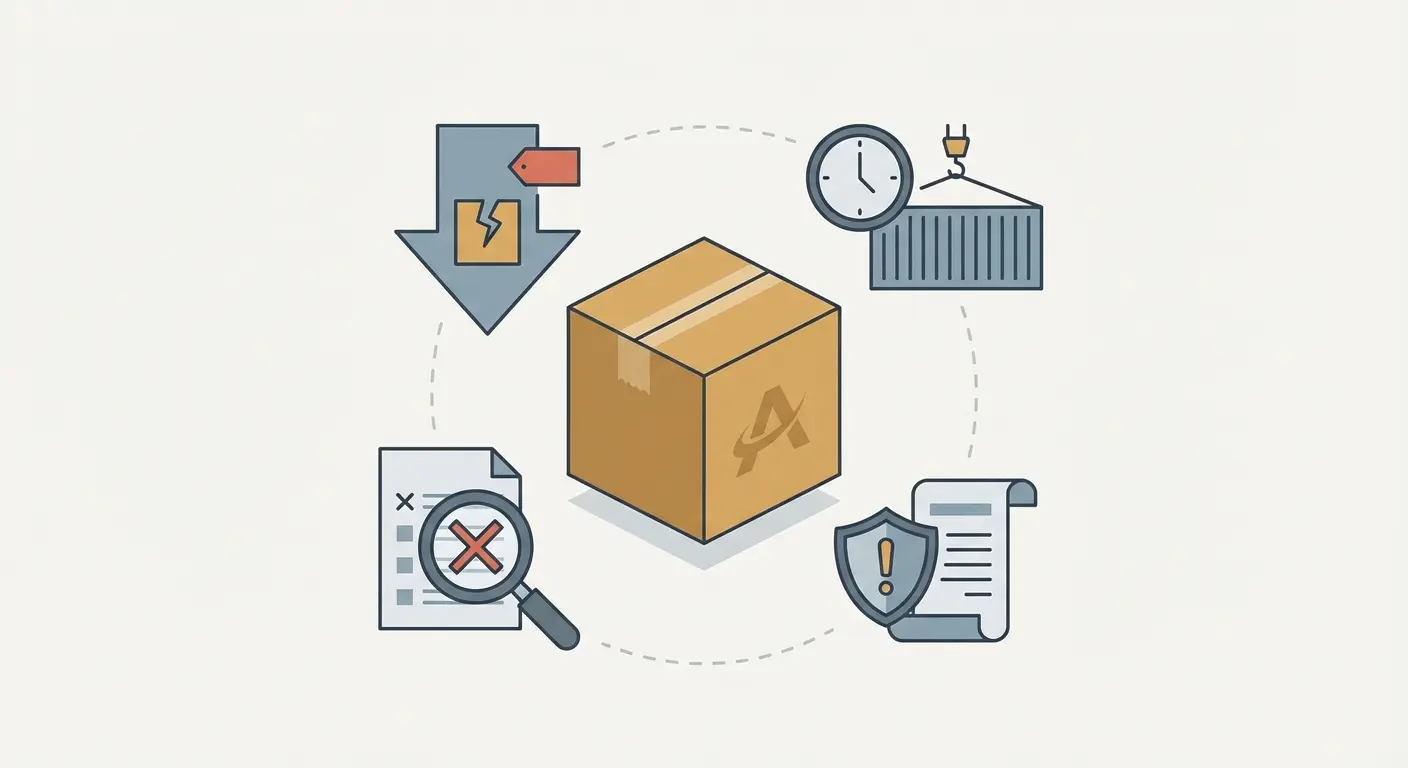
Returns are not a rounding error
A return is not just the refund. It can include:
fulfillment and return-related fees that may not be fully recoverable, depending on the program, category, and current fee rules
damaged or unsellable inventory
customer experience signals and conversion drag
review sentiment deterioration (which affects future traffic efficiency)
Design to reduce returns before you design to increase CTR.
Listing abuse and attribution issues
Without strong brand control, expect:
unauthorized edits
images swapped in
variation misuse
other sellers offering against your detail page in ways that create customer confusion (category- and listing-dependent)
Mitigation is mostly boring hygiene: consistent documentation, clean identifiers, aligned brand assets, and monitoring that catches changes fast.
Inventory placement and inbound variability
Inbound check-in times and shipment routing decisions can change cash flow, and the impact can be bigger when you’re running lean. Model with time buffers, avoid living on the edge of stockout, and assume exceptions will happen during high-volume periods.
A practical checklist (compressed)
If you want a fast audit of whether your amazon private label plan is real:
1) Numbers: break-even price versus realistic market price; margin survives worst-case ad costs and realistic return rates.
2) Differentiation: visible in the main image and reflected in reviews (not only in A+).
3) Compliance: claims substantiated; category requirements known; documentation accessible and current.
4) Supply chain: spec sheet, QC plan, and packaging survivability appropriate for your fulfillment path.
5) Listing architecture: variation plan and identifiers won’t trap you later.
6) Inventory: cash and lead times support staying in stock through the learning phase.
Miss two or more and you’re not launching—you’re donating data to competitors.
Closing: the only non-negotiable in private label on Amazon
Amazon doesn’t reward effort; it rewards stable shopper outcomes and low operational risk. In practice, the best amazon fba private label Sellers do less brainstorming and more constraint solving: margin sensitivity, return control, catalog integrity, and supply repeatability.
If you want, I can turn this into a SKU evaluation framework (a scoring model) you can apply to your next 10 product candidates before you spend on molds, logos, or photos.