Reselling on Amazon: Constraints That Protect Profit

Olivia Reyes

Reselling on Amazon: a realistic path to profit (if you pick the right constraints)
Are you treating reselling on amazon like it’s “find cheap stuff → list it → get paid,” and then wondering why the margin disappears in fees, returns, pricing swings, or a single intellectual property (IP) complaint?
You can build a real business reselling products on amazon, but the money isn’t in the act of listing—it’s in selecting a model that survives Amazon’s constraints: brand and category approval rules, documentation expectations, condition policy, Buy Box dynamics, and cash-flow timing. This is the part most “how to start” guides skip, and it’s also the part that determines whether can you make money reselling on amazon becomes “yes” or “I tried it for three months.”
What you’re actually deciding when you start reselling
When sellers ask how to start reselling on amazon, they usually think they’re choosing products. In practice, you’re choosing a set of operational constraints:

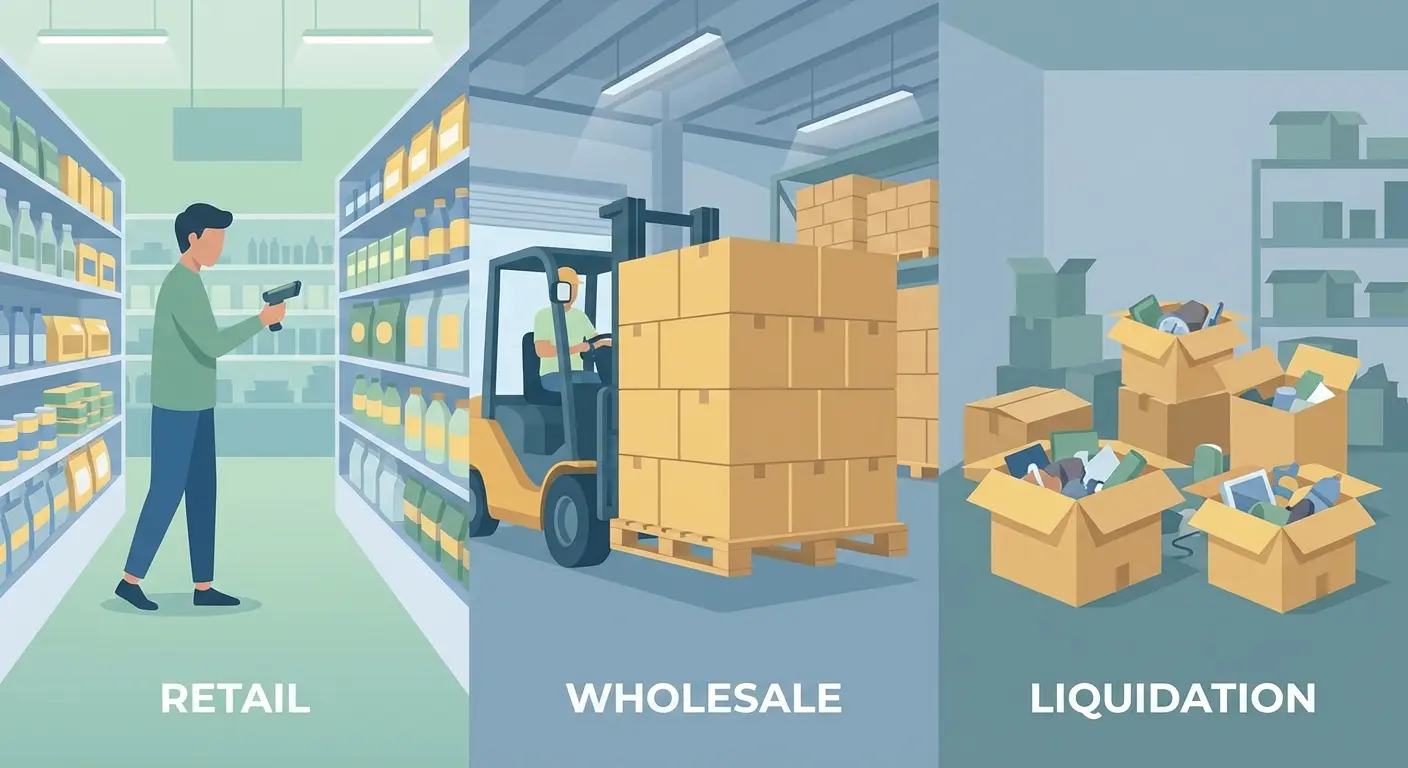
Sourcing posture: retail/online arbitrage vs wholesale vs liquidation/secondary markets.
Risk posture: how much IP friction, authenticity scrutiny, and documentation requests you can tolerate.
Fulfillment posture: FBA convenience vs FBM control (and how returns hit you).
Speed posture: fast flips with smaller spreads vs slower turns with cleaner documentation.
Catalog posture: competing on existing listings vs creating new listings (less common for pure resellers, but it matters).
Profitability in reselling is usually less about “finding a unicorn ASIN” and more about consistently avoiding the failure modes that trigger stranded inventory, chronic returns, or account health problems.
Expectation vs Reality
Expectation: “If the app shows profit, it’s profit.”
Reality: “If you can’t stay on the listing and keep your account healthy, the app number is only a starting hypothesis.”
The ranking that matters: what to optimize first (and what to stop over-optimizing)
Experienced sellers already know to check fees and sales rank. The deeper question is what to prioritize before you fall in love with a deal. Here’s the order that tends to keep resellers alive long enough to compound.
1) Permission to sell + friction to stay listed
Before margin, verify you can actually sell the item without ongoing suppression, gating, or brand-level restrictions. Eligibility can vary by seller account, condition, category, and sometimes geography, and it can change over time.
What matters in real life:
Whether Amazon may request documentation (often invoices or other proof of authenticity) and whether your sourcing can support that.
Whether other sellers appear to be getting repeated IP complaints on the same brand or product line. You can’t rely on anecdotes as proof, but patterns are a practical risk signal.
2) Listing stability and condition risk
Reselling is vulnerable to detail-page changes, variation issues, bundle policy enforcement, and condition complaints. A stable listing with clear identifiers (model number, part number, size/count clarity) usually beats a “great ROI” listing that’s messy.
Watch-outs:
Generic listings that later get updated to a brand name, creating confusion or a mismatch with your packaging.
Variations where the wrong child ASIN gets merged or the pack count becomes ambiguous, increasing “not as described” returns.
3) True margin after the costs you actually pay
This is where most calculations are overly optimistic. Your “all-in” needs to include:
Returns (especially for apparel, shoes, electronics accessories, and seasonal goods).
Prep/labeling, inbound shipping, and the possibility of removals.
Storage exposure if the item doesn’t move as expected, including longer-term storage fees where applicable.
Repricing pressure (Buy Box rotation and price competition can compress margins quickly).
4) Velocity you can repeat (not just a good flip)
how to make money reselling on amazon usually comes down to repeatable replenishment. One-time clearance finds are fine, but they’re not a strategy unless you’re structurally set up for constant sourcing and fast decision cycles.
Signals of repeatability:
Multiple replenishable suppliers or a reliable replenishment pattern.
A price band that stays profitable even when more sellers join the listing.
5) Operational fit: your time, your space, your tolerance for mess
Some reselling models are labor-heavy (OA/RA), some are paperwork-heavy (wholesale), and some are customer-service-heavy (FBM). The best model is the one you can run consistently without cutting corners that create account health problems later.
“If this is your situation…” patterns that usually work
If you’re deciding between reselling approaches, the most reliable guidance is conditional.
If you don’t have invoice-grade sourcing, arbitrage can work—but only with tight guardrails
Retail/online arbitrage is often the quickest way into reselling on amazon for beginners, but it can also be the fastest way into documentation problems (retail receipts are not the same as wholesale invoices), packaging inconsistency, and condition disputes. It tends to work better when you focus on:
Brands with low IP conflict and lower counterfeit sensitivity.
Items where condition is unambiguous (avoid anything easily argued as “used” due to seals, hygiene concerns, or packaging).
Lower return categories until your processes are tight.
If your goal is scale with fewer surprises, wholesale is slower—but steadier
Wholesale reselling is less romantic and more operational: applications, terms, minimum order quantities, and account management. It often aligns better with documentation requests and can reduce random “prove it” moments, though it doesn’t eliminate them.
It tends to fit when:
You can tie up capital in larger buys.
You want fewer SKUs with deeper inventory.
You’re willing to walk away from brands that don’t offer viable margins after competition and fees.
If you’re tempted by liquidation, treat it like a grading business, not a sourcing hack
Liquidation can be profitable, but the margin is often earned through sorting, testing, and routing inventory correctly (FBA vs FBM, new vs used, open-box, parts-only). If you don’t have a strong condition workflow and clear listing practices, liquidation can turn into return-driven losses and customer complaints.
A practical filter: if you can’t confidently explain how you’ll inspect, grade, and list defects at scale while complying with condition guidelines, liquidation will usually find your weakest process.
If Buy Box is your entire plan, you’re one price war away from working for free
On competitive listings, your “strategy” becomes pricing posture, stock depth, fulfillment method, and account performance. If you don’t have a view on how low you’re willing to go—and when you’ll exit—you’re not making decisions, you’re reacting.
If you’re debating FBA vs FBM, decide based on failure modes, not preference
FBA can reduce fulfillment labor and often improves conversion, but it can amplify return/refund leakage and storage risk if you misjudge demand. FBA also introduces warehouse-handling variables you don’t fully control.
FBM can protect you on fragile or condition-sensitive goods and give you more inspection control, but it demands operational consistency (handling time, valid tracking, on-time delivery, and fast customer messaging).
The traps that quietly kill reselling profits (or the account)
Treating “ungated” as “safe”
Being allowed to list is not the same as being safe to sell at scale. Eligibility can change, enforcement can tighten, and performance issues can create additional friction. If your sourcing can’t produce documentation Amazon may request, keep your exposure small.
Building around brittle listings
Listings with frequent title/attribute changes, brand disputes, or variation abuse will cost you time and stranded inventory. Stable catalog beats clever sourcing.
Confusing a spreadsheet margin with a cash-flow margin
Even profitable flips can starve you if payout timing, return windows, and stranded inventory block capital. Reselling businesses often fail from cash-flow friction, not just “bad ROI.”
Underestimating “cost of cleanliness”
Prep, labeling accuracy, polybag suffocation warnings, expiration date handling, and unit condition are not admin chores—they’re the difference between scaling and drowning in returns, complaints, and remediation work.
Getting casual about IP and authenticity risk
Amazon’s enforcement environment is asymmetric: you can do a lot mostly right and still lose weeks to appeals if you get hit. Avoiding risky brands and documenting sourcing is often more profitable than chasing high ROI in hostile territory.
The cheapest inventory is the one you can actually sell.
Two quick walkthroughs (hypothetical, but close to how it plays out)
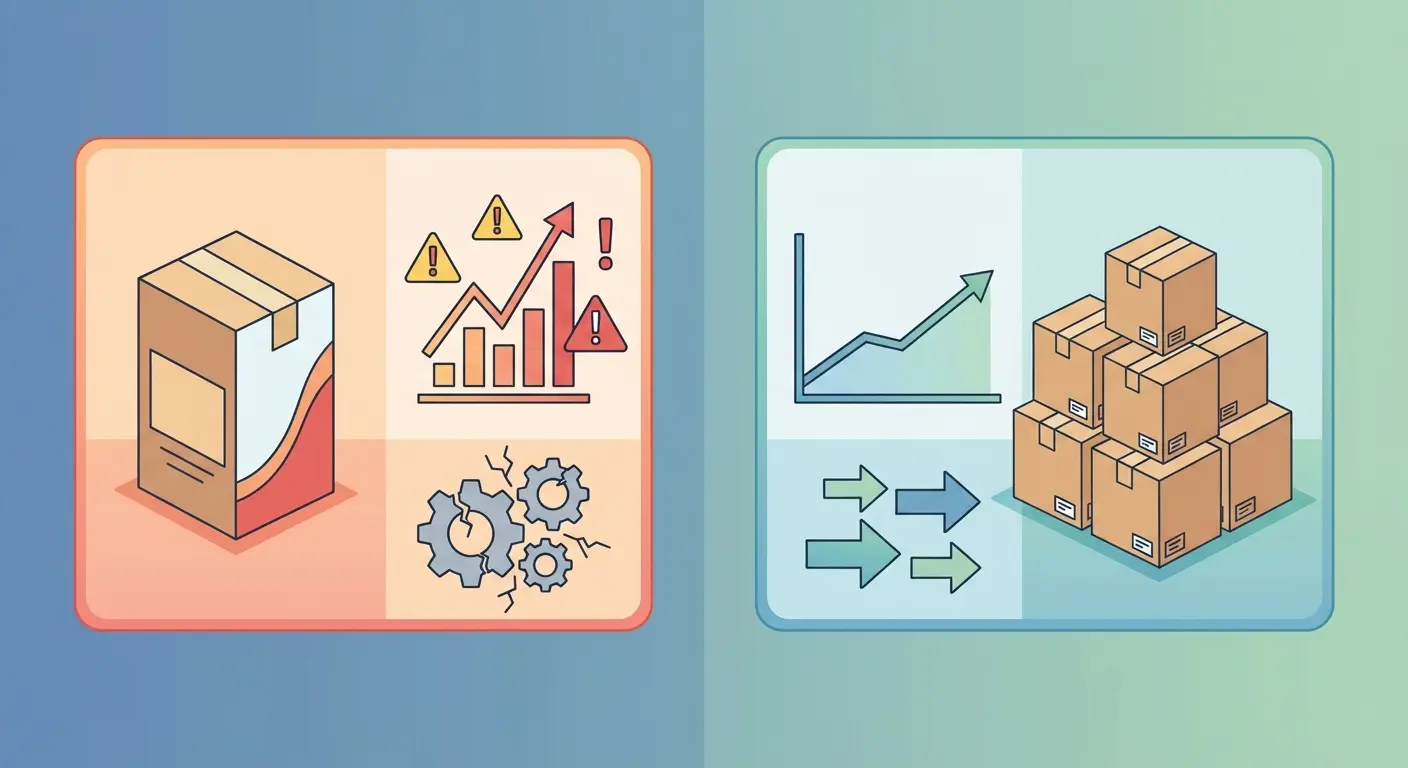
Walkthrough 1: OA opportunity with a great app score, but hidden fragility
A seller finds an online deal: name-brand personal care, strong sales rank, and the calculator shows a healthy spread. The temptation is to buy deep because the numbers “work.”
What an experienced reseller checks next:
Brand behavior on Amazon: Are sellers reporting recurring IP issues, listing takedowns, or authenticity complaints tied to the brand? It’s not proof, but it is risk data.
Condition and packaging: Will the units arrive with stickers, price tags, shelf wear, or seal damage that triggers “not new” complaints?
Listing stability: Is the ASIN clear (correct images, clear pack count), or does it invite pack-size confusion?
Exit plan: If the listing turns hostile, can the inventory be rerouted to FBM (with accurate condition), another channel, or returned to the supplier within policy?
Decision outcome (typical): they still buy, but they cap the first order to a test quantity, inspect units on arrival, and wait for early order signals (returns, complaints, listing edits) before scaling. The profit comes from surviving the second and third buy, not winning the first one.
Walkthrough 2: Wholesale offer with thin margins, but high survivability
A distributor offers a product line where the Buy Box is competitive and the margin looks merely “okay.” Many sellers pass because it’s not exciting.
What an experienced reseller values:
Invoice strength: Clean paperwork reduces stress if Amazon asks for sourcing documentation.
Replenishment: Predictable restocks allow steadier forecasting and fewer stop-start cycles.
Lower operational variance: Fewer surprise condition issues than arbitrage, and often fewer messy listings.
Portfolio logic: A “boring” winner can subsidize experiments elsewhere.
Decision outcome (typical): they take a small set of SKUs with the best velocity and lowest listing drama, then build a replenishment cadence. Over time, operational simplicity and fewer firefights can make the effective hourly profit higher than flashier flips.
What to carry into your next sourcing session
Reselling on amazon is a constraints game first, a sourcing game second. Optimize for permission, listing stability, and survivable operations before chasing ROI.
how to make money reselling on amazon usually means repeatable replenishment. One-off flips are fine, but they don’t compound unless your sourcing system does.
Treat can you make money reselling on amazon as “can you keep selling the same thing next month.” If the brand or listing won’t let you stay, the margin doesn’t matter.
Choose FBA/FBM based on your most expensive failure mode. For some SKUs it’s labor; for others it’s returns, condition disputes, or storage exposure.
Scale only after a controlled test validates reality. Early order signals (returns, listing changes, Buy Box behavior) are part of the cost of discovery.
If your sourcing can’t support documentation, reduce your risk surface. Fewer units, safer brands, clearer-condition categories, and cleaner listings.
If you want, share your current model (OA/RA/wholesale/liquidation), average buy cost, and whether you’re FBA or FBM, and I’ll map a tighter decision filter for how to start reselling on amazon that fits your risk tolerance while staying aligned with Amazon’s marketplace policies.