Amazon Orders Pending: Meaning, Causes, Next Steps

Olivia Reyes
Why Is My Amazon Order Pending? What “Pending” Really Means for Sellers (and What to Do Next)
Are your amazon orders pending long enough to make you second‑guess inventory, shipping cutoffs, or even whether the sale is real? If you’ve ever asked why is my amazon order pending (or had a customer ask it), the useful frame is this: “Pending” is usually not a fulfillment failure—it’s an Amazon order‑release hold while payment authorization and other validation checks finish.
The “Pending” status is an Amazon-controlled gate, not a seller task list
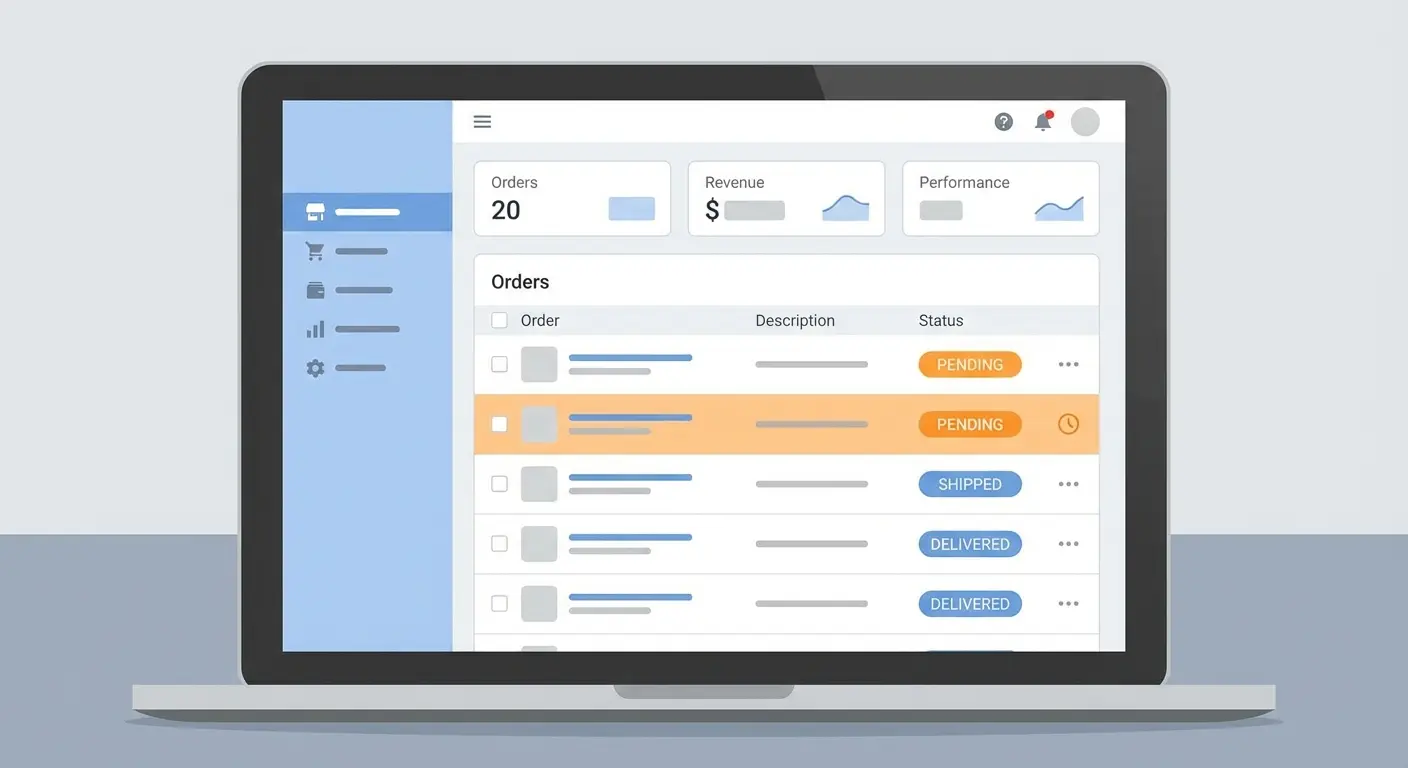
In Seller Central, amazon orders pending generally means the buyer submitted the order, but Amazon has not released it for fulfillment yet. Until it changes to Unshipped for FBM (or otherwise becomes available for you to fulfill), treat it as not ready for action.
Two practical implications that matter in day‑to‑day operations:
You can’t—and shouldn’t—ship a Pending order. Amazon hasn’t released it to you for fulfillment, and it may still change or cancel.
It can temporarily reserve inventory, especially noticeable on low-quantity listings, which can make demand look higher than it really is.
Think of Pending as Amazon saying: “This order is in process, but not yet released.”
What “Pending” actually covers (and what it doesn’t)

Authorization vs. fulfillment
Pending typically means payment authorization and/or order validation steps are incomplete.
For FBM, your fulfillment obligation starts when the order is released and appears as Unshipped (with a ship-by date). For FBA, you generally can’t intervene; Amazon will fulfill once the order is released and routable.
Buyer intent vs. confirmed order
A buyer can be fully committed, but Amazon may delay release if it can’t complete payment authorization or needs additional validation. That’s why Pending can feel unpredictable: it is often driven by buyer/account/payment signals rather than anything about your listing.
Pending is not automatically “stuck”
Many Pending orders clear quickly. Some take longer, and some never release and eventually cancel. A single Pending order is rarely meaningful; patterns are.
Why your Amazon order is pending: common operational causes
When someone asks why is my amazon order pending, the underlying drivers usually fall into a few buckets. Sellers don’t control these checks, but you can control how you plan around them.

Payment authorization and funding checks
A common reason is payment authorization delay or failure. Amazon may be waiting on:
card authorization responses or retries
bank verification steps
gift card or split-tender reconciliation
billing address verification or mismatch resolution
Seller insight: bursts of Pending around peak traffic can be payment-network latency rather than an issue with your account.
Fraud and risk screening
Amazon runs risk checks that can delay order release, for example:
new buyer accounts or unusual purchasing patterns
high-risk or hard-to-validate shipping destinations
high-ticket items or multi-quantity purchases that look atypical
behavior that triggers additional verification
This is also why two buyers can purchase the same SKU and only one shows as Pending.
Address validation / delivery constraints
Some addresses require normalization or additional validation. If Amazon can’t confirm deliverability quickly, it may hold the order before release.
Promotions, discounts, and pricing validation
In some cases, Pending can last longer while Amazon validates promotion eligibility or resolves pricing/quantity anomalies that trigger internal checks. Sellers typically won’t see a detailed reason code.
Order-type or program-specific workflows
Certain order types can behave differently, such as:
business purchasing workflows
orders with special handling options
category/program flows that add compliance or verification steps
What happens behind the scenes—and what you should watch as a seller
Expectation vs. reality: “Pending means I’m late shipping”
Pending itself is an Amazon hold; for FBM, you generally can’t buy shipping or confirm shipment until the order is released and shows as Unshipped with an actionable ship-by date. In practice, the performance clock that matters is tied to the ship-by date and whether you confirm shipment on time, not to how long an order sat in Pending before it was released.
Even so, monitor Pending volume because it can affect inventory and forecasting:
Inventory allocation: Pending orders can reduce available quantity temporarily.
Replenishment signals: reports or external dashboards that don’t separate Pending from released orders can overstate demand.
Customer messaging: buyers may contact you, and you should avoid implying you control payment release.
What to check in Seller Central
Keep it consistent:
Manage Orders: filter for Pending; compare “Order Date” to when it flips to Unshipped.
Inventory impact: if available stock drops without corresponding shipped units, Pending holds may be part of the explanation.
Cancellation patterns: if Pending orders regularly cancel after long holds, it often points to buyer-side authorization or verification issues rather than a listing problem.
A workable decision rule: if Pending usually clears within a normal window for your business, don’t adjust operations. If you see repeated multi-day Pending that frequently cancels, plan inventory buffers and avoid treating those holds as true demand.
Three realistic scenarios

Scenario 1: FBM seller ships before release
A buyer places an order, it shows Pending for hours, and the seller ships anyway to “stay ahead.”
What can go wrong:
The order may never release and can cancel.
You may have shipped product without a valid order you can complete in Seller Central.
Operational takeaway: do not fulfill Pending; wait for release to Unshipped (or the equivalent actionable state).
Scenario 2: Low stock looks artificially constrained
You have 6 units. Two orders go Pending for 3 units total. Available quantity drops, and sales slow because inventory appears tighter than it really is. Then one Pending order cancels many hours later.
Operational takeaway: when stock is tight, Pending holds can create artificial scarcity. If it happens often, avoid operating at razor-thin quantities during spikes.
Scenario 3: Buyer messages “my amazon orders pending”
A buyer reaches out: “my amazon orders pending—did you receive it?” They assume you’re sitting on the order.
A safe response pattern:
Confirm you see the order status in your system (if you do).
Explain that Amazon releases orders for fulfillment after processing/verification.
Don’t ask for payment details or diagnose their card/bank.
Operational takeaway: keep messaging neutral and Amazon-centered: “Amazon is still processing the order; once it’s released to us for fulfillment, we’ll ship within our stated handling time.”
The mistakes sellers make when they see Pending
Confusing Pending with backorders or stock problems
Pending is usually not caused by your inventory. It’s more often tied to Amazon’s authorization/verification steps before order release.
Treating Pending like a customer-service emergency
It’s usually not an issue unless it becomes a pattern (multi-day holds, high volume spikes, or sudden changes versus your baseline).
Changing handling time or shipping settings to “fix” Pending
Handling time changes won’t force Amazon to release Pending orders. Adjusting settings without evidence can reduce competitiveness and complicate operations.
Pushing the buyer to cancel and reorder
Sometimes a reorder clears, but it can also create duplicates and confusion. If the issue is authorization/verification, a reorder may fail the same way.
Where Pending gets weird: edge cases and what to do about them
Pending for unusually long periods
If you see Pending for days:
it may still be buyer-side verification, payment authorization issues, or address validation
it can also coincide with broader payment-network or marketplace latency events
What you can do:
track typical Pending duration (median and worst-case) for your account
if it’s widespread and persistent, contact Seller Support with specific order IDs and focus on “order release delays,” not assumptions about fraud
Inventory whiplash from Pending clusters
If Pending holds repeatedly reserve inventory and then cancel, you can get volatility in:
reorder timing
ad pacing
low-stock decision-making
Mitigation:
don’t base replenishment solely on raw units that include Pending
maintain an internal view that separates released sales from pending holds
Buyer-facing implications you must not overstep
Amazon controls payment verification and risk decisions. In Buyer-Seller Messaging:
don’t request payment details
don’t instruct buyers to bypass Amazon systems
keep it factual: Amazon is processing the order, and you’ll fulfill once released
A reliable line: “Amazon is still processing the order; once it’s released to us for fulfillment, we’ll ship within our stated handling time.”
What to remember the next time you see “amazon orders pending”
Pending usually points to payment authorization and/or verification steps before Amazon releases the order.
Don’t ship until the order is released for fulfillment (FBM: Unshipped with a ship-by date; FBA: Amazon controls fulfillment after release).
Pending can temporarily reserve inventory, which matters most at low stock.
Track patterns: occasional Pending is normal; repeated long holds and frequent cancellations are worth investigating.
When buyers ask why is my amazon order pending, keep your message neutral and Amazon-centered.