Amazon Return Pallets 2025: Buy, Test, Sell Profitably

Sarah Johnson
Amazon Return Pallets in 2025: How to Buy Amazon Returns and Sell Them Without Bleeding Cash
Are you pricing amazon return pallets off the manifest and then “making it work” after the truck shows up—only to discover half the value is locked behind missing parts, untestable electronics, or brand restrictions? If so, the problem usually isn’t the pallet. It’s the buying model.
What “Amazon returns” really means (and what it doesn’t)
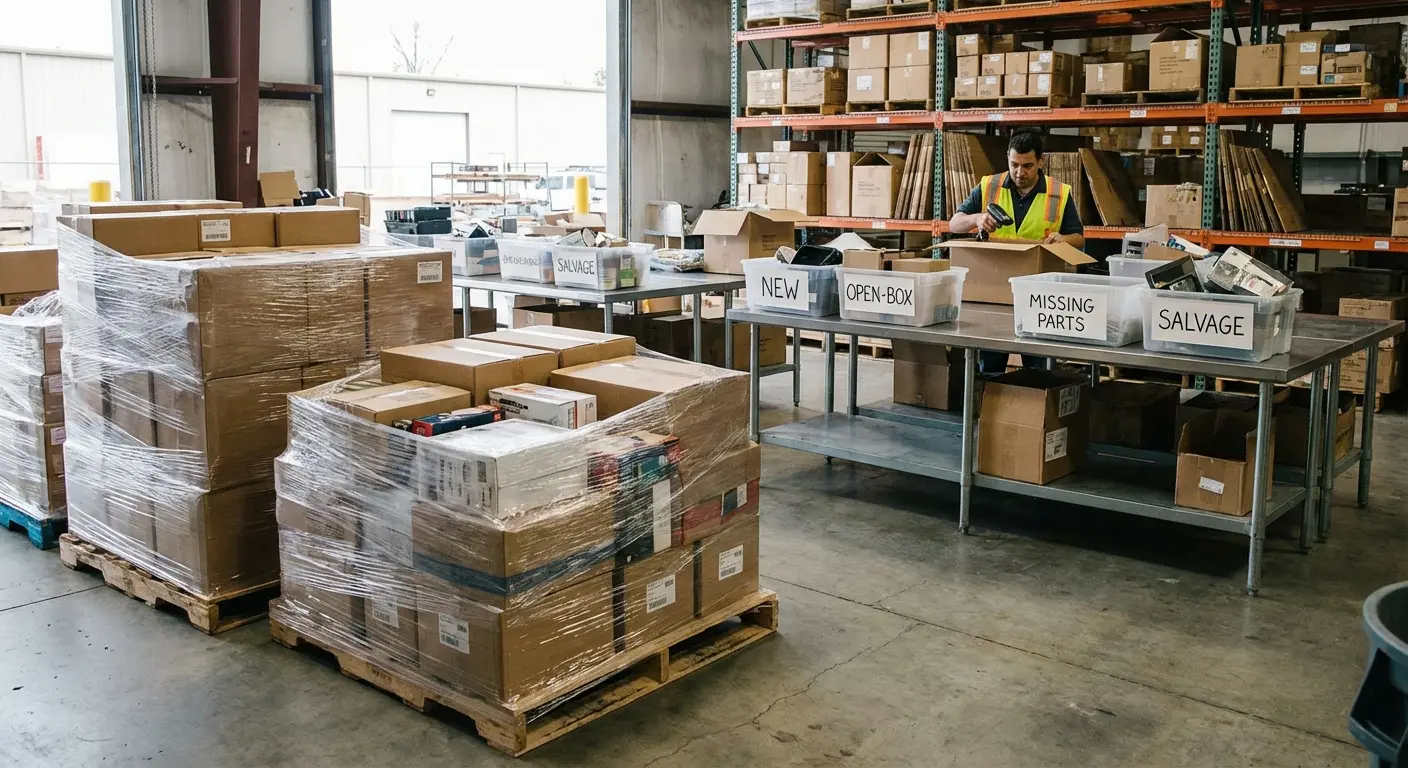
When sellers say amazon return pallets, they’re usually talking about mixed lots of customer returns, shelf-pulls, and overstock that originated in, or moved through, Amazon’s fulfillment and transportation network and then entered the liquidation channel. That’s a broad bucket with very different risk profiles depending on how the lot is described, who’s selling it, and what paperwork accompanies it.
A few terms you’ll see repeatedly:
Customer returns vs. overstock vs. salvage: customer returns are often the messiest; overstock can be clean; salvage usually implies damage, missing parts, or unverified condition.
Grades/conditions (A/B/C, “like new,” “untested”): these are not standardized across all liquidators. Treat grades as seller-specific shorthand, not a universal truth.
Manifested vs. unmanifested: a manifest is a list of items (sometimes with MSRP, retailer price, or a last-known ASIN). It reduces uncertainty, but it doesn’t eliminate it.
Pallets vs. truckloads: pallets are a more forgiving way to learn; truckloads can be cheaper per unit but magnify operational mistakes.
A practical answer to does amazon sell pallets of returned items: most sellers are not buying directly from Amazon Retail in a traditional wholesale arrangement. In practice, sellers usually access these lots through liquidation marketplaces and intermediaries that source inventory from large retailers (including Amazon-origin inventory). The distinction matters because item condition language, data quality, and dispute processes are controlled by the liquidation seller/platform—not by the Amazon brand.
The real workflow: from an amazon return pallet auction to sellable inventory
Most experienced sellers underestimate how much of this business is operations, not sourcing. Here’s the sequence that actually determines profitability.
Step 1: Choose a buying lane that matches your capabilities
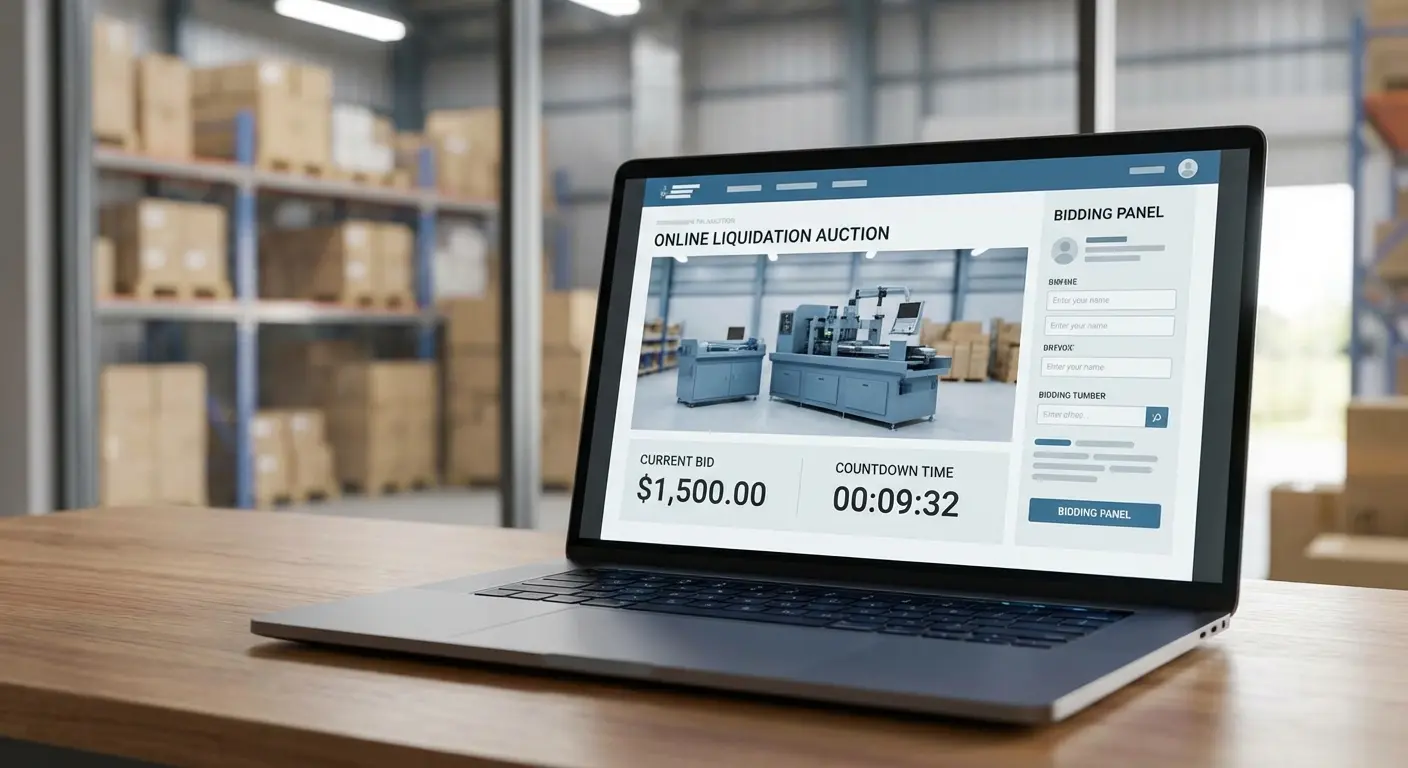
There are three common ways to buy:
Fixed-price lots: simplest. Usually priced higher, sometimes better curated.
An amazon return pallet auction: potentially cheaper, but you’re competing with buyers who may have lower labor costs, different sell-through channels, or a better refurb pipeline.
Local pickups/secondary resellers: convenient, but you may be paying for someone else’s sorting and cherry-picking unless the relationship and sourcing are transparent.
Decision rule: if you don’t have a reliable testing/repair workflow, avoid lots described as untested electronics no matter how good the manifest looks. Your bottleneck will be labor, parts, and failure rate—not sourcing.
Step 2: Underwrite the lot like an operator, not a treasure hunter
Manifests create a predictable failure mode: sellers build a spreadsheet off MSRP or “Amazon price,” then discover the real constraint is sellable condition, missing parts, and whether the items are even eligible for their intended channel.
A more realistic underwriting pass includes:
Sellable rate assumption (conservative): what portion will be immediately listable without parts, cleaning, or safety concerns?
Channel fit: can you sell these on Amazon, or will you need eBay/Walmart/FB Marketplace/offline?
Hidden costs: inbound freight, packaging, cleaning supplies, testing time, disposal, and storage.
Return liability: if you sell used/open-box on Amazon, return rates and “item not as described” claims can erase margin fast if grading isn’t consistent.
Also factor in compliance and listing friction. Some products are restricted by category rules, condition rules, hazmat constraints, recall risk, or brand/IP enforcement—none of which a manifest can solve.
Step 3: Plan receiving like you’re running a mini-warehouse
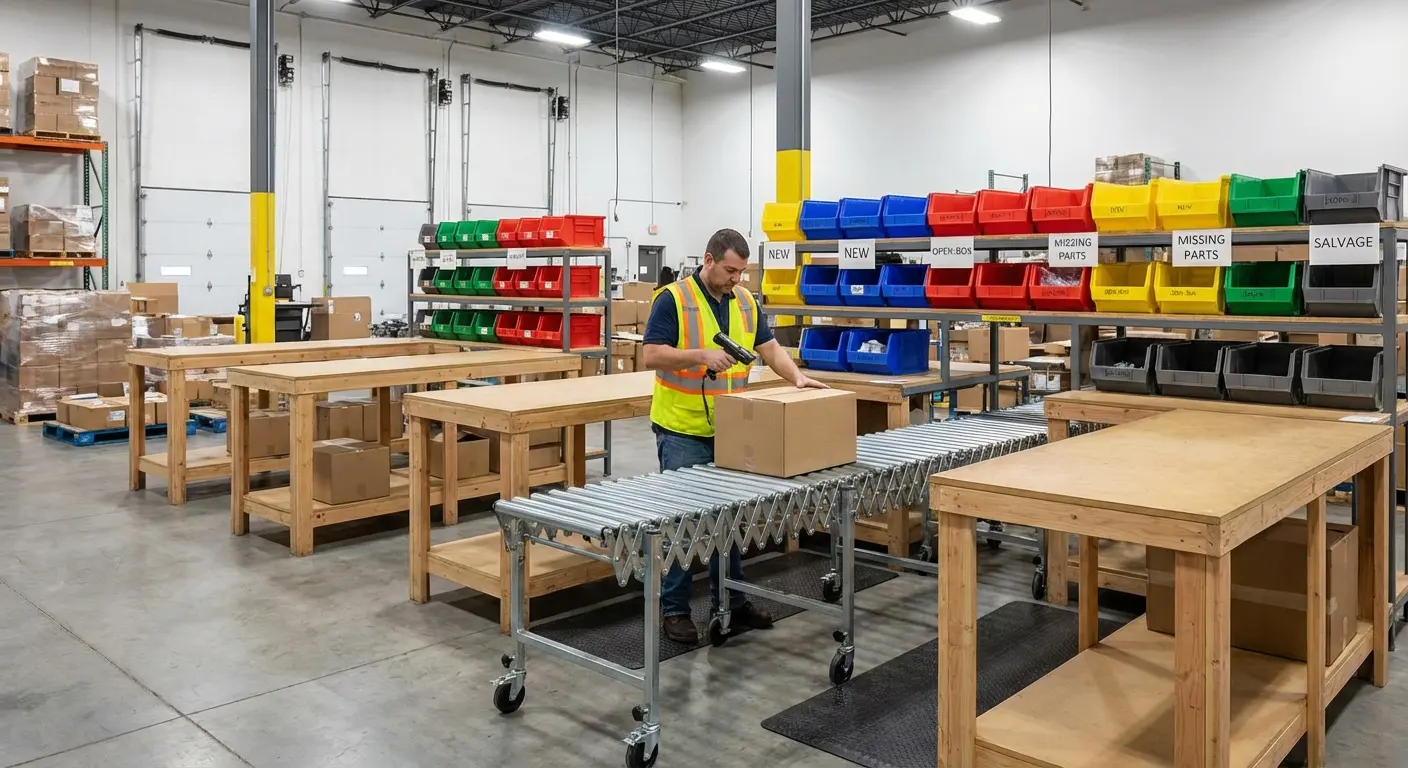
Your margin is often won or lost in the first 48 hours after delivery.
Quarantine zone: separate “unprocessed” from “processed” inventory so items don’t disappear into a pile.
Triage buckets: (1) New/sealed, (2) Open-box complete, (3) Missing parts, (4) Needs testing, (5) Salvage/disposal.
Tracking method: an internal SKU sticker plus a spreadsheet is enough; the key is consistency and a single source of truth.
If you’re doing FBA, build a clean handoff from triage → prep → labeling. Liquidation items often have packaging damage, missing suffocation warnings, missing polybag seals, missing accessories, or mixed UPCs—all of which can lead to inbound issues or stranded inventory if you don’t catch them early.
Step 4: Test and grade with rules tight enough to survive Amazon customers
Used condition on Amazon can be unforgiving, especially in categories where buyers expect “like new” even when the listing says “Used.” Your best lever is a standard grading checklist per category (especially electronics, small appliances, baby, beauty, and anything safety-adjacent).
Practical best practices:
Record serial numbers where relevant (helps with fraud, swaps, and return investigations).
Photograph defects before listing (helps with internal consistency and customer expectation-setting).
Build “missing parts kits” for common repeats (remotes, screws, chargers), but don’t over-invest until volume justifies it.
Separate “functional but incomplete” from “non-functional” immediately, because they have different recovery paths and buyer expectations.
The cheapest pallet is the one you can actually process.
Step 5: Decide where to sell—Amazon isn’t always the best exit

If your plan is “buy returns, sell on Amazon,” pressure-test these constraints before you buy:
Brand restrictions/gating: many brands and categories have approval requirements or restrictions. Even when a listing exists, you may not be eligible to sell it.
Condition limits: some categories don’t allow used, and some products are risky to sell used even if technically permitted.
Documentation: liquidation invoices often do not meet what Amazon or a rights owner may request in an authenticity or supply-chain challenge. Even valid paperwork may not guarantee approval or reinstatement outcomes.
Variation/compatibility issues: manifests and bulk lots can include older revisions, regional variants, or missing accessories that change the correct ASIN or condition.
A reliable pattern is multi-channel: use Amazon for clean, compliant items; push questionable-condition, incomplete, or “parts/repair” units to other marketplaces where the buyer expectation matches product reality.
Three realistic outcomes sellers run into
Case 1: The “manifest looks amazing” electronics pallet
You buy based on ASINs and last-known prices. On arrival, many units are missing chargers/remotes, some won’t power on, and several are different revisions than the manifest suggests.
What saves you: a pre-set rule that anything failing a quick functional test gets routed to a refurb/parts pipeline or an alternate channel, and your listings use conservative condition grading with clear notes on what’s included.
Case 2: The “mostly new” home & kitchen pallet that still loses money
Most items are technically sellable, but they’re bulky, slow-moving, and the packaging is wrecked. FBA fees, prep time, and damage risk wipe out margin.
What saves you: routing oversized or packaging-damaged items to FBM/local sale, and prioritizing small, standard-size items for FBA where fees and handling risk are easier to predict.
Case 3: The “restricted brands” pallet that becomes stranded inventory
You can’t list key items due to restrictions, and liquidation paperwork doesn’t help you get approved. You end up selling at a steep discount elsewhere.
What saves you: an underwriting step that checks restriction risk before bidding, and a plan that assumes a portion must be sold off-Amazon at a lower recovery rate.
The misunderstandings that keep repeating
“If it came from Amazon, I can sell it on Amazon”
Origin doesn’t equal permission. Brand/category rules, condition policies, hazmat rules, and performance standards still apply. Plan for items you cannot list on Amazon, and for cases where you can list but still face authenticity, safety, or IP-related challenges.
“A manifest guarantees what I’m getting”
Manifests are often directionally helpful, but they can be wrong on quantity, model, condition, completeness, or whether items match the listed identifier. Your only ground truth is what arrives—and what you can verify during processing.
“Returns are just open-box new”
Returns include buyer remorse, but also damage, missing components, swaps, and heavy use. Underwrite for a meaningful portion that is unsellable without labor, parts, or disposal.
“I’ll just price it low and move it”
Low price doesn’t fix bad condition. It can also increase returns if your listing doesn’t set expectations precisely, and returns can compound labor and shipping losses.
Where this business breaks: limits, edge cases, and 2025 realities
Condition-sensitive categories can be a trap
Baby products, topical beauty, ingestibles, medical items, and safety-related products can be high-risk even when they look “fine.” If you can’t verify safe handling, confirm completeness, or validate that the item is eligible for resale in your channel, liquidation isn’t the place to gamble.
High return rates can throttle account performance
If you push marginal-condition inventory through Amazon, you can get hit with elevated returns, negative feedback, A-to-z claims (for FBM), and “not as described” complaints. It’s rarely one bad unit; it’s usually a systemic mismatch between inventory quality and channel expectations.
Freight and storage variability matter more than people admit
A pallet that’s profitable on paper can flip negative after residential liftgate fees, re-delivery charges, damage in transit, or storage constraints that slow processing. Throughput (units processed per hour) is a first-class metric.
Policy and enforcement uncertainty is part of the model
Amazon enforcement and verification outcomes are not perfectly predictable. If your plan depends on liquidation invoices functioning like wholesale authorization for every brand, you’re underwriting the wrong risk.
Practical bottom lines you can actually run with

Amazon return pallets are an operations game; testing, grading, and channel strategy usually matter more than bid price.
If you’re learning how to buy amazon returns, start with small manifested lots and measure sellable rate and labor hours before scaling.
Treat any amazon return pallet auction like you’re buying variance: bid assuming a meaningful percentage is incomplete, damaged, or unlistable on Amazon.
Does amazon sell pallets of returned items matters less than who the seller is, what the dispute process looks like, and how accurate their condition language is.
Build a receiving/triage workflow first; without it, even “good” pallets turn into untracked piles and margin leaks.
Assume multi-channel from day one; Amazon is excellent for clean, compliant inventory, not for every liquidation unit.
Your best defense is conservative grading and ruthless separation of “Amazon-worthy” vs. “sell elsewhere” inventory within the first two days.