Are Amazon Third-Party Sellers' Problems Rising in 2025?

Sarah Johnson

A Marketplace That Feels Harder Than It Did Two Years Ago
Are amazon third-party sellers problems actually increasing in 2025, or does the marketplace simply feel more competitive because weaker operators are being filtered out?
For many experienced operators, the shift is not subtle. Margins are tighter. Enforcement feels more automated. Inventory planning requires more capital discipline. At the same time, Amazon continues to report that third-party sellers account for the majority of units sold in its stores. The channel is not shrinking. It is maturing.
The core issue is not whether problems exist. They always have. The question is whether the structure of risk and cost for amazon third party sellers has materially changed in 2025.
The Operating Thesis: Structural Friction Is Rising
The working hypothesis is this:
The primary challenges amazon faces as a platform in 2025, including regulatory scrutiny, margin pressure, and operational complexity, are being partially absorbed by third-party sellers through higher costs, stricter enforcement, and increased competition intensity.
In other words, the ecosystem is not collapsing. It is reallocating risk.
If that hypothesis holds, we would expect to see:
More automated enforcement and less case-by-case discretion
Higher effective cost to acquire and fulfill a sale
Greater capital requirements for inventory resilience
Reduced tolerance for operational mistakes
Stronger advantage for branded, well-capitalized sellers
The rest of this analysis examines whether current seller experience supports that view.
Enforcement: From Reactive to System-Led Control

One of the most cited amazon third-party sellers problems remains account health volatility. What has changed is not the existence of enforcement actions, but the speed and consistency with which they can occur.
Automation as First Line of Enforcement
Policy enforcement increasingly relies on systems and standardized workflows. Triggers can include:
Related account signals
IP complaints, including those submitted through brand protection processes
Pricing-related flags, where applicable
Compliance documentation issues
ASIN suppressions tied to listing, compliance, or product detail concerns
The practical shift is that sellers often interact with systems first, and case review second.
Implications for operators:
Documentation is safer when it is organized before it is needed.
Supply chain records and traceability matter more in gated, regulated, and high-risk categories.
Appeals tend to perform better when they are procedural and evidence-based, and when they directly address the stated reason for the action.
If a large share of revenue depends on a single account, the business has concentrated platform risk. That risk needs to be managed like any other operational dependency.
Related Accounts and Data Linkages
“Related account” actions remain particularly disruptive because linkages can stem from shared access patterns, devices, networks, user permissions, or overlapping operational resources.
The structural issue is asymmetry. Amazon has visibility into cross-account signals that a seller may not be able to see or verify independently. That increases the importance of organizational hygiene:
Dedicated login environments and clear device policies
Strict separation between client accounts for agencies and service providers
Controlled user permissions and routine access audits
Documented contractor onboarding and offboarding
This is less about paranoia and more about reducing preventable exposure.
Fulfillment Economics: Margins Under Compression

Rising fulfillment-related costs are not new. What has changed for many sellers is how little margin buffer some categories now allow.
The Fee Stack in 2025
An experienced seller evaluates a SKU’s viability by accounting for:
Referral fees
Fulfillment fees, where applicable
Storage costs, including long-term storage fees when inventory ages past program thresholds
Advertising cost of sale
Returns and customer concessions impact
Removal or disposal costs when inventory needs to be cleared
In many categories, combined platform and operating costs can consume a large share of revenue before cost of goods.
Advertising is often the pressure point. When a product requires sustained paid traffic to maintain velocity, a tight break-even ACoS combined with competitive CPCs can make margins fragile.
Expectation vs. reality:
Expectation: FBA simplifies logistics and scales profitably.
Reality: FBA simplifies logistics, but it rewards tight capital control and SKU discipline.
Restock Limits and Inventory Volatility
Capacity and restock constraints can introduce planning friction. Sellers must balance:
Stockouts that can hurt momentum and conversion
Overstock that can trigger higher storage costs and tie up capital
Receiving and check-in delays that distort replenishment models
In practice, this favors sellers who:
Use conservative velocity assumptions
Maintain diversified fulfillment pathways, such as a mix of FBA and FBM where appropriate
Track sell-through and weeks of cover frequently, not just at month-end
This is not catastrophic, but it raises the competence threshold required to operate profitably.
Competitive Intensity: Big Brands and Platform Influence

A recurring concern among amazon third party sellers is competing with large brands and with Amazon’s own retail operation in certain categories.
First-Party Participation and Retail Leverage
In some categories, Amazon Retail (1P) can affect:
Buy Box dynamics
Pricing behavior and price matching outcomes
Visibility through availability, delivery speed, and offer competitiveness
For third-party resellers, this can create structural disadvantage when brands prioritize direct supply to 1P or when pricing compresses. For private label operators, the risk often shows up as category saturation and faster price competition.
It is also important to separate perception from broad generalizations. Amazon’s private-label efforts exist, but their impact varies widely by category. In many cases, competitive pressure comes less from Amazon itself and more from:
Manufacturers selling direct
Well-funded aggregators and consolidators
Fast-moving niche entrants using mature data tools
The marketplace has become more efficient at responding to what works. That is a major competitive shift.
Data Transparency Cuts Both Ways
A decade ago, product selection involved more guesswork. Now, many tools provide near-real-time signals on demand, pricing, and competitor activity.
That transparency lowers entry barriers. It can also shorten product life cycles.
Implications:
Moats need to extend beyond sourcing.
Brand equity, repeat purchase behavior, and defensible differentiation matter more.
Pure commodity arbitrage is often less resilient than it was earlier in the marketplace’s growth.
Advertising: From Growth Lever to Operating Requirement
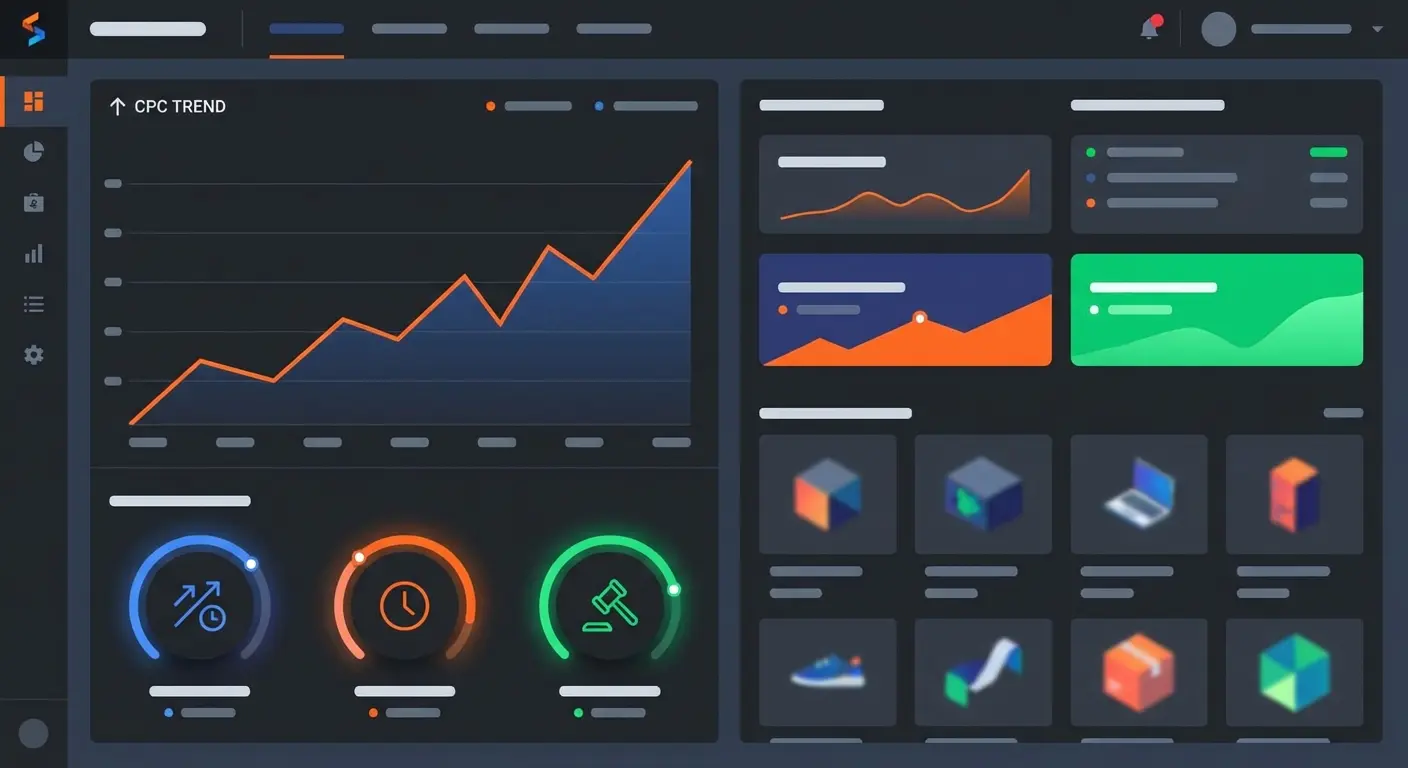
Sponsored ads were once a tactical lever. In many categories, they now function as baseline infrastructure.
PPC Inflation and Diminishing Margins
As more sellers bid on competitive queries, CPCs often rise. The effect compounds when:
Large brands accept lower margins to defend share
Growth-focused brands prioritize velocity over profit
Global entrants compete aggressively on price and spend
For disciplined sellers, the rule is straightforward:
If a SKU cannot sustain paid traffic at realistic CPC levels, it is not a durable SKU.
This shifts product research from “demand first” to “ad economics first.”
External Traffic Signals
Some sellers report ranking and conversion benefits when they drive incremental, high-converting external traffic. The exact weighting of external signals is not public, and results vary by category, audience, and offer quality.
This changes the growth model. Marketplace-only strategies can be more exposed than hybrid approaches that combine:
Email capture using compliant methods
Social proof and creator partnerships
Influencer distribution
Brand search demand growth
External traffic requires skill and capital, and it can fail if it sends low-intent clicks that do not convert.
Returns, Reviews, and Customer Expectations

Amazon’s customer-first approach remains central to the marketplace. The cost distribution can feel heavier for sellers in high-return categories.
Returns and Refund Risk
Categories with high return rates face layered challenges:
Refund timing that may occur before a full inspection is completed, depending on the scenario and policy flow
Used, incomplete, or swapped returns
Inventory condition changes that affect recoverable value
Return-related fees and processing impacts
Mitigation includes:
Clearer listing content to reduce mismatched expectations
Packaging that reduces damage in transit
Conservative forecasting for net margin and return loss
In some categories, pricing to absorb predictable return loss can be more sustainable than chasing volume at thin contribution margins.
Review Sensitivity
Negative reviews can disproportionately impact conversion. Amazon also enforces policies against review manipulation, and sellers should avoid any prohibited incentives or request methods.
Sellers can still face:
Sudden review volatility for reasons that are hard to diagnose
Competitive pressure that shows up as higher scrutiny and more buyer skepticism
Customers using reviews as a channel to express service frustration
The most durable defense is structural:
Product quality buffer
Accurate, non-misleading claims
Strong customer support and post-purchase communication that stays within Amazon policy
In competitive niches, a 4.2 rating can convert very differently than a 4.6.
Alternative Interpretation: Is This Just Market Maturity?
Not all friction indicates deterioration.
An alternative explanation is platform normalization:
Weaker sellers are exiting.
Compliance is tightening to reduce counterfeit, unsafe, or non-compliant products.
Fees reflect real logistics, labor, and infrastructure costs.
Competition is the natural outcome of low entry barriers and better data tools.
From this perspective, the challenges amazon faces include regulatory pressure, operational scale, and trust maintenance. Stricter enforcement can be a rational response rather than arbitrary aggression.
Additionally:
Third-party sellers still represent the majority of units sold.
New sellers continue to enter the marketplace.
Amazon continues investing in logistics and marketplace infrastructure across regions.
The platform is not shrinking. It is filtering.
What We Cannot Measure Precisely
Several uncertainties remain.
First, Amazon does not publish comprehensive public data on suspension rates or appeal outcomes. Perceived increases may reflect broader community discussion, changes in category mix, or shifts in enforcement focus.
Second, advertising cost trends vary widely by category. Some niches remain relatively stable while others experience sharp inflation.
Third, regulatory pressure in regions such as the EU and U.S. could alter platform behavior, but the timeline and scope are uncertain.
Fourth, anecdotal evidence dominates seller conversations. Without standardized reporting, it is difficult to separate systemic shifts from localized issues.
Any strong claim that amazon third-party sellers problems are definitively “worse” should acknowledge these data gaps.
What We Can Say With Confidence
Several conclusions are consistent with observable marketplace behavior:
Operating complexity for amazon third party sellers has increased in many categories.
Margin buffers are thinner in many mature, competitive segments.
Enforcement often moves faster and relies more on standardized processes.
Capital discipline matters more than it did during earlier growth phases.
Brand-building is generally more resilient than pure arbitrage in crowded categories.
The opportunity remains large. However, the tolerance for inexperience is lower.
In 2018, tactical optimization could sometimes compensate for structural weaknesses. In 2025, structural weaknesses tend to surface quickly.
The marketplace is still viable. It is less forgiving.
Questions That Will Define the Next Phase
Several open questions will determine whether friction stabilizes or intensifies:
Will regulatory actions limit how marketplaces can advantage certain offers or business lines?
Will advertising costs plateau, or continue to rise as more global sellers enter?
Will Amazon increase transparency in enforcement workflows, or further standardize them?
Will off-Amazon brand building become essential rather than optional for durable success?
How will macroeconomic conditions influence price sensitivity and return behavior?
For experienced operators, the strategic posture in 2025 is clear:
Treat Amazon as a high-leverage distribution engine, not as a complete business model by itself.
Sellers who thrive tend to manage risk deliberately, control margins tightly, and build assets that extend beyond a single ASIN or a single channel. The problems are not necessarily increasing in number. They are increasing in consequence.