What to A/B Test on Amazon (and What to Skip)

Olivia Reyes

What to A/B Test on Amazon (and What to Leave Alone)
If your first reaction to why are my amazon sales dropping is to rewrite the whole listing, you may be increasing risk without learning what actually changed.
Many performance problems are not caused by “bad listings.” They come from testing the wrong elements, changing too many variables at once, or misreading what Seller Central is really telling you. To apply how to do ab testing on amazon in a way that improves clicks and conversion, you need structure, clean comparisons, and realistic expectations about marketplace volatility.
Below is a practitioner FAQ for experienced sellers who want to test with intention, not guess.

Where should I start when sales dip: traffic or conversion?
Before touching images or bullets, check your funnel. In Seller Central, use Business Reports for sessions and unit session percentage, and use your advertising reporting for ad impressions, ad click-through rate, and ad conversion.
If sessions are down, you likely have a visibility issue such as ranking changes, lower impression volume, or higher competition. If sessions are stable but unit session percentage is falling, you likely have a listing-level or offer-level conversion issue. Mixing these up is how sellers “optimize” a listing when the real problem is reduced impressions, Buy Box eligibility changes, or a traffic mix shift.
When the question is why are my amazon sales dropping, separate visibility from persuasion first.
How to do A/B testing on Amazon without corrupting your data?
Use Manage Your Experiments when it is available for your brand and ASINs. It is designed to split shopper traffic between variants and reduce the bias that comes from comparing different date ranges.
Avoid manual swaps that rely on “before vs. after” windows unless you have no other choice. Seasonality, competitor actions, and ad budget shifts can distort conclusions quickly.
Only test one major variable at a time, such as title or main image, or A+ layout or bullet structure. If you change multiple elements together, you may get a lift, but you will not know what caused it.
Keep conditions as stable as possible during the test. If you must change bids, budgets, coupons, or pricing, document it and treat the result as directional rather than definitive.

What element usually impacts click-through rate the most?
For many categories, the main image is the most common driver of measurable CTR movement because it is the primary thumbnail asset in search and on many placements. If you are working on how to improve amazon click through rate, start with the main image before rewriting long-form copy.
Your main image competes at mobile thumbnail size. Small lighting tweaks rarely matter as much as clarity of product type, perceived value, and differentiation. Testing angle, zoom level, packaging visibility, and bundle presentation often produces clearer signal than micro-edits.
A practical rule: if the difference between variants is not obvious at mobile search size, the test is probably too subtle.

How do I properly test Amazon product images?
When planning how to test amazon product images, focus on meaningful contrasts that change perception quickly:
Tight crop vs. slightly zoomed out
Product alone vs. product with included accessories
Minimalist composition vs. a more dimensional presentation
Avoid spending cycles on adjustments that only show up when zoomed in. Test framing, hierarchy, and the buyer’s immediate understanding of what they are getting.
Also compare performance in context. A main image can improve Sponsored Products CTR while leaving organic click behavior mostly unchanged, depending on placements and keyword intent.
What about titles: SEO or persuasion?
Titles serve two masters: indexing and clicks. If you are already indexed for your core terms, adding more keywords to the title often has diminishing returns. Testing phrasing, structure, and readability can matter more.
You can test feature-first vs. benefit-first formats. You can test shorter mobile-friendly phrasing vs. longer keyword-heavy phrasing. Before simplifying aggressively, confirm you are still indexed for the terms that drive meaningful sales.
If impressions drop after a title variant wins on conversion rate, you may have traded discoverability for persuasion. That trade can be acceptable, but it should be intentional and measured.
How do I know what is a good conversion rate on Amazon?
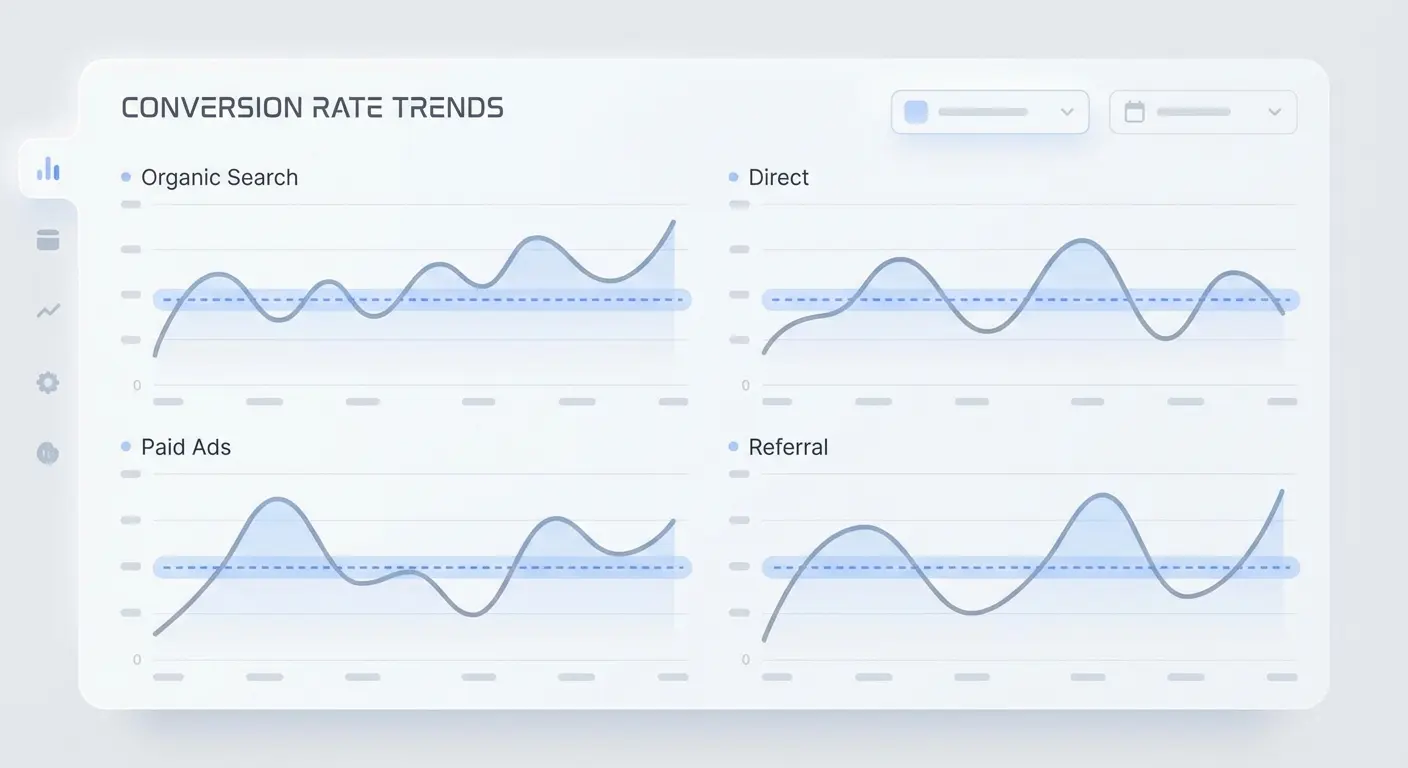
There is no universal answer to what is a good conversion rate on amazon. Category norms, price point, review profile, fulfillment method, and traffic source all change the baseline.
Benchmark against your own reality:
Compare the ASIN against its own historical median, not a generic “average.”
Compare ad traffic conversion vs. organic conversion.
Compare performance by placement or device when you have access to the right reporting.
If unit session percentage drops materially versus its own baseline, that is usually more actionable than chasing broad internet ranges.
Why is my Amazon conversion rate low even with good traffic?
If you are asking why is my amazon conversion rate low, start by isolating offer and intent mismatch issues, not just copywriting issues:
Price or perceived value mismatch versus top competitors
Review patterns that create hesitation, not only star rating
Secondary images that confuse sizing, inclusions, or usage
A+ content that fails to answer common objections
Bullet points that are too technical, generic, or hard to scan on mobile
High traffic with low conversion often means the listing does not match the intent of the keywords driving sessions. Check search term and targeting reports, and confirm you are not drawing large volumes from loosely related terms. Sometimes the fix is narrowing targeting and refining keyword focus, not rewriting the entire detail page.
How to increase Amazon conversion rate without rewriting everything?
If the goal is how to increase amazon conversion rate, target leverage points that influence decisions quickly:
Strengthen above-the-fold clarity, especially main image, title, and the offer stack shoppers see immediately.
Reorder bullet points so the primary decision driver appears first.
Use A+ modules and comparison charts to remove objections and reduce uncertainty.
Incremental, controlled upgrades often outperform full rewrites because they reduce volatility and make attribution clearer.
How should I write better Amazon bullet points for testing?
When working on how to write better amazon bullet points, test structure before tone. Examples of structural variants include:
Benefit headline plus short explanation
Plain sentence format that reads cleanly on mobile
Problem-solution framing
Feature clusters for spec-driven categories
Bullet order matters as much as wording. If your top objection is durability, do not bury it in the fourth or fifth bullet.
Keep bullets scannable. Dense paragraphs can reduce clarity on mobile. Avoid repeating what is already obvious from the title unless it reinforces a differentiator that affects purchasing.
What are realistic best practices for Amazon A+ content?
Best practices for amazon a plus content usually center on objection handling, product understanding, and brand consistency, not aesthetic design alone.
Testable A+ variables include:
Comparison chart placement, top vs. bottom
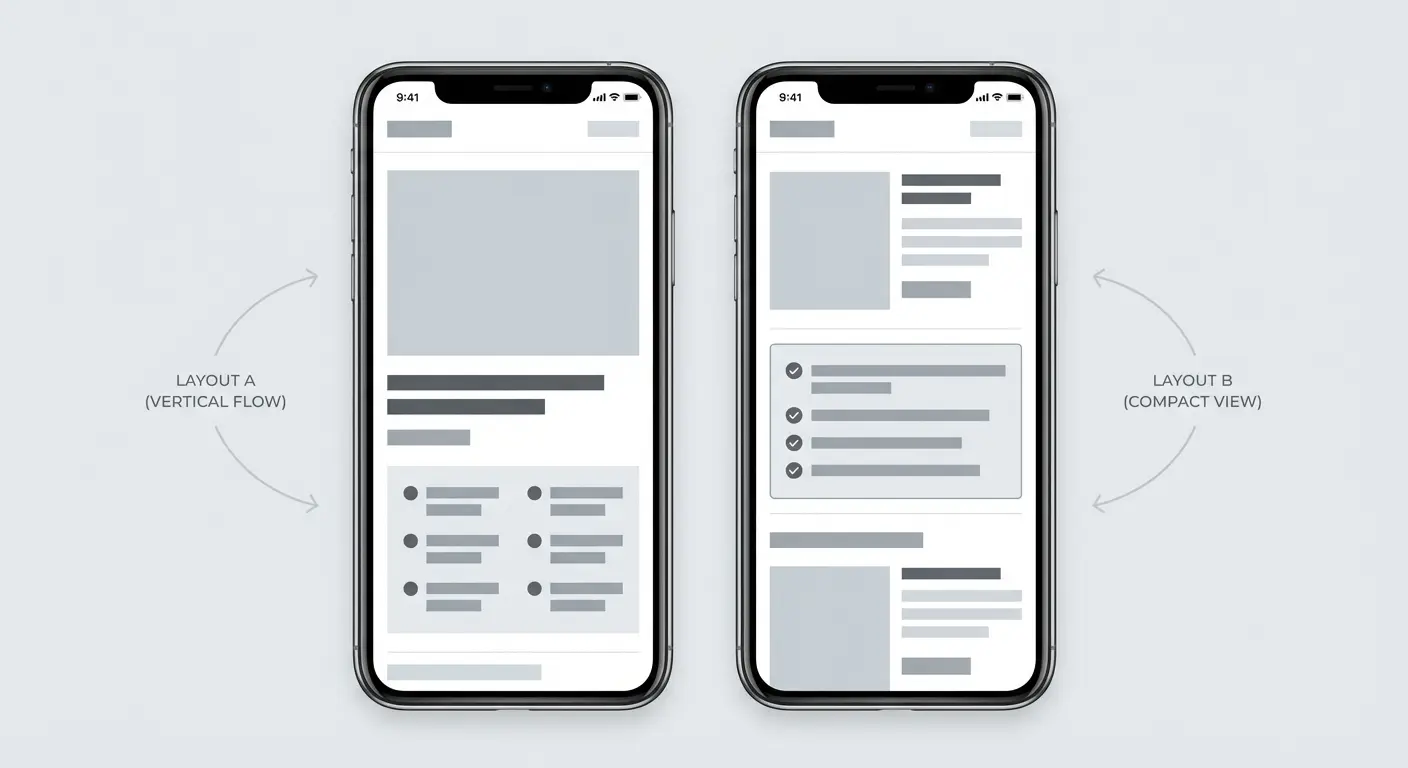
Feature grid vs. lifestyle-heavy layout
FAQ-style modules for complex products
A+ typically influences shoppers who are already on the product detail page, so it often affects conversion more than click-through rate. Do not expect A+ to fix low traffic by itself.
Also check for visual contradictions. If A+ implies inclusions or use cases that your images or bullets do not support, it can increase hesitation.

How do I fix low traffic on an Amazon listing?
If the question is how to fix low traffic on amazon listing, do not start with bullets or A+. Start with discoverability and placement fundamentals:
Indexing coverage for core keywords
Correct browse category and attribute completeness
Competitive pricing and offer health
Sponsored visibility and targeting relevance
Low sessions often reflect ranking decay, reduced impression volume, or stronger competitor visibility, not poor on-page conversion.
Use ad reporting to review impression trends. If impressions are down but CTR is stable, visibility is the bottleneck. Listing copy changes alone usually will not solve an indexing, relevance, or bidding problem.
How to analyze Amazon seller metrics before testing?
Knowing how to analyze amazon seller metrics prevents wasted experiments and false positives.
Review:
Sessions trend over comparable windows, such as 30, 60, and 90 days
Unit session percentage trend
Buy Box percentage where it applies
Ad CTR and ad conversion rate separately from organic behavior
If ad conversion drops but organic remains stable, your listing may not be the issue. It can be lower-intent traffic from keyword expansion, placement shifts, or targeting changes.
Compare equal time windows. Avoid comparing a deal-heavy week to a normal week and drawing conclusions.
How do I check if my Amazon listing is optimized before testing?
Before running experiments, confirm fundamentals that commonly block performance:
Indexed for primary and secondary keywords that matter
No suppressed fields, compliance warnings, or broken variations
Images meet Amazon requirements and support zoom where applicable
Clear value proposition in the first image and the first bullet
If you are deciding how to check if amazon listing is optimized, use a checklist process rather than a redesign impulse. Optimization is structural. Testing refines what is already structurally sound.
Testing a broken listing often only tells you which broken version performs slightly better.
Hard Situations Sellers Run Into
What if traffic is too low to reach statistical confidence?
Low-traffic ASINs can take a long time to produce clear results in Manage Your Experiments.
In that case, consider directional pre-testing off-Amazon, such as controlled shopper feedback on image variants, before committing to a live variant. You can also prioritize hero ASINs first, then apply validated patterns across the catalog.
Do not force certainty where volume does not support it.
What if conversion improves but total sales drop?
This often means impressions or sessions decreased during the test period. A higher conversion rate on lower traffic can still produce fewer units sold.
Separate rate improvements from volume effects. Check impression trends, traffic sources, and major offer changes during the test window before declaring a “win.”
What if competitors change pricing mid-test?
Competitive shifts can contaminate experiments.
If a major competitor drops price or runs a prominent promotion, your conversion may decline regardless of listing changes. Document competitive events during the test window and be willing to discard inconclusive results.
A/B testing assumes relative stability, but the marketplace can move quickly. Context matters.
Practical Patterns That Hold Up
Diagnose traffic vs. conversion before editing anything.
Test one high-impact element at a time.
Make variations meaningfully different, not cosmetically different.
Let tests run long enough to reduce daily volatility.
Interpret results alongside traffic, offer, and pricing shifts.
Prioritize hero ASINs where data accumulates faster.
Use A+ to handle objections, not to fix discovery problems.
Benchmark conversion against your own history, not generic averages.
Apply amazon listing optimization tips selectively, based on the bottleneck you identified.
Structured testing compounds over time. Random optimization burns time and ad spend. When you treat how to do ab testing on amazon as a disciplined measurement system, you can make changes that hold up under scrutiny and are defensible with data.