Automate Amazon PPC in 2026 Without Losing Control

Olivia Reyes

How to Automate Amazon PPC Campaigns in 2026 Without Losing the Plot
If your Amazon ads are "automated" but ACOS is drifting up, search term clutter is growing, and nobody can explain why a campaign stopped spending, you do not have an automation system. You have unattended software. For sellers trying to figure out how to automate amazon ppc campaigns 2026 style, the useful question is not whether automation saves time. It often does. The real question is which decisions should be automated, which should stay manual, and how to measure whether the machine is helping or just moving budget around faster.

What Amazon PPC automation actually covers
In practice, Amazon PPC automation is not one feature. It is a stack of repeated decisions that can be handled by rules, software, or AI-assisted bidding logic. That usually includes bid changes, budget pacing, search term harvesting, negative keyword updates, placement adjustments, and reporting.
The important distinction is between automating execution and automating strategy. Execution is repetitive and rule-friendly. Strategy is where sellers still get hurt if they outsource judgment. Choosing whether a SKU should defend branded traffic, whether a new launch should tolerate higher ACOS, or whether poor ad efficiency is really a pricing problem is not something a tool can solve reliably on its own.
A second distinction is between Amazon-native automation and third-party automation. Amazon already provides features such as dynamic bidding, budget rules, portfolio controls, suggested bids, and campaign settings. Third-party tools usually add workflow speed, reporting layers, dayparting, bid logic, and cross-campaign controls. That matters when comparing amazon ppc dayparting software vs manual management, or when deciding whether AI bidding is worth the cost and operational complexity.
One more scope note: good automation should support true profit, not just lower visible ACOS. That means the ad system has to be judged against contribution margin, repeat purchase behavior where relevant, and blended account performance. A campaign can look efficient while limiting a ranking path that is profitable at the account level. The reverse can also happen.
The part most sellers skip: deciding what the system is allowed to touch
Before you automate anything, define your guardrails. This is the difference between a stable system and a cleanup project three weeks later.
Start with campaign classes. Brand defense, category winners, launch SKUs, seasonal items, and low-margin products should not all run under the same rules. A branded exact campaign with strong conversion history can tolerate different bid logic than a broad research campaign. If you feed both into one target ACOS rule, one of them will be managed badly.
Next, define the metrics that actually matter for each class. For mature products, your main concern may be reducing wasted ad spend on amazon fba and protecting margin. For launches, you may accept ugly short-term ACOS if click-through rate, conversion rate, and retail readiness are strong. For SKUs with inventory risk, automation may need a ceiling to avoid scaling demand you cannot fulfill.
Automate around decision thresholds, not emotions. If a search term has enough clicks without orders, the action should already be defined. If a campaign has impressions but no clicks, that should trigger a different response than a campaign with no impressions at all. Most PPC chaos comes from unclear escalation paths, not bad software.
How a sensible automation loop works
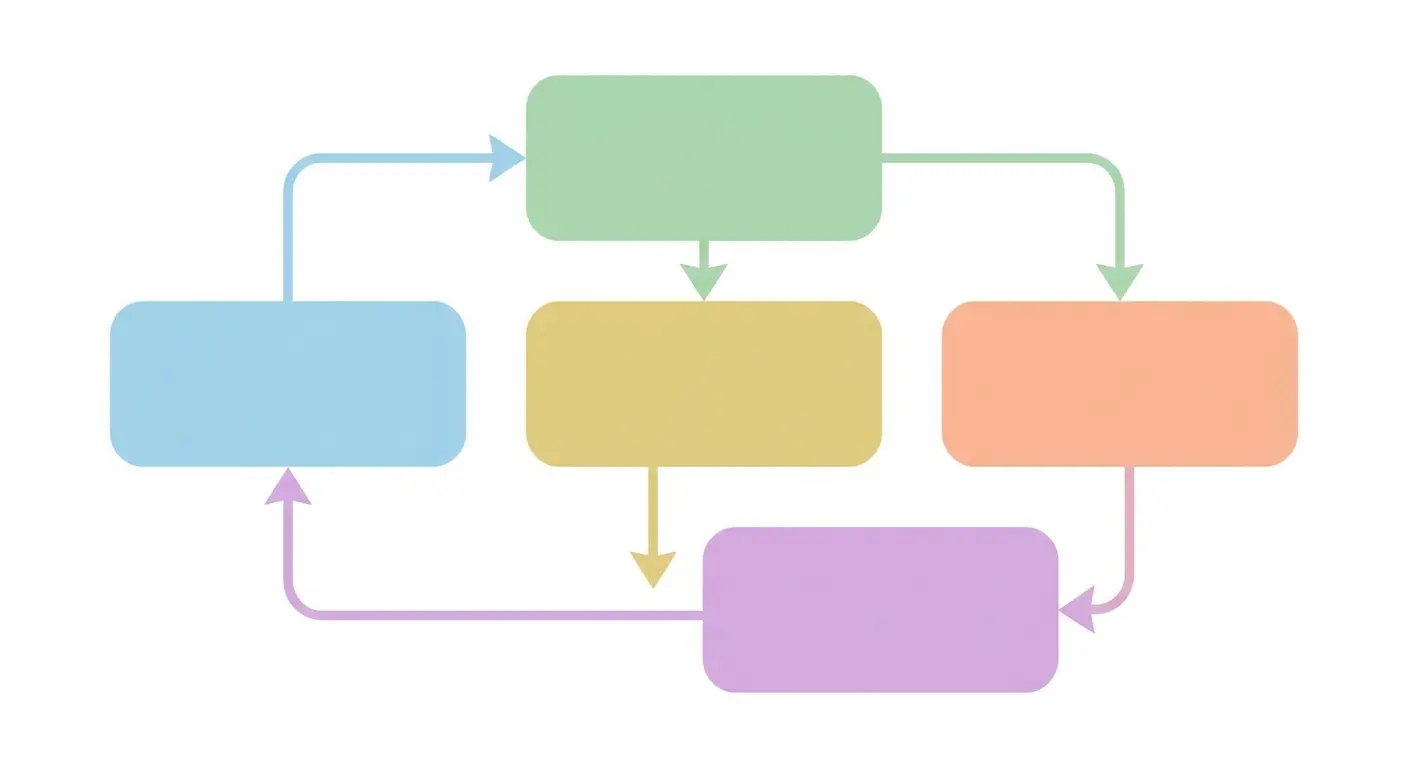
The cleanest automation model follows a simple sequence: traffic discovery, traffic qualification, traffic isolation, traffic suppression, then bid refinement.
Traffic discovery usually starts with auto campaigns, broad match, and sometimes category targeting. Their job is not to be pretty. Their job is to generate search term data and uncover where your listing actually converts.
That leads directly to how to harvest keywords from amazon auto campaigns. You are looking for search terms that have enough evidence to justify promotion into manual campaigns. In real life, that means more than getting one order. You want a threshold that reflects your price point, conversion rate, and click costs. The exact number varies, but the principle is stable: promote terms that show repeatability, not random luck.
Once harvested, those terms should be isolated into tighter manual structures, usually exact match for proven winners and phrase or broad only where exploration still makes sense. This is where automation helps most. The software can surface candidates, move them into the right campaign buckets, and lower bids on the original discovery campaigns so you do not pay twice for the same traffic path.
Then comes suppression, which is where amazon ppc negative keyword strategy 2026 matters more than most sellers admit. Negative keywords are not just for obvious junk traffic. They are also for routing traffic intentionally. If a search term is now being targeted in an exact campaign, the discovery campaign often needs that term negated to reduce overlap and muddied reporting. Without that step, automation harvests but never truly organizes.
Finally, bid refinement happens after structure is cleaned up. This is where AI bidding tools and rule engines can be useful, especially for large catalogs. But they work best on already-separated traffic. If exact winners, broad explorers, branded terms, and low-intent category targets all live in one campaign, bid automation has little chance of making smart tradeoffs.
Why high ACOS is often a structure problem before it is a bid problem
A lot of sellers jump straight to managing high acos with ai bidding strategies because AI sounds like the fastest fix. Sometimes it helps. Often it is solving the wrong layer.
Expectation: High ACOS means bids are too high, so the system should lower bids until efficiency improves.
Reality: High ACOS can come from weak listing conversion, bad search term quality, poor traffic routing, low review count, price mismatch, inventory instability, or campaign overlap. Lowering bids may reduce spend while leaving the underlying leak untouched.
AI bidding performs best when the input environment is clean. If a SKU converts well on exact non-brand terms but poorly on broad category terms, AI can optimize around those patterns if they are separated. If everything is blended, the system often reacts by lowering bids broadly, which may cut sales faster than waste.
Use AI bidding when you have enough data density and a clear goal. Do not use it as a substitute for campaign architecture. Also, keep override rules for brand terms and top organic drivers. Some terms deserve manual protection even if a model thinks they are expensive, because their value is not always captured by short attribution windows alone.
Negative keywords are not cleanup, they are campaign routing
Most negative keyword discussions stay too shallow. For experienced sellers, the useful way to think about negatives is traffic governance.

A practical amazon ppc negative keyword strategy 2026 usually includes three buckets:
Blocking irrelevant traffic
These are obvious mismatches, wrong use cases, incompatible product types, or searches that repeatedly burn clicks without plausible fit. This is the simplest use case and the easiest place for automation to help.
Preventing internal cannibalization
When you promote a winning search term into a dedicated exact campaign, you often want to negate it in the auto or broad campaign that discovered it. That keeps reporting cleaner and reduces paying for the same query through multiple routes.
Separating intent levels
Phrase and exact negatives can be used to keep high-intent, proven terms in controlled campaigns while leaving exploratory campaigns free to find adjacent demand. This matters a lot in larger accounts where campaign purpose is more important than campaign count.
One caution: aggressive negatives can limit discovery. If you negate too early, you reduce the search term surface before the product has enough data. Early-stage SKUs usually need wider tolerance than mature winners.
When campaigns are not spending, do not blame the bid first
Fixing amazon ppc campaigns not spending starts with diagnosing where the bottleneck is. Sellers often increase bids immediately, but that only helps in one subset of cases.
If impressions are low or zero, likely causes can include weak Buy Box eligibility, limited indexing, irrelevant targeting, budget exhaustion earlier in the day, bids that are too low relative to competition, or ad eligibility issues. If impressions exist but clicks do not, the problem is usually ad relevance, price perception, review disadvantage, weak main image, or poor placement mix.
This is where amazon ppc dayparting software vs manual decisions become practical. Manual checks can identify whether budgets are running out by noon or whether evening traffic converts better for certain ASINs. Software can enforce scheduling more consistently, but only after you know there is a real intraday pattern. Dayparting is not automatically smart. If your campaign is already budget constrained and under-delivering, shutting it off for part of the day can reduce data and make learning slower.
A reliable decision rule is simple: use dayparting when you have evidence that certain hours produce materially worse efficiency or when operational constraints justify it. Do not use it just because the tool offers a heatmap.
Measuring what ads are really doing to the account
If you want better automation, you need a better scoreboard. ACOS alone is too narrow, and raw TACOS is often misread.
When sellers focus on calculating true tacos after amazon ads, the missing piece is usually attribution context. Standard TACOS is ad spend divided by total revenue. That is useful, but incomplete. True TACOS is better understood as a blended view that considers what ads changed in the business, not just what they directly attributed.
For example, if ad spend grows and TACOS stays flat while organic rank improves on a core keyword set, that may be healthy. If ad spend falls, ACOS improves, but total revenue and rank slide, the account may actually be less profitable over time. On the other hand, if branded sales inflate ad efficiency while generic acquisition stalls, account-level numbers can look fine while growth quietly weakens.
A practical way to evaluate ads against true profit is to review them at three levels:
Search term or target level: is this traffic economically viable?
Campaign or SKU level: is this structure helping the product win profitable demand?
Account level: are ads improving total contribution, not just attributed metrics?
That layered view is especially important when automation tools optimize toward one metric. If the software is told to hit target ACOS, it will often do that even when the result is lower total profit.

Three scenarios where automation helps, and where it goes wrong
A mature catalog with too much manual upkeep
A seller with many established ASINs is spending hours each week adjusting bids and exporting search term reports. Automation helps by standardizing bid changes, harvesting terms from auto campaigns, and applying negative keywords to discovery campaigns after promotion.
Where it goes wrong: one target ACOS is applied across all SKUs, including branded defense and low-margin products. The result is cleaner dashboards but worse actual control. The fix is segmentation first, automation second.
A launch account trying to scale too carefully
A new product has decent retail readiness, but the seller automates tight ACOS rules from day one. The software suppresses bids before enough conversion history exists. Traffic never matures, and the seller concludes the niche is too expensive.
Where it goes wrong: launch campaigns are treated like mature campaigns. The fix is to use looser exploration rules during the learning phase, then tighten once search term patterns emerge.
An account with smart bidding and bad reporting
AI bidding lowers visible ACOS, but overall sales flatten. Search term overlap remains, branded traffic carries the conversion rate, and generic acquisition weakens.
Where it goes wrong: the model optimized the easiest traffic, not the best growth mix. The fix is to separate branded from non-branded, isolate proven generic winners, and review blended revenue impact rather than headline ACOS alone.
The access question most teams handle too casually
If you use software or an agency, safe seller central access matters. This is not just an IT concern. It is an operational risk issue.
Use the minimum access level necessary. Separate advertising permissions from broader account permissions where possible. Review who has access, through which login method, and whether old vendors still retain entry. If a tool requires broad permissions, understand why. Convenience is not the same as necessity.
Also, think about business continuity. If the automation platform goes down or access is revoked, can your team still manage core campaigns manually? A healthy setup always has a fallback path. Software should increase control, not become a single point of failure.
The mistakes sellers make when they say they want automation
One common misunderstanding is assuming automation means less strategy. In reality, automation increases the importance of clear strategy because small bad rules scale faster than manual mistakes.
Another is treating all search term movement as optimization. Harvesting a term from auto into exact is only useful if bids, negatives, and budgets are also adjusted to support the new route. Otherwise, you just create extra campaign objects.
A third is assuming software can detect business context. It usually cannot see margin changes from rising landed costs, stockout risk, review shocks, or pricing experiments unless someone translates those realities into rules.
A fourth is assuming non-spending campaigns are unhealthy by default. Some campaigns are intentionally narrow and should spend lightly. The question is whether they are spending in line with their purpose, not whether every campaign looks active.
Where automation still struggles
Automation works poorly when data is thin, products are highly seasonal, conversion rates are unstable, or catalog changes happen faster than the system can relearn. It also struggles with products that have long consideration cycles, because short attribution windows can understate real value.
Manual judgment is still important for product launches, listing changes, price resets, inventory disruptions, and major competitive shifts. If your hero SKU loses reviews, gets a cheaper competitor, or changes package quantity, historical bid logic may suddenly become misleading.
There is also a practical limit to set and forget. Even good automation needs recurring audits. Search term quality drifts. Budget allocation drifts. Marketplace conditions drift. Amazon also changes ad features and behavior often enough that last year's stable rule set may quietly become less useful.
What tends to hold up over time
For sellers who want a durable system, the winning pattern is usually boring in the best way. Keep campaign purpose clear. Use auto and broad for discovery, exact for control, negatives for routing, and automation for repetitive adjustments. Judge performance with a blended profit lens, not a single vanity metric. Audit exceptions manually.
A good PPC system should save you time without hiding the reasons performance changed. If the tool gives you speed but less understanding, you may be paying to become slower where it counts.
The practical points worth keeping
Start by deciding which campaign types can share automation rules and which need separate treatment.
Use automation to handle repetitive execution, not to replace product-level strategy.
For how to harvest keywords from amazon auto campaigns, promote only terms with enough evidence, then negate them in discovery campaigns when appropriate.
A strong amazon ppc negative keyword strategy 2026 is about traffic routing as much as blocking irrelevant searches.
When fixing amazon ppc campaigns not spending, diagnose impressions, clicks, Buy Box eligibility, indexing, and budgets before just raising bids.
Compare amazon ppc dayparting software vs manual only after confirming there is a real hourly performance pattern worth acting on.
Evaluate ads through calculating true tacos after amazon ads and overall true profit, not just campaign ACOS.