Amazon Prime 2-Day Shipping for Sellers in 2026

Olivia Reyes

Amazon Prime 2-Day Shipping for Sellers: What Actually Matters in 2026
If your offer is Prime-eligible but margins keep shrinking, or your badge disappears and reappears with no obvious pattern, the problem usually is not shipping speed in the abstract. It is how Amazon converts operational performance into delivery promises, listing visibility, and account risk. For experienced sellers, understanding Prime delivery means knowing the difference between FBA speed, Seller Fulfilled Prime eligibility, delivery metrics, and the hidden cost of trying to be fast everywhere. This is where decisions around network placement, carrier selection, shipping templates, and team access controls start to matter.

Prime speed is a promise layer, not just a shipping method
When sellers talk about Amazon Prime 2-day shipping, they often mean one of two very different systems.
The first is FBA, where Amazon stores inventory and determines the Prime delivery promise through its own fulfillment network. The second is Seller Fulfilled Prime, where the seller ships orders from their own warehouse while still offering the Prime badge. Those models may look similar to customers, but they operate under different constraints, costs, and failure points.
For FBA sellers, the main question is not how to print labels faster. It is how inventory placement, in-stock rates, receiving delays, and fulfillment-center transfers affect the promise shown on the listing. If the offer loses Prime speed, the root cause may be regional inventory availability rather than a direct shipping defect.
For SFP sellers, the issue is more direct. You are responsible for meeting Amazon’s shipping and delivery expectations through your own operation. That means carrier performance, order cutoff discipline, coverage zones, and processing reliability determine whether you can support Prime speed without damaging account health.
This is why how to maintain 2 day shipping on amazon is partly a logistics question and partly a system-design question. Fast delivery is not one switch. It is the result of whether your fulfillment setup aligns with Amazon’s promise engine.
What Amazon is really measuring behind the scenes
Experienced sellers know Amazon rarely rewards good intentions. It rewards measurable execution.

For Prime-related offers, Amazon looks at whether orders are confirmed on time, whether tracking is valid, whether delivery performance is reliable, and whether customer experience remains strong enough to justify the badge. The exact dashboards and thresholds can change, so sellers should rely on the current Account Health, Shipping Performance, and program-specific policy pages in Seller Central. Still, the practical framework remains stable.
One metric cluster concerns order handling. This includes whether the order is confirmed shipped on time and whether carrier handoff happens when promised. That is where sellers run into trouble with late shipment rate. A rising late shipment rate is not just an operational annoyance. In more serious cases, repeated issues can contribute to enforcement, including amazon account suspension for late shipment rate if the pattern is severe or persistent.
Another metric cluster concerns delivery performance. For Prime offers, being shipped on time is not enough if the customer receives the order late. This is where amazon prime delivery speed metrics for sellers become operationally important. Amazon evaluates the customer outcome, not just the warehouse timestamp.
There is also a visibility effect. Prime badging and delivery promises influence conversion and Buy Box competitiveness, although many factors affect featured offer visibility. So when sellers are fixing lost prime badge on amazon fba, they should not assume there was a compliance event. Sometimes the badge changes because inventory is stranded, low, regionally unavailable, or no longer positioned to support the displayed promise.
Why the two-day promise often breaks in real operations
The common expectation is simple: if you offer Prime, the item arrives in two days. The operational reality is more nuanced.
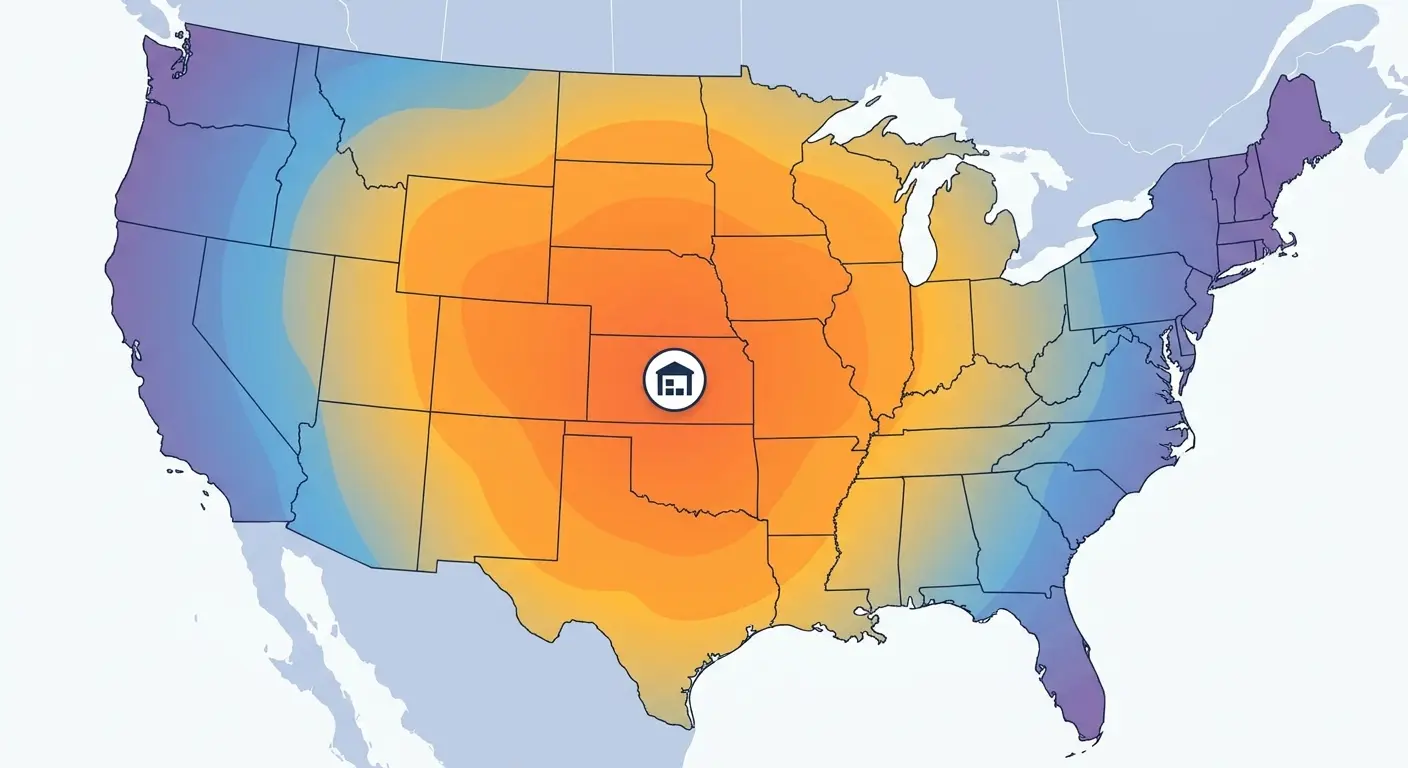
For FBA, Amazon controls fulfillment after receipt, but sellers still control what enters the network, how often stockouts happen, and how broadly ASINs are available. If one region has inventory but another does not, the delivery promise shown to customers can change. A listing may still be Prime, but not necessarily at the same speed in every ZIP code. Sellers sometimes interpret this as random inconsistency. It usually is not random. It is often a network coverage issue.
For SFP, the most frequent breakdown is overcommitting geographic reach. Sellers try to offer broad national coverage with two-day service, but shipping costs rise and carrier reliability falls at the edge of the map. The badge may be active, but the economics and delivery risk no longer work.
A useful seller insight here is this: if your farthest zones produce the most defects and the least profit, stop treating nationwide two-day coverage as a badge of honor. Treat it as a routing decision.
Cutoff times are another hidden lever. A seller may believe they support two-day delivery, but if orders placed late in the day cannot be packed and tendered the same day, the promise becomes fragile. One warehouse delay can turn a manageable schedule into a missed carrier scan, then a late shipment mark, then a delivery miss.
Weekend processing creates a similar gap. Prime shoppers buy seven days a week, but many seller operations still behave like business-hour warehouses. If your carrier pickups, staffing model, or label workflow cannot support weekend order flow, your fast-shipping offer may only be fast on paper.
Seller Fulfilled Prime in 2026 is mostly about operational proof
Sellers searching how to get amazon seller fulfilled prime 2026 are usually asking the wrong first question. The first question is not, how do I enroll? It is, can my operation survive being measured like a Prime operation?

Amazon has historically controlled access to Seller Fulfilled Prime and changed enrollment mechanics over time, including pauses, waitlists, trial periods, and performance qualifications. The right approach is to check current Seller Central guidance rather than rely on older blog posts. Regardless of the enrollment details, the core requirement remains the same: you need a fulfillment operation that can repeatedly meet strict shipping and delivery expectations.
That means a few practical things.
Your warehouse workflow has to be stable under normal volume and during spikes. If your team only hits targets when order volume is comfortable, you do not have Prime capability yet. You have a fair-weather shipping process.
Your carrier strategy has to include service-level realism. Sellers often underestimate how much Prime success depends on details such as pickup reliability, label generation speed, exception handling, and delivery performance by lane.
Your user permissions matter more than many teams realize. Large operations often have multiple staff members or agencies touching orders, shipping settings, and templates. If access is too broad, one person can accidentally change shipping settings, disable services, or expose account security. safe access for fulfillment teams should be intentional: role-based permissions, limited access where possible, and clear ownership of shipping templates and order workflows.
FBA versus Seller Fulfilled Prime: the cost question sellers care about
The headline question around fba vs seller fulfilled prime shipping costs has no universal answer, because sellers are comparing two different cost structures.
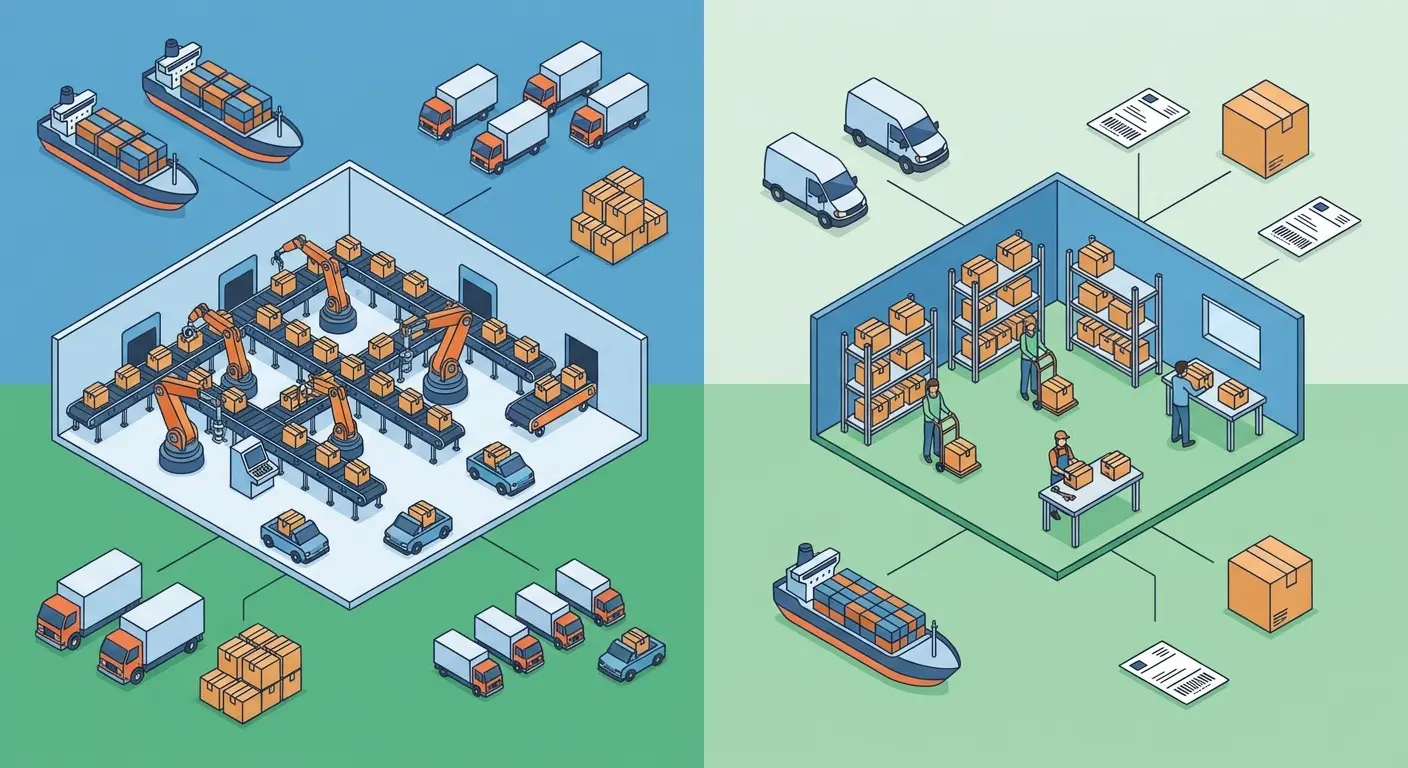
FBA bundles storage, pick-pack, fulfillment, and customer-facing Prime speed into one system. The convenience is real, but the total cost can include storage exposure, inbound placement costs, aged inventory risk, and less direct control over packaging and routing. FBA is often easier to scale operationally, but it is not always cheaper on a per-unit basis once storage and inventory inefficiency enter the picture.
Seller Fulfilled Prime gives more control. You may pack more efficiently, choose carriers, and avoid some FBA storage costs. But the tradeoff is that your own operation absorbs the volatility. Two-day shipping across long zones can get expensive quickly. If your product is bulky, low-priced, or geographically imbalanced in demand, SFP can turn into margin erosion disguised as growth.
Expectation: SFP is cheaper because I already have a warehouse. Reality: It may be cheaper in nearby zones and much more expensive in distant zones, especially if the Prime promise forces premium services.
Expectation: FBA is expensive because of fees. Reality: For many sellers, FBA is a hedge against operational complexity, staffing volatility, and delivery failures they would otherwise pay for indirectly.
The right comparison is not fee line versus fee line. It is fully loaded landed cost versus fully loaded delivered cost, including defect risk, labor intensity, and the probability of losing conversion when delivery promises slow down.
How sellers reduce Prime shipping cost without hurting performance
If you are focused on reducing amazon seller fulfilled prime shipping costs, cost control starts with service area design, not carrier coupon hunting.

First, tighten your shipping map. Two-day delivery should be offered where you can hit it consistently and profitably. Overextending to weak zones usually raises costs and defect rates at the same time.
Second, review packaging logic. Dimensional weight can quietly destroy margin on Prime orders. A modest packaging redesign can produce more savings than a carrier negotiation, especially for SFP sellers shipping medium or bulky items.
Third, use carrier mix by lane rather than one default service for every order. The cheapest carrier is not the same in every region, and the most reliable carrier may differ by destination type. Prime performance improves when sellers route intentionally instead of using habit-based rules.
Fourth, distribute inventory based on demand density if you run your own network. Even a simple two-node model can lower cost and improve reliability. You do not need a national web of warehouses to benefit from regionalization. You need enough inventory in the right places to stop paying premium rates for preventable distance.
For FBA sellers, cost control looks different. You are less focused on last-mile carrier selection and more focused on inventory health. Preventing stock imbalances, stranded units, and reactive replenishment often protects Prime conversion better than trying to optimize one fee bucket at a time.
Three realistic cases sellers run into
A brand loses the Prime badge on an FBA ASIN
Case: a seller sees that an established FBA listing no longer shows the expected Prime speed and sales soften.
The first instinct is often to open a support case for a badge issue. Sometimes that is necessary, but the better first pass is operational. Check whether the ASIN is low on available inventory, whether units are stranded or reserved, whether recent inbound shipments are delayed, and whether inventory is concentrated in a limited region. In many cases, fixing lost prime badge on amazon fba starts with restoring healthy available inventory and network coverage, not arguing about display logic.
An SFP seller has good ship-confirm times but weak delivery outcomes
Case: a seller confirms shipments on time and believes the warehouse is performing well, yet delivery-related metrics are slipping.
This usually points to a carrier or zone problem rather than an internal packing problem. Review late deliveries by destination, service level, and carrier lane. If the misses cluster in edge zones, your offer map is too broad or your carrier plan is too optimistic. The fix is often to narrow coverage, adjust cutoffs, or change service selection by region.
A multi-user account develops shipping setting drift
Case: a warehouse manager, agency partner, and VA all have broad account permissions. Shipping templates and handling settings change without clear ownership, creating inconsistent promises.
This is where safe access for fulfillment teams becomes practical rather than theoretical. Restrict permissions by function, document who owns shipping settings, and audit changes after major operational disruptions. Prime performance can be damaged by simple access chaos.
The misconceptions that lead sellers into preventable trouble
One common misunderstanding is that Prime automatically means a literal two-day experience from order placement in every case. What buyers see depends on order timing, processing windows, weekends, and delivery promise logic. Sellers should manage to the actual promise shown to the customer, not to a simplified slogan.
Another is that FBA removes the need to think about shipping speed. FBA removes some direct execution burden, but not the inventory-planning burden. Sellers still lose conversion when stock is unavailable, unevenly distributed, or delayed inbound.
A third misconception is that on-time shipping and delivery performance are interchangeable. They are related but not identical. You can confirm on time and still deliver late, especially in SFP.
Finally, some sellers assume that if they miss performance targets occasionally, Amazon will always view context kindly. Sometimes it may, sometimes it may not. Marketplace enforcement is metric-driven. The safest operating assumption is that recurring misses matter even when each individual miss had a reasonable explanation.
Where Prime speed becomes fragile
Prime delivery is hardest to sustain when your operation combines one or more of these conditions: oversized items, low ASP, wide geographic demand spread, seasonal volume spikes, or dependence on one carrier pickup window.
Low-priced items are especially vulnerable because the conversion gain from fast shipping may not cover the cost of fulfilling the promise. Oversized products can be even worse, since the shipping service needed to protect speed can consume most of the margin.
Seasonality introduces another edge case. A system that meets amazon seller on time delivery rate requirements during average weeks can fail during peak periods if labor, packaging supplies, or carrier capacity tighten. Prime readiness should be measured at stress volume, not only at baseline volume.
Cross-border and remote-area delivery is another fragile area. Sellers should be cautious about assuming standard domestic logic applies everywhere. Delivery promises may vary, and cost to serve usually does.
One more quiet risk is operational dependency on a single person. If one shipping lead knows all the workarounds and no one else understands the templates, labels, and cutoffs, then your Prime program is less stable than the dashboard suggests.
What to keep in view
For sellers managing Prime-related speed, the right mental model is not, how do I ship everything in two days? It is, how do I build an offer and fulfillment setup that can repeatedly support the delivery promise Amazon is willing to show?
A practical checklist to keep nearby:
Prime speed is a customer-facing promise generated by systems, inventory placement, and execution, not just by buying faster labels.
FBA and Seller Fulfilled Prime solve different problems. Compare total operating economics, not just visible fees.
If you want to know how to get amazon seller fulfilled prime 2026, start by testing whether your warehouse, carrier mix, and staffing can survive Prime-level measurement.
When fixing lost prime badge on amazon fba, inspect inventory health, stranded status, inbound delays, and regional availability before treating it as a display bug.
Watch both shipping and delivery outcomes. Good ship-confirm discipline does not guarantee good customer delivery speed.
reducing amazon seller fulfilled prime shipping costs usually comes from tighter coverage zones, better packaging, and lane-based carrier strategy.
Protect the account operationally and administratively. Late shipment patterns can escalate into account health problems, and safe access for fulfillment teams reduces preventable configuration mistakes.
Review amazon prime delivery speed metrics for sellers alongside current Seller Central policy pages, because program details and thresholds can change.
Keep how to maintain 2 day shipping on amazon tied to real cutoff times, carrier performance, and realistic service areas rather than optimistic templates.
Monitor amazon seller on time delivery rate requirements together with late shipment, valid tracking, and customer-facing delivery outcomes, because no single metric tells the whole story.