Amazon North America Unified Account Guide

Olivia Reyes

Amazon North America Unified Account: What Actually Matters When You Expand into Canada and Mexico
Are you solving a growth problem, or are you adding two more marketplaces that create listing drift, tax questions, and support overhead?
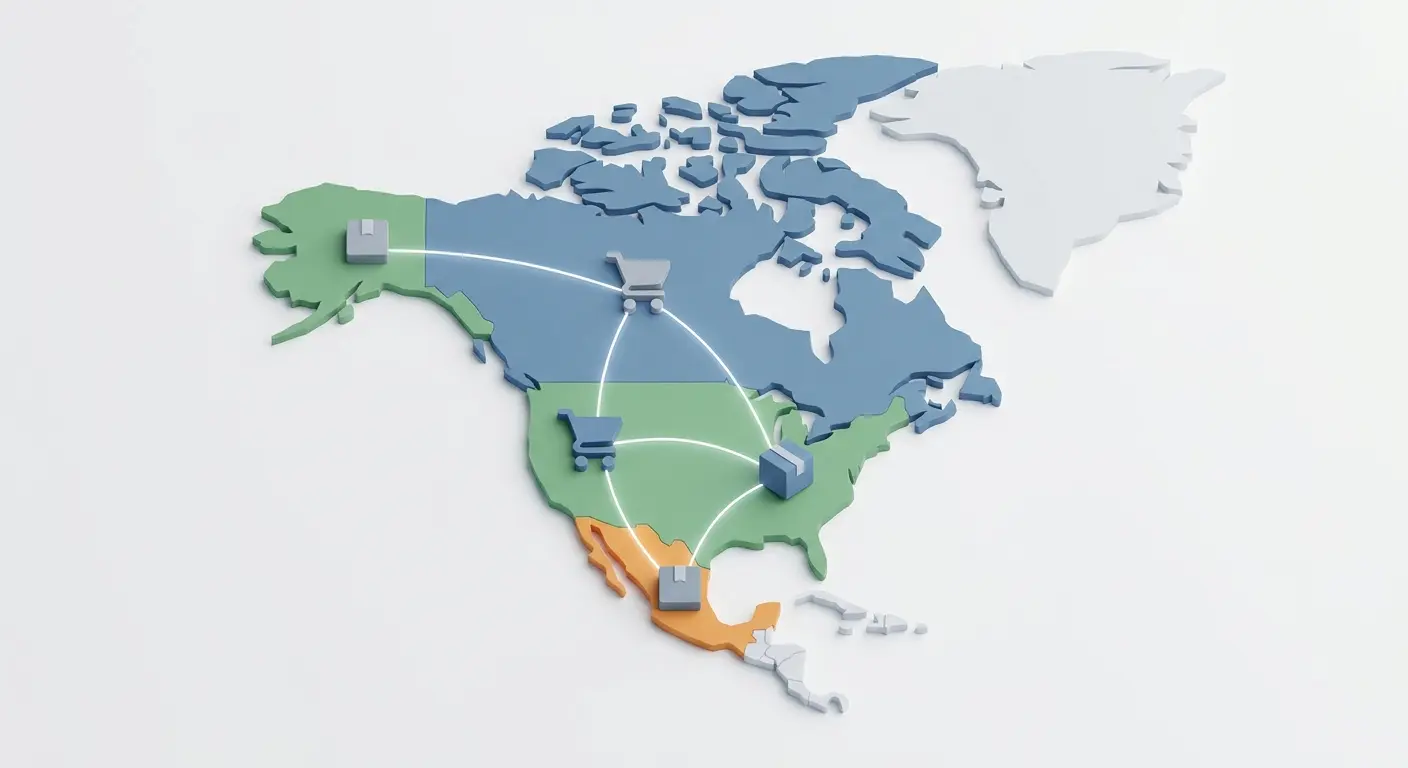
For experienced sellers, the Amazon North America Unified Account is less about access and more about operating model. The setup is usually straightforward. The harder decision is how inventory, pricing, compliance, currency, and team workflows should behave once the US, Canada, and Mexico are connected.
Sellers often ask some version of the same question: how to sell in canada and mexico with amazon us account access without multiplying admin work. A unified account can help with that, but only if you separate account convenience from fulfillment strategy. It can simplify login access, marketplace access, and the professional selling plan structure across North America, while still leaving country-specific decisions around listings, taxes, inventory placement, and customer experience.
What you are really choosing when you use a unified account
The appeal is obvious. One Seller Central relationship across the US, Canada, and Mexico. In practice, the real decision is whether your business can support cross-border complexity without damaging margin or account health.
Most sellers frame this as an expansion question. In reality, it is a control question. You are deciding whether to centralize marketplace management while accepting that customer expectations, local regulations, and fee structures still differ by country. A unified account does not turn North America into one marketplace. It gives you one administrative surface for three marketplaces that still operate differently.
That distinction matters because many sellers overestimate what gets unified. The subscription side may be simpler, which is why sellers look up amazon north america unified account fees 2026, but subscription cost is rarely the main risk. The larger risks are operational mismatch, weak listing governance, and treating Remote Fulfillment with FBA as a permanent inventory strategy when it is better used as a demand test or transitional model.
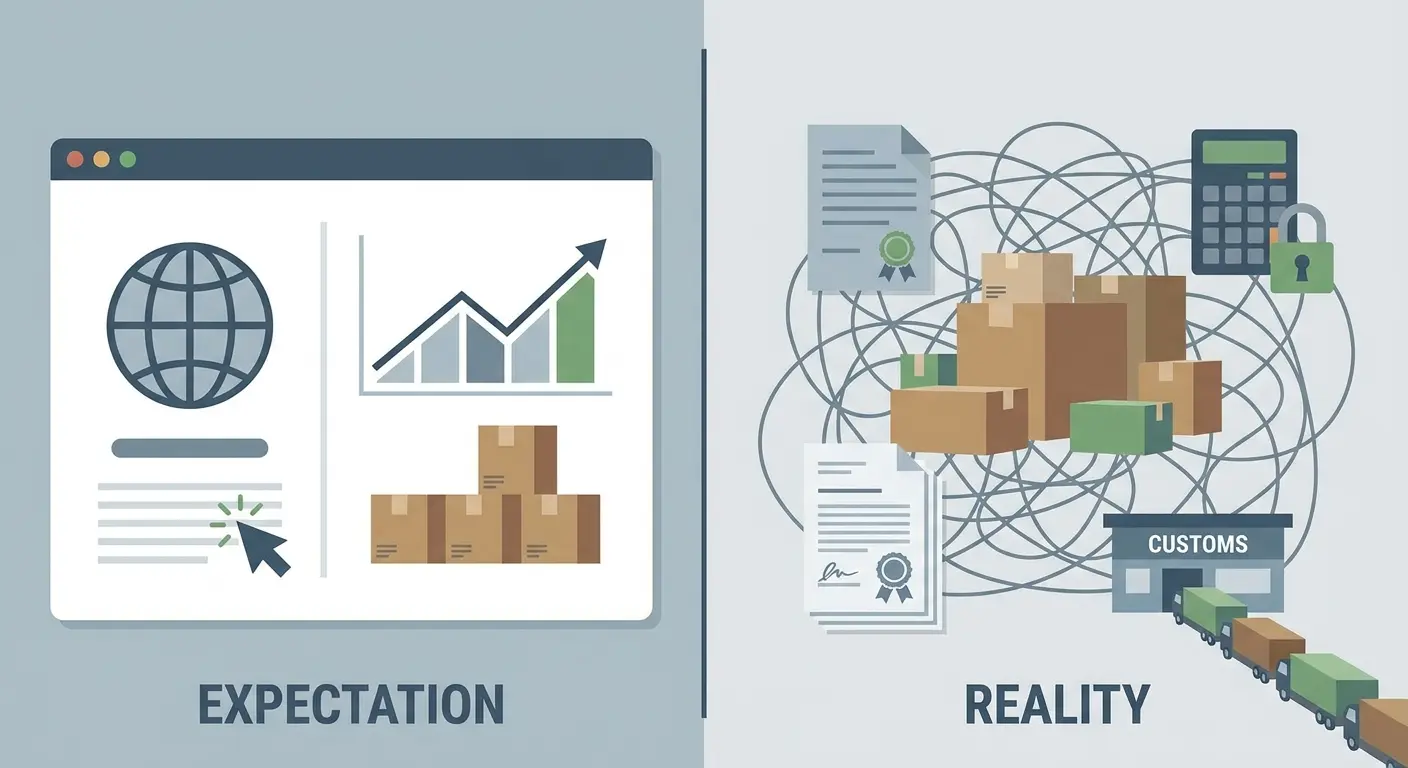
Expectation vs. reality:
Expectation: one account means one inventory system, one pricing logic, and easy expansion. Reality: one account reduces some admin friction, but inventory segmentation, compliance, taxes, and local economics still need deliberate design.
A seller with stable US operations may benefit quickly. A seller with messy catalog governance, unresolved variation issues, or poor margin visibility often exports those problems into two more marketplaces.
The ranking that matters most before you turn on Canada and Mexico
If you are deciding whether to expand with a unified account, these are the criteria worth ranking first.
Margin durability beats traffic potential
The first question is not whether Canada or Mexico can add sales. It is whether those sales remain profitable after conversion costs, fulfillment economics, return behavior, local fees, and support time.
This is where many cross-border plans fail quietly. Revenue appears first. Margin leakage appears later. Managing currency exchange rates amazon fba settlements can turn an acceptable margin into a weak one if pricing is not built around a base-currency floor. If your pricing process cannot absorb exchange movement without constant manual intervention, expansion can look profitable until reconciliation tells a different story.
A practical rule is simple: if your margin only works when exchange rates stay favorable, it is not a durable margin.
Inventory logic matters more than account setup
The second major criterion is inventory design. This is the core of the amazon narf vs unified account inventory management confusion. These are not substitutes.
A unified account is an account structure. NARF, now generally referred to by Amazon as Remote Fulfillment with FBA, is one possible fulfillment method for serving Canada and Mexico from eligible US FBA inventory. Sellers often compare them as if they solve the same problem. They do not. One gives you administrative access across marketplaces. The other gives you a fulfillment path for some cross-border demand.
If your catalog is stable, replenishment is predictable, and demand outside the US is still uncertain, remote fulfillment can be a reasonable test.
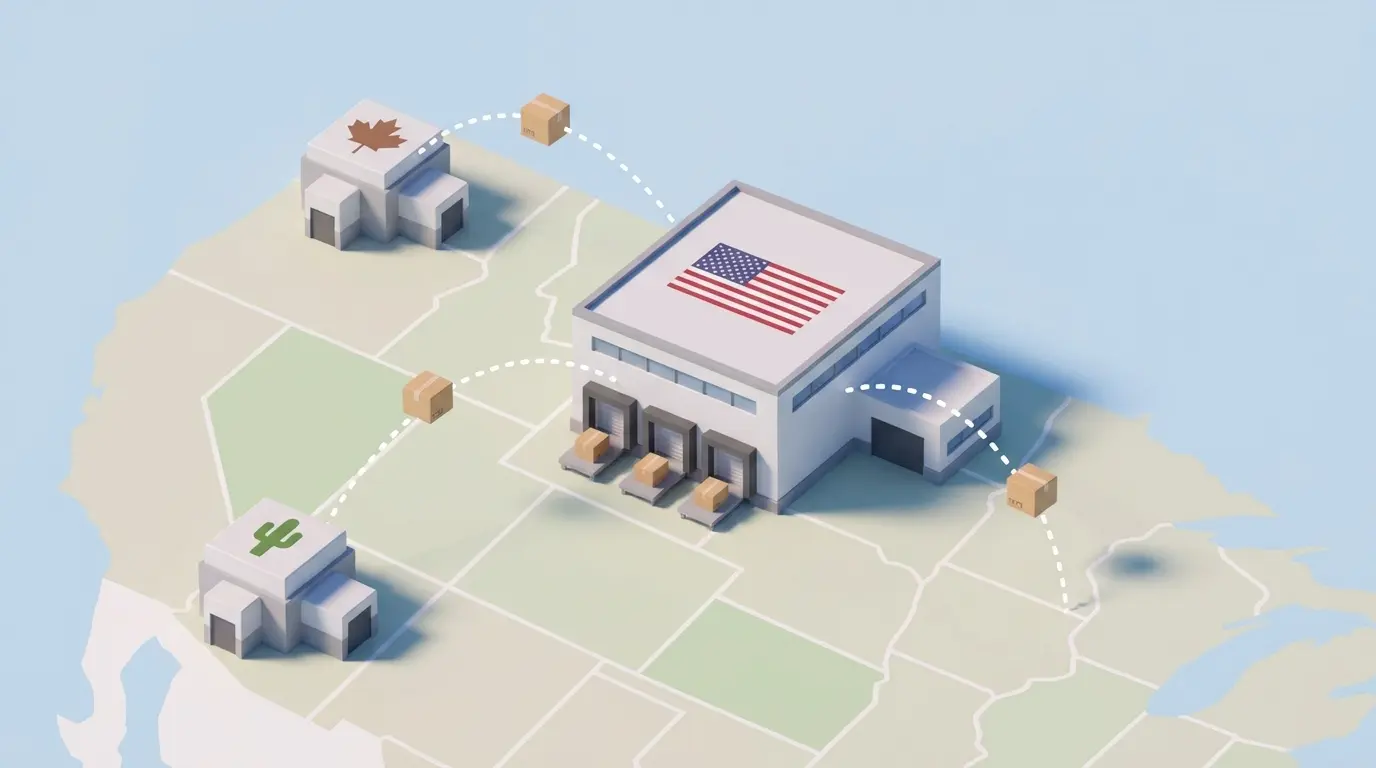
If demand becomes durable, local FBA or a clearer country-specific inventory plan often becomes the cleaner long-term move.
Listing control determines how much maintenance you inherit
Cross-border expansion goes wrong quickly when listing synchronization is treated as a one-time setup. How to sync listings across amazon north america is not just a tool question. It is a governance question.
Tools such as Build International Listings can help propagate content and pricing rules, but they do not remove the need for local review. Units, compliance language, translations, packaging claims, and suppression triggers can differ by marketplace. If your catalog has many parent-child relationships, regulated attributes, or frequent content updates, weak sync logic creates silent errors that are expensive to unwind.
A reliable pattern is to sync structure and core content where possible, then localize the parts that affect compliance, conversion, or returns.
Compliance risk should be assessed SKU by SKU
Experienced sellers already know that "follow local rules" is not useful advice. In practice, the risk is usually product-specific, not expansion-specific.
For some SKUs, Canada is relatively simple but bilingual labeling can become a constraint. For others, Mexico introduces tax and import considerations that make remote fulfillment less attractive than it looked at first. For still others, the issue is hazmat classification, topical claims, electronics standards, or category restrictions.
That is why amazon fba cross border shipping compliance 2026 should be treated as an ongoing operating requirement, not a box to check during launch week. Program eligibility, documentation expectations, and local requirements can change. Sellers need a review cadence, especially in regulated categories.

Team access and process discipline are not optional
The more marketplaces you connect, the more dangerous informal team habits become. One person changing content in the US, another adjusting prices in Canada, and a third fixing suppressed listings in Mexico can create avoidable drift.
This is where secure team collaboration matters more than many sellers expect. A unified account makes centralized access possible, but that only helps if permissions, role ownership, and change tracking are clear. If agencies, virtual assistants, finance staff, and catalog managers all touch the same account structure, poor access hygiene becomes a real account-health risk.
When each setup starts to make sense
The right choice depends less on ambition and more on how demand, inventory, and compliance interact in your business.
If your US business is mature, your catalog is standardized, and you want to test Canadian or Mexican demand without relocating inventory immediately, a unified account plus remote fulfillment can make sense. This works best when your products are straightforward, margins are not extremely tight, and delivery speed outside the US does not determine conversion.
If the product is already proven in Canada, or if faster shipping is central to conversion, local inventory deserves a serious look earlier than many sellers assume. Sellers often stay in test mode too long. Once remote fulfillment carries meaningful volume, slower delivery, return friction, and cross-border cost structure can become a drag on growth.
If your catalog has compliance sensitivity, such as ingestibles, topical products, electronics, or products with strict language requirements, it is worth treating each marketplace as a separate launch despite the unified account. In those cases, administrative simplicity should not tempt you into operational shortcuts.
If your business is FBM-heavy and ships from one warehouse, the decision turns on service levels and landed economics. Some sellers can manage shared inventory logic effectively. Others find that cross-border transit variability creates customer-service strain they did not price in.
The more your offer depends on delivery promise and low defect rates, the less you should treat account unification as fulfillment simplification.
Where sellers get burned

The biggest mistake is assuming linked marketplaces behave like mirrored storefronts. They do not. A listing that is healthy in the US can still have attribute conflicts, compliance gaps, or translation issues in Canada or Mexico.
Another common failure mode is misunderstanding fees. Sellers ask about amazon north america unified account fees 2026 expecting a major structural cost difference, then miss the real P and L drivers: currency conversion, remote fulfillment economics, storage, return handling, and tax administration. The subscription convenience is real, but it is rarely the decisive financial factor.
A third pitfall is using remote fulfillment as a permanent answer instead of a transitional one. Amazon remote fulfillment with fba mexico taxes and import-related considerations are the kind of details that often surface only after volume grows. What worked at low volume as a demand test may not remain the cleanest structure once accounting, customer experience, and margin scrutiny catch up.
Another anti-pattern is trying to expand while account-health issues are still unresolved. Sellers dealing with performance notifications, identity verification problems, or prior enforcement actions sometimes end up searching for fixing amazon account deactivation cross border linking after the fact. That is the wrong sequence. If your base account is unstable, expansion adds complexity at the worst possible time.
There is also a softer but very common operational problem: pricing without a base-currency guardrail. When exchange rates move, sellers either become uncompetitive or unprofitable. If your repricing or international pricing rules are not tied to margin protection, your catalog can drift into bad economics quietly.
One more area to watch is reimbursement and reconciliation. Cross-border inventory and orders create more opportunities for missed reimbursements, ambiguous return events, and marketplace-by-marketplace discrepancies. If you use refund software for cross border inventory no commission arrangements, the tool still needs to map correctly to the way your inventory is actually fulfilled and tracked. Software cannot reconcile what your SKU architecture obscures.
Two short decision walkthroughs
A US FBA brand testing Canada and Mexico
Hypothetical case: a private label seller has a stable US FBA business with a focused catalog, healthy margins, and no major compliance complexity. Canada and Mexico show some organic demand signals, but there is no local inventory yet.
In this case, a unified account is usually the easy part and likely a sensible move. The tougher decision is whether to start with remote fulfillment or local stock. If demand is still uncertain, remote fulfillment may be a rational first layer because it limits commitment. The seller should treat this as a validation phase with explicit review points: conversion rate, landed margin, return rate, and support burden by marketplace.
If those metrics hold, the next decision is not simply to keep doing what worked in testing. It is whether the product now deserves local FBA placement, especially in Canada. That shift often improves shipping speed and customer experience enough to justify the extra operational complexity.
A seller with a broad catalog and messy listing governance
Hypothetical case: a reseller or distributor has a large catalog, frequent contribution conflicts, multiple team members editing listings, and thin margins. The US operation works, but catalog hygiene is inconsistent.
This type of business should slow down before expanding. A unified account will not solve poor listing governance. It can magnify it. If catalog sync rules are weak, international duplication creates more suppression issues, stranded offers, and pricing maintenance problems.
For this seller, the better path may be selective expansion by SKU rather than a broad rollout. Start with products that have stable content, low compliance risk, and enough margin to absorb exchange movement. Tighten permissions, define who owns international listing changes, and set pricing floors before adding more countries. Expansion can still make sense, but only after the operating discipline is there.
What tends to work better over time
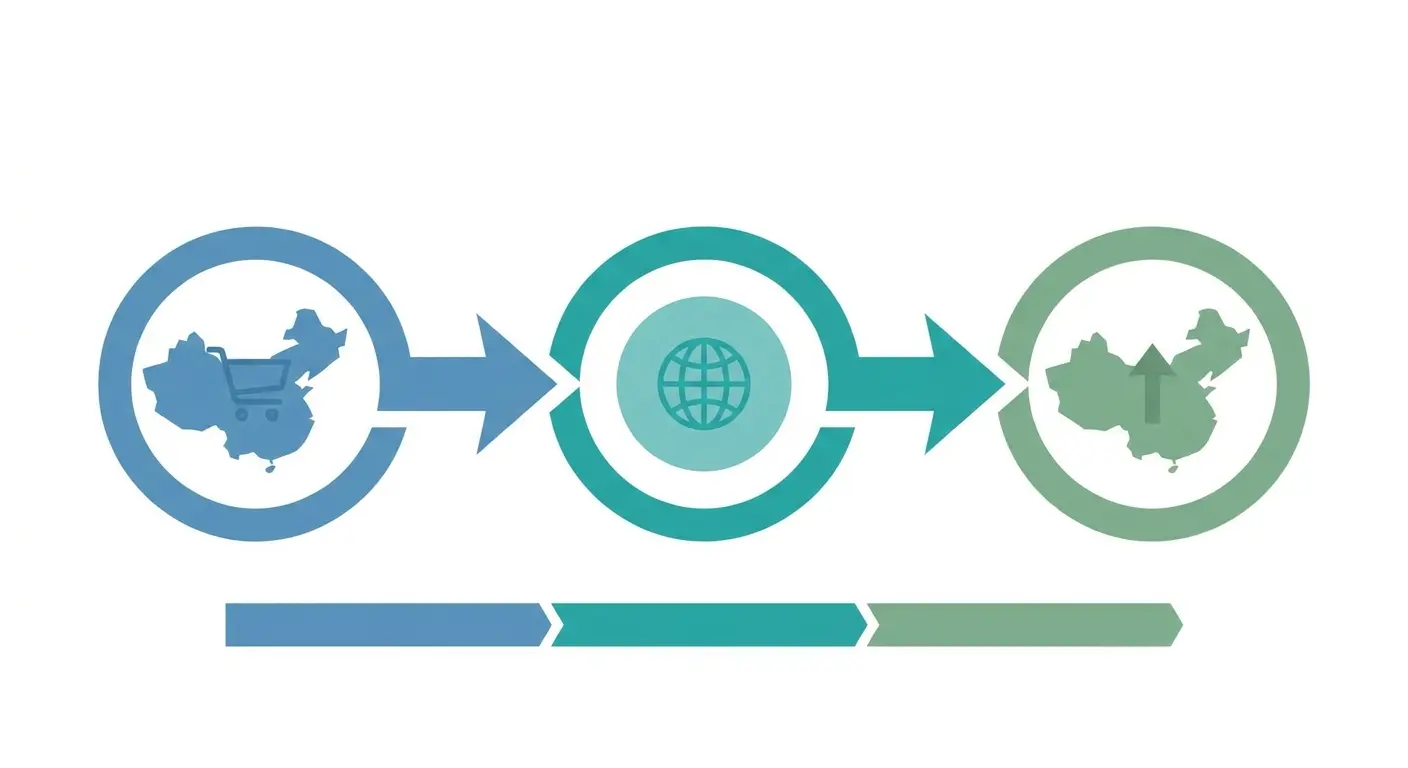
The most reliable cross-border setups usually share a few traits.
They separate market entry from long-term fulfillment design. Sellers use the unified account to gain operational visibility and market access, but they do not confuse that with the final inventory model.
They keep SKU architecture intentional. Whether inventory is shared or marketplace-specific, naming and mapping should make reconciliation easier. If you cannot quickly tell how a unit was meant to be fulfilled, finance and operations will eventually disagree about what happened.
They localize where it matters. Core content can be syndicated, but regulatory language, measurements, translations, and packaging expectations need review by marketplace.
They price from margin floors, not from optimism. That matters even more when managing currency exchange rates amazon fba payouts introduce across countries and settlement methods.
They treat permissions as part of account health. Secure team collaboration is not just an IT concern. It reduces accidental edits, unauthorized changes, and confusion during appeals or investigations.
What to keep in front of you as you decide
A unified account is usually worth having if you are serious about selling across the US, Canada, and Mexico. The mistake is thinking the account itself is the strategy.
What matters more is whether your inventory model, margin guardrails, listing governance, and compliance review are strong enough to support linked marketplaces. Sellers who do well with cross-border expansion tend to be disciplined in the best way. They define what is shared, what is local, and what gets reviewed on a schedule.
Before you expand, keep these points in view:
The unified account simplifies access, not marketplace complexity.
Remote fulfillment and a unified account solve different problems.
Margin protection needs to account for fees, returns, and exchange movement.
Listing sync should standardize structure, not erase local requirements.
Compliance review should be SKU-specific, especially in sensitive categories.
Do not link broader operations to a shaky account-health situation.
Secure team collaboration and permissions become more important as marketplaces multiply.
Use demand testing to inform inventory placement, not to postpone decisions indefinitely.
Reconciliation and refund tooling only work well if SKU and fulfillment logic are clear.
Expansion usually works best when done selectively first, then standardized after the process proves itself.