Amazon Ads Performance: Costs, TACoS, and Profit

Olivia Reyes
The Hard Truth About Running Ads on Amazon: What’s Actually Slowing Sellers Down
Are your Amazon ads underperforming because bids are too low, or because the account is solving the wrong problem?
That distinction matters more now than many sellers want to admit. A lot of teams focus on tactical fixes like lowering bids, adding negatives, or launching one more campaign type. But the real drag on performance is often structural: mismatched goals, weak unit economics, poor query segmentation, inventory friction, or ad spend being judged with the wrong profitability lens. If you are serious about overcoming rising amazon advertising costs 2026, the work is usually less about hacks and more about making cleaner decisions.
Why ad issues get misdiagnosed so often
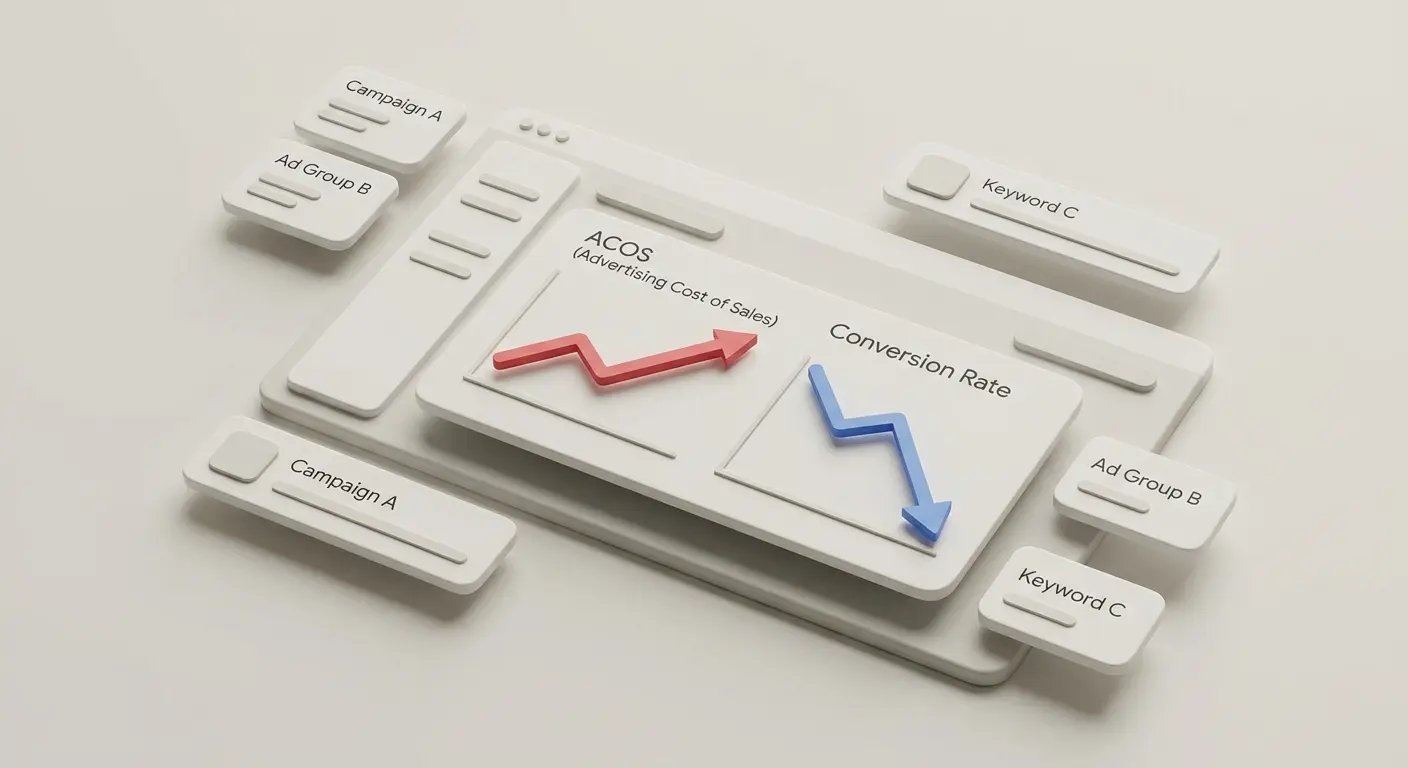
Most Amazon advertising problems look similar on the surface. ACOS rises, TACoS drifts up, spend stalls, organic rank softens, and conversion rates become less predictable. Sellers often respond by changing bids first because bids are visible and easy to change. In practice, bids are often the last layer of the problem, not the first.
The harder truth is that Amazon PPC operates inside a crowded system. Retail readiness, margin compression, placement inflation, catalog overlap, and changing shopper behavior can all distort what the ad console shows you. If your listing is weak, your CPC issue may partly be a conversion issue. If your hero ASIN is out of stock too often, your ad learning cycle is disrupted before campaign settings can help. If your branded search terms are too aggressively funded, you may be protecting rank or you may simply be paying for traffic you would have won anyway.
This is why experienced sellers need a decision framework, not a checklist.
What deserves attention first when ad performance slips
Not every metric belongs at the top of the stack. Order matters, because fixing the wrong layer wastes time and can make performance less stable.
Start with contribution margin, not dashboard comfort
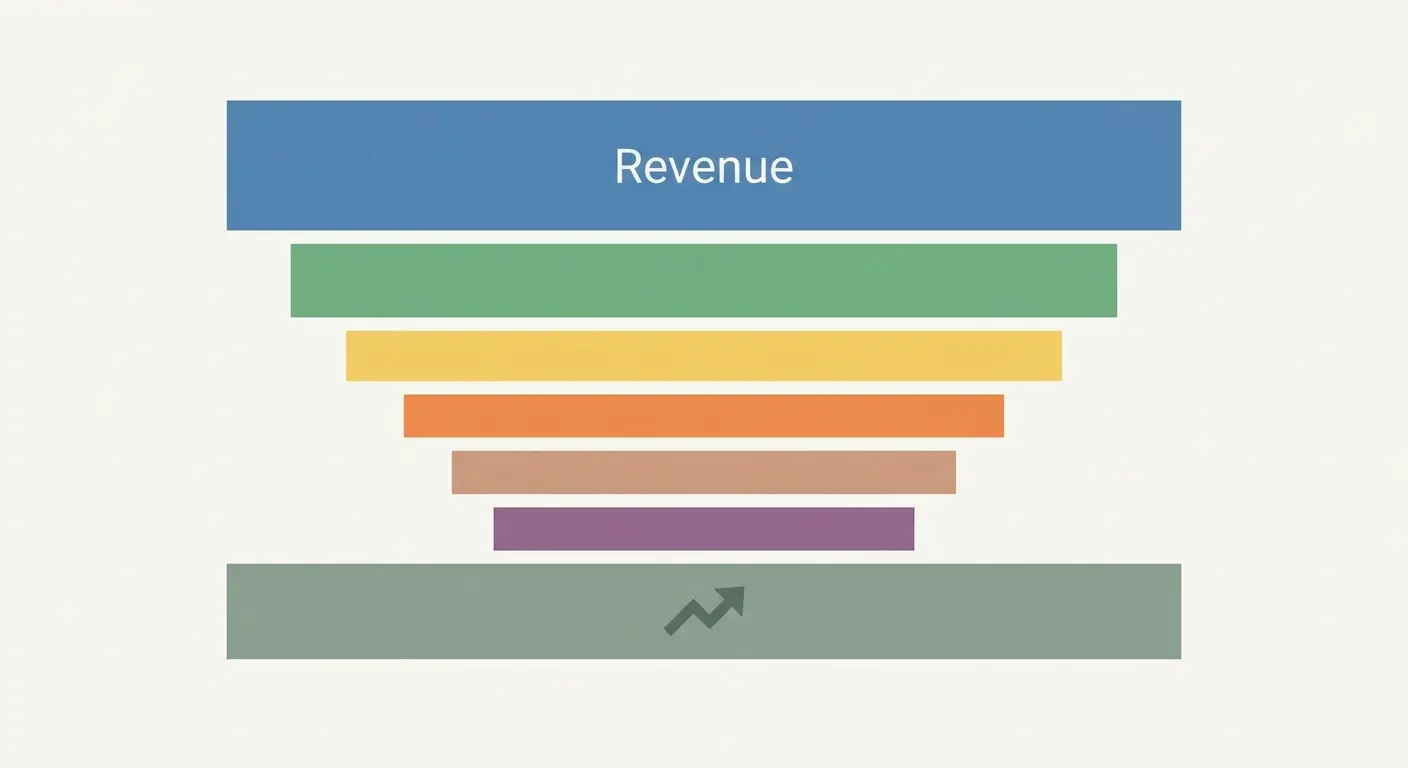
Before asking how to lower acos for amazon sponsored products, ask whether the product can absorb paid traffic at all. A campaign can look efficient inside the ad console while still producing weak net profit after fees, discounts, storage, and returns. On the other side, a campaign can look expensive and still make strategic sense if it supports visibility on a high-repeat product with strong downstream value.
This is where calculating true profit after amazon ppc fees becomes non-negotiable. Sellers who only review ACOS and ROAS tend to overfund low-margin winners and underfund products that can scale profitably with a slightly higher ad cost. True profitability means mapping ad spend against referral fees, fulfillment fees or other shipping cost, coupons, promos, return rate, and any meaningful post-click impact on margin.
If margin is unclear, every bid decision becomes guesswork.
Then check conversion friction before touching bids
If CPC is rising and conversion is falling, many sellers assume competitive pressure is the cause. Sometimes it is. Often it is listing drag. A weak main image, poor review velocity, unclear differentiation, mismatched title, pricing gaps, or thin A+ content can all make a keyword look unprofitable when the traffic itself is fine.
Expectation vs reality:
Expectation: lower bids will fix inefficient traffic.
Reality: lower bids often hide a conversion problem while reducing volume on terms that could work with a better product detail page.
This matters even more when optimizing amazon ads for rufus ai search. Amazon’s shopping experience is becoming more intent-interpreted and context-aware, so listings that answer use case, fit, comparison, and buyer hesitation more clearly may have an easier time converting mixed-intent traffic. That does not mean there is a fixed formula for Rufus. It means your detail page should communicate clearly for shoppers and support relevance, rather than rely on clumsy keyword stuffing.
Watch TACoS trend, but only in context
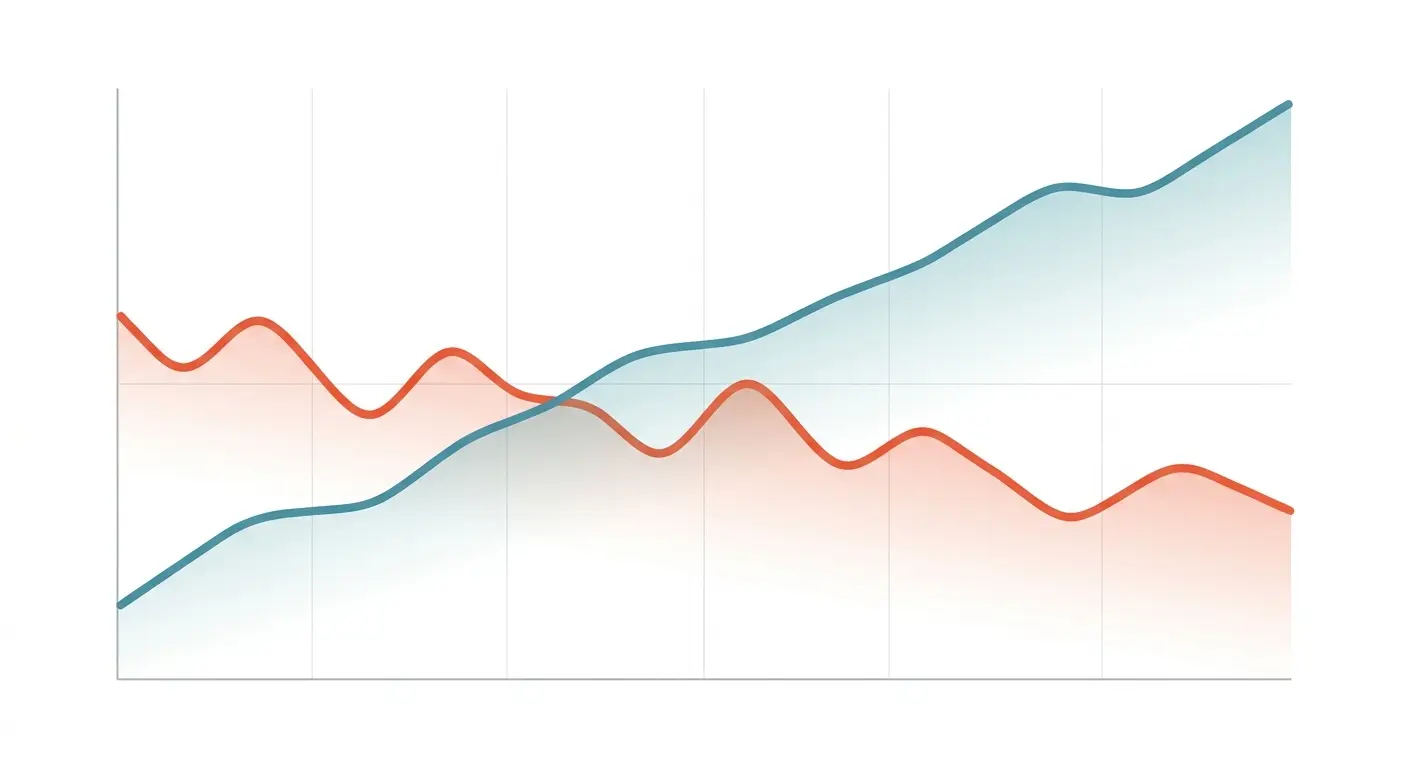
A lot of sellers talk about reducing high tacos on amazon fba as if lower is always better. It is not. High TACoS can mean overspending on weak ads, but it can also reflect a launch phase, an aggressive market share push, a seasonal stocking window, or defensive spend while competitors enter the niche.
The better question is whether TACoS is moving in the same direction as account health. If TACoS rises while organic sales and total contribution improve, the spend may be acceptable. If TACoS rises while organic rank, blended conversion, and repeat purchase stay flat, the spend may be compensating for weak fundamentals.
TACoS is a strategic metric. ACOS is a tactical metric. Mixing them leads to bad decisions.
Query control matters more than campaign count
An account with too many campaigns is not automatically broken. An account where search intent is poorly separated often is. When exact, phrase, broad, auto, ASIN targeting, branded defense, and category conquest all pull from overlapping query pools, attribution gets noisy and budgets compete with each other.
This is where sellers run into amazon ppc cannibalizing organic sales fix discussions. Cannibalization is real, but it is often misunderstood. Not every branded click is waste. Not every paid sale on an organic keyword is cannibalization. The real question is incremental value. Are ads helping defend against conquesting and preserve conversion rate, or are they paying for traffic your listing would likely have captured anyway?
The answer usually appears when you compare branded and non-branded performance separately, watch rank movement during spend changes, and review how much budget is allocated to terms where you already dominate organically.
What to consider in common real-world situations
If spend is not flowing, the issue may not be bidding alone
When sellers ask why are my amazon ppc campaigns not spending, the obvious answer is low bids. Sometimes that is true. But non-spending campaigns often come from a narrower set of practical causes: low search volume, budget trapped in lower-priority campaigns, products not winning the Buy Box consistently, suppressed or weak listings, overly restrictive targeting, irrelevant match type buildout, or campaign duplication that fragments delivery.
A useful pattern is to separate eligible but ignored from not eligible enough. If impressions are near zero, check indexing, Buy Box consistency, inventory, category relevance, and whether the target itself has meaningful traffic. If impressions exist but clicks do not, the issue is more likely bid competitiveness, placement weakness, poor creative, or a listing that does not earn the click.
For Sponsored Brands, weak spend can also come from creative mismatch. A headline that says little, a Store page that does not align with the query, or a video that fails to communicate quickly can all depress click-through rate, which may reduce delivery over time.
If ACOS looks bad, isolate the expensive layer before cutting budget
There is no single answer to how to lower acos for amazon sponsored products because ACOS inflation comes from different sources. Higher CPC requires one response. Lower conversion requires another. Broader query leakage requires a different one again.
If rising ACOS is driven by CPC inflation on generic terms, long-tail segmentation and tighter match-type isolation usually matter more than blanket bid reductions. If ACOS is driven by low conversion on relevant traffic, listing optimization and pricing strategy deserve attention before keyword cuts. If ACOS is driven by budget bleeding into exploratory search terms, negative targeting and search term harvesting become the first move.
Experienced sellers usually do better when they classify spend into three buckets:
rank defense
profitable harvest
exploration
The mistake is forcing one ACOS target across all three.
If branded ads look efficient, verify whether they are actually incremental
Branded campaigns often post strong conversion numbers and can make an account look healthier than it is. That is why branded efficiency can be misleading. If your branded spend keeps increasing while non-branded discovery shrinks, the account may be protecting demand rather than creating it.
This is often the background behind amazon ppc cannibalizing organic sales fix. The fix is rarely turning off branded ads completely. A better approach is to decide what branded traffic is for. Defense against competitor Sponsored Brands is one valid use case. New-to-brand acquisition can be another, depending on ad type and brand setup. Store routing and product line merchandising can also justify branded spend. But if branded exact is simply absorbing budget because it reports a low ACOS, it can starve discovery campaigns that are necessary for future growth.
If costs keep rising, creative and retail readiness become part of the ad strategy
The phrase overcoming rising amazon advertising costs 2026 sounds like a media buying problem, but cost inflation on Amazon is also a merchandising problem. When competition increases, better listings and sharper merchandising help you convert traffic other sellers waste.
That is why ad efficiency often improves after changes that are not inside the ad console: stronger image stack, better comparison framing, more precise bullets, cleaner A+ content, tighter pricing architecture, more reliable in-stock rates, and review quality improvements. Rising CPCs tend to punish average product detail pages first.
If you are using video, treat it like search real estate, not brand theater

A strong amazon sponsored brand video ad strategy starts with one practical assumption: many shoppers will not have sound on, and many will not watch for long. The first seconds should communicate product, use case, and differentiator visually.
Strong Sponsored Brand Video often works because it pre-qualifies the click. It filters curiosity traffic and attracts higher-intent shoppers who understand the offer quickly. Weak video can do the opposite. It may generate curiosity clicks that convert worse than a standard Sponsored Products placement.
For mature accounts, video usually works best when assigned a focused role. One video can target a high-intent problem keyword. Another can support a comparison-driven use case. Another can defend a category term where static creatives blend in too easily. The anti-pattern is expecting one brand video to handle every stage of shopper intent.
Where experienced sellers still lose money
Chasing platform features before fixing account structure
New placements, audience options, and AI-adjacent tools can be useful. But if search term routing is messy and SKU goals are unclear, more features create more noise. Sellers often mistake optional complexity for sophistication.
A reliable pattern is to add complexity only after the base account answers simple questions clearly: which ASINs deserve scale, which terms are defended, which terms are exploratory, and where margin can support growth.
Treating every SKU like it deserves the same advertising model
Some SKUs can win broad search. Some only work on exact and product targeting. Some should be advertised mainly for catalog halo or basket-building reasons. Some should barely be advertised at all until pricing, reviews, or content improves.
Uniform strategy across uneven SKUs usually leads to hidden budget waste.
Ignoring retail operations while diagnosing ad inefficiency
Inventory interruptions, delayed check-ins, coupon changes, and pricing instability all distort PPC performance. Sellers often read the ad console as if traffic quality changed overnight, when the real issue was a retail event that reduced conversion.
When reviewing a bad week, check operations before rewriting the ad strategy.
Using blended metrics to make term-level decisions
Blended ACOS across a campaign can hide the fact that one query family is carrying the result while another is draining margin. The cure is not endless segmentation for its own sake. The cure is enough segmentation to separate meaningfully different intent.
A useful rule of thumb is to split when the optimization action would be different.
Overreacting to short windows
Amazon traffic quality moves with seasonality, competition, and retail events. Cutting bids hard after a few weak days can reset campaigns that were simply passing through a noisy period. This is especially costly on proven exact terms where historical conversion remains healthy.
Patience is not passivity. It means using enough data to judge whether performance decay is real.
Two short decision walkthroughs
Walkthrough one: high TACoS on a mature hero ASIN

Hypothetical case: a seller sees TACoS rise on a top ASIN over several weeks and assumes the answer is to cut generic keyword bids.
A better review starts with traffic mix. Branded spend has grown faster than non-branded spend. Organic rank on core generic terms is still stable. Contribution margin is being squeezed mostly by heavier branded defense and a coupon that lowered net margin. In this case, reducing high tacos on amazon fba is less about cutting all spend and more about tightening branded budget caps, separating defensive branded campaigns from discovery, and recalculating targets based on post-coupon margin. Generic terms may not be the main problem at all.
Walkthrough two: campaigns are barely spending after a relaunch
Hypothetical case: a seller relaunches campaigns and asks, why are my amazon ppc campaigns not spending, even though bids seem competitive.
The review shows the main ASIN is intermittently losing the Buy Box, indexing is weak on several target terms, and the new campaign build is too concentrated in exact match keywords with modest search volume. The fix is not simply raising bids. It is restoring retail eligibility, broadening controlled discovery through auto and phrase, confirming indexing coverage, and then adjusting bids where impressions appear but click-through rate is weak. In this case, spend failure started with eligibility and reach, not aggressiveness.
The practical rules that hold up
If you want Amazon ads to become more reliable instead of more exhausting, the useful rules are fairly simple:
Profit first, dashboard metrics second. Start by calculating true profit after amazon ppc fees.
Do not ask how to lower acos for amazon sponsored products until you know whether the problem is CPC, conversion, or query leakage.
Use TACoS to judge strategy, not to panic over short-term spend.
Separate branded, non-branded, defensive, and exploratory traffic whenever the optimization action differs.
Treat amazon ppc cannibalizing organic sales fix as an incrementality question, not a slogan.
When campaigns are not spending, check eligibility, indexing, Buy Box, and search volume before assuming bids are too low.
A real amazon sponsored brand video ad strategy is built around pre-qualifying clicks, not making the brand look polished.
Optimizing amazon ads for rufus ai search should mean clearer shopper communication and stronger relevance, not awkward keyword stuffing.
The path to overcoming rising amazon advertising costs 2026 is usually better decision quality, better listings, and tighter traffic segmentation, not more campaign volume.
Some products should be scaled, some should be defended, and some should wait until retail fundamentals improve.
The hard truth is that Amazon ads usually slow down when the account loses clarity. Sellers who regain it tend to spend less energy forcing results and more time directing spend where it can actually do useful work.