Amazon Backorders Explained for Sellers: A Comprehensive Guide

Sarah Johnson

Amazon Backorders Explained: What Sellers Actually Need to Know
If your listing says “In Stock,” but you know your inbound shipment will not arrive for 10 days, are you selling inventory you do not have?
That tension sits at the heart of amazon backorders. Most sellers encounter them at some point, but fewer understand how they show up operationally across FBA and FBM, how Amazon frames availability to customers, and how payment timing typically works. This guide breaks down what backorders usually mean in practice and answers two common questions: does amazon charge for backorders and when does amazon charge for backorders.
What “Backorder” Really Means on Amazon
At its simplest, a backorder is an order placed for inventory that is not currently available for immediate shipment.
On Amazon, the concept is less of a single seller-controlled feature and more of a situation where customers can still place an order while the delivery estimate reflects a delay. In other words, the offer remains purchasable, but the promise shifts.
A backorder-like scenario on Amazon generally includes:
The buyer can place an order.
The product is not ready to ship immediately.
Fulfillment happens once inventory becomes available.
The buyer sees a delayed delivery estimate at checkout or on the product page.
This differs from being fully “Currently unavailable” where the customer cannot purchase.
Scope: FBA vs FBM

Backorders behave differently depending on fulfillment method.
FBA (Fulfilled by Amazon)If your FBA available inventory reaches zero, Amazon commonly shows “Currently unavailable” and stops taking orders. Sellers generally cannot turn on a universal “accept backorders” setting for standard FBA offers. Still, there are edge cases where customers may see longer delivery dates while Amazon is accounting for inventory states such as inbound, reserved, or transfers, or when availability signals lag during fast sell-through.
FBM (Fulfilled by Merchant)With FBM, sellers control handling time and quantity. If you keep quantity active while relying on replenishment, you can create a backorder-like situation. The risk is straightforward: if you ship late relative to the ship-by date Amazon sets from your handling time, metrics and account health can be impacted.
Seller insight: On Amazon, a backorder is usually the gap between the customer-facing delivery promise and your real inventory readiness.
How Amazon Backorders Work in Practice
Step 1: The Listing Remains Purchasable
For a backorder-like order to exist, the offer must still be buyable. This can happen because:
You keep quantity active on FBM while replenishment is delayed.
Amazon presents longer delivery estimates based on inventory signals and logistics.
System timing or availability lag occurs during rapid sell-through.
The critical factor is what the customer sees and accepts at checkout, which is the delivery estimate.
Step 2: Amazon Sets the Delivery Promise
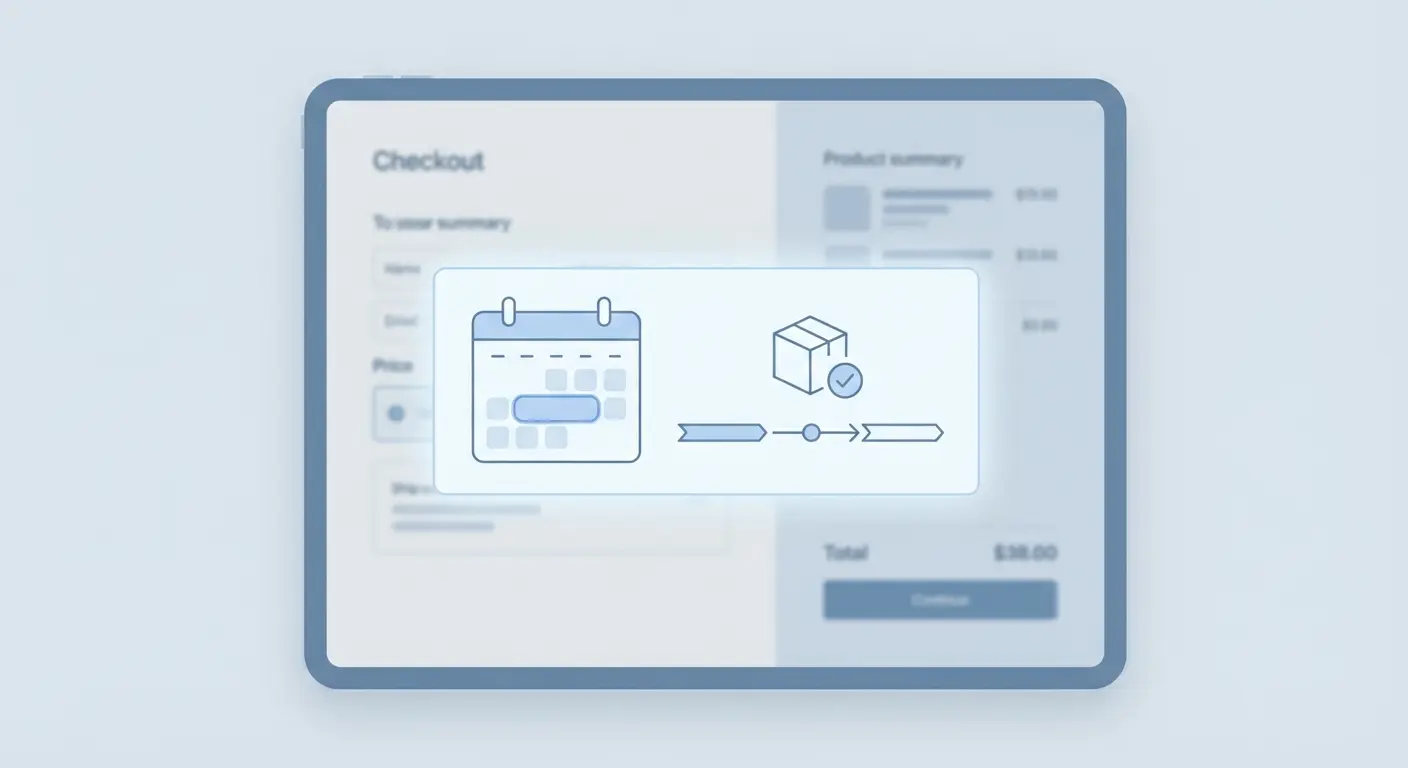
Amazon calculates delivery dates dynamically using signals that can include:
Handling time (FBM)
Transit time
Inventory status and availability
Fulfillment channel
Operational performance signals
If the order is placed with a delayed delivery estimate, the order is still valid. The operational risk begins if actual fulfillment misses the promised ship-by or delivery expectations Amazon communicated.
Step 3: The Order Waits on Inventory or Must Be Shipped On Time
For FBA:
If Amazon continues to accept orders under extended promises, fulfillment happens when Amazon has receivable and available inventory to allocate to those orders.
For FBM:
You must ship within your stated handling time as reflected in Amazon’s ship-by date.
If you cannot ship on time, you typically have to cancel, which can affect pre-fulfillment cancellation rate and customer experience.
Backorders themselves are not inherently a policy violation. Missing ship-by dates, excessive cancellations, or misleading availability can create real compliance and performance issues.
Does Amazon Charge for Backorders?
The practical answer to does amazon charge for backorders is that Amazon does not publish or apply a standard, standalone “backorder fee” simply because an order had delayed availability. Charges generally come from the normal fee structure tied to fulfillment and completed orders.
Indirect costs can still be significant.
1. Referral Fees Still Apply
Referral fees apply based on the category and are generally assessed on completed sales. A delayed-availability situation does not create a special referral-fee surcharge by itself.
2. FBA Fees Apply When Fulfilled; Storage Depends on Stored Inventory
For FBA:
Fulfillment fees are charged when the unit ships.
Storage fees apply to inventory that is physically stored in Amazon fulfillment centers.
If units have not been received into Amazon’s fulfillment network, you typically are not paying monthly storage fees on those not-yet-received units. Once inventory is received and stored, standard storage fees apply.
3. The Real Cost Is Often Performance and Conversion
Even without a special fee, mismanaged delays can create financial impact through:
Late shipment rate (FBM)
Pre-fulfillment cancellations
Buy Box suppression or reduced competitiveness
Lower conversion due to longer delivery promises
Higher return/refund pressure and negative feedback risk
When Does Amazon Charge for Backorders?
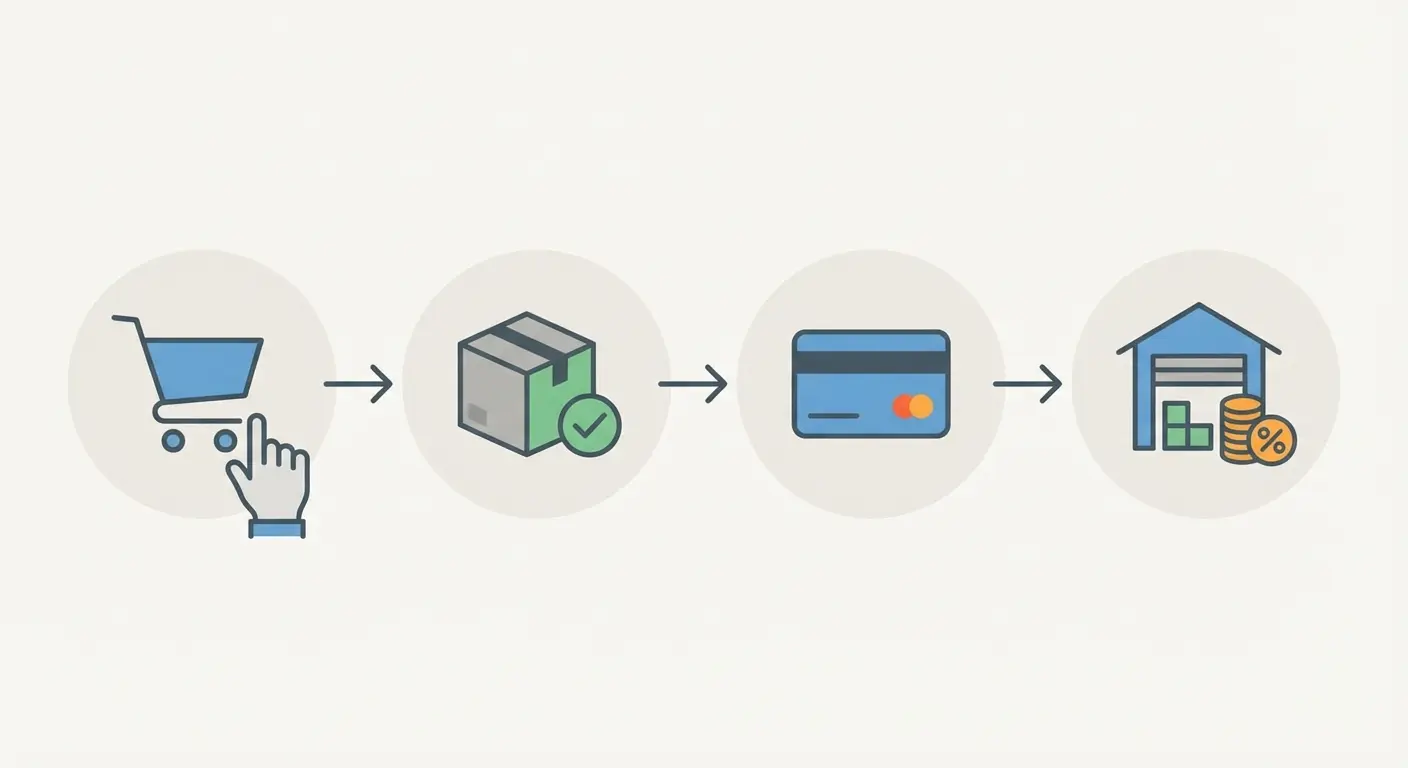
A cleaner way to interpret when does amazon charge for backorders is to focus on when Amazon typically charges the buyer and when seller fees are assessed, since “backorder” is not usually a separate billing event.
For FBM Sellers
For most physical products, Amazon typically charges the buyer when the order ships (after shipment confirmation), not at the moment the order is placed.
That pattern means:
The buyer places the order.
You confirm shipment.
Amazon charges the buyer.
Referral fees are assessed on the completed sale.
If you cancel before shipment, the buyer is generally not charged, but cancellation metrics can be impacted.
Note: Amazon has exceptions in certain contexts, such as some digital goods or specific programs. For standard physical-product FBM, charge-at-shipment is the common model.
For FBA Sellers
For FBA:
The buyer is typically charged when Amazon ships the item.
FBA fulfillment fees are charged upon shipment.
Referral fees apply as part of the completed transaction.
If delays lead to missed promised delivery windows, the downstream impact may include higher refund rates, increased negative feedback, and customer service costs. The exact outcomes depend on the situation and customer actions.
Key clarification: There is generally no separate billing moment where Amazon charges you because an order was effectively backordered. Charges are tied to shipping, storage, and completed sales activity.
Three Real-World Scenarios

Case 1: FBM With Extended Handling Time (Hypothetical)
A seller runs FBM with a 10-day handling time due to replenishment lead time.
They keep 50 units available for sale while expecting stock in 7 days. Inventory arrives on day 8. Orders ship within the 10-day window.
Result:
Shipments are on time relative to the handling time set.
Referral fees apply when orders ship.
This functions like a controlled backorder, as long as customer promises are met.
Case 2: FBA Inbound Delay
An FBA seller sells out during a peak period. A shipment is inbound but delayed in receiving.
Depending on how Amazon displays availability, the listing may become unavailable, or Amazon may show extended delivery estimates for some customers in some situations. If orders are accepted under extended estimates, Amazon fulfills once inventory is available.
If promised dates are met:
Standard FBA and referral fees apply.
No special backorder charge applies.
If promised dates are missed:
Customer dissatisfaction risk rises.
Refunds and negative feedback can increase, even if the delay was upstream.
Case 3: Overcommitted FBM Seller
A seller accepts 200 orders assuming supplier delivery in 5 days, but the supplier delays by 14 days. Handling time was set to 3 days.
Result:
Late shipment rate can spike if orders are shipped late.
Cancellations can rise if the seller cannot ship.
Account health risk increases.
No labeled “backorder fee” appears, but the commercial and operational damage can be substantial.
Common Misunderstandings About Amazon Backorders
“Backorders Are an Official Toggle Like Other Platforms”
For most sellers and listings, Amazon does not provide a universal backorder switch comparable to other ecommerce platforms. Availability and delivery promises are largely system-driven, or they are a consequence of how you set quantity and handling time.
“Amazon Charges Extra for Backorders”
There is typically no explicit backorder fee. Costs arise from normal referral, fulfillment, and storage fees, plus performance, conversion, and customer-experience fallout if delays are mishandled.
“Customers Are Charged Immediately”
For most physical products, customers are typically charged at shipment, not at order placement. That matters for cash flow and for interpreting what “held” orders mean operationally.
“Backorders Are Always Bad”
In some categories, carefully managed delayed availability can preserve sales momentum. In others, long delivery promises can crush conversion and Buy Box eligibility. The deciding variable is promise accuracy and competitive context.
Where Backorders Break Down: Limits and Edge Cases

1. Prime Expectations and Conversion
Prime-focused shoppers often expect fast delivery. Longer delivery promises can reduce conversion and competitiveness, even if orders remain technically possible.
2. Buy Box Competition
Availability and delivery speed are key competitive factors. If competitors are in stock with faster delivery, they are more likely to win the Buy Box.
3. FBA Inventory Constraints
For FBA sellers, running too lean can create stockouts, while overstocking increases storage exposure. Backorder-like demand does not fix structural replenishment problems.
4. A-to-Z Claims, Feedback, and Trust
If delays exceed what the customer was promised, disputes and claims can increase. Amazon emphasizes buyer experience, and sellers should keep documentation and communication disciplined.
5. Cash Flow Assumptions
If buyers are charged at shipment, then a surge of delayed-availability orders does not necessarily translate into immediate cash inflow.
Practical Decision Framework for Sellers
Before allowing a backorder-like posture, ask:
Is my supplier lead time reliable, including worst-case delays?
Is my handling time set conservatively for FBM?
Can I absorb cancellations without harming account health?
Will longer delivery promises harm conversion in my category?
Is the demand spike temporary or structural?
A useful rule of thumb: only sell ahead of inventory when the inbound timeline is comfortably inside your stated handling time, with buffer for delays.
What to Remember About Amazon Backorders
amazon backorders are best understood as orders accepted under delayed availability and longer delivery promises, not as a universal seller-controlled feature.
There is no dedicated backorder fee. Standard referral and fulfillment fees apply when items ship, and storage fees apply to inventory stored in Amazon fulfillment centers.
For most physical products, customers are typically charged when the item ships, not when the order is placed.
The real cost of mismanaged delays is metrics, cancellations, lost Buy Box share, and reduced conversion.
Controlled delayed availability can work when delivery promises remain accurate and competitive.