Amazon Deactivated vs Suspended Account Guide

Olivia Reyes
Amazon Deactivated Account vs Suspended Account: What Sellers Actually Need to Know
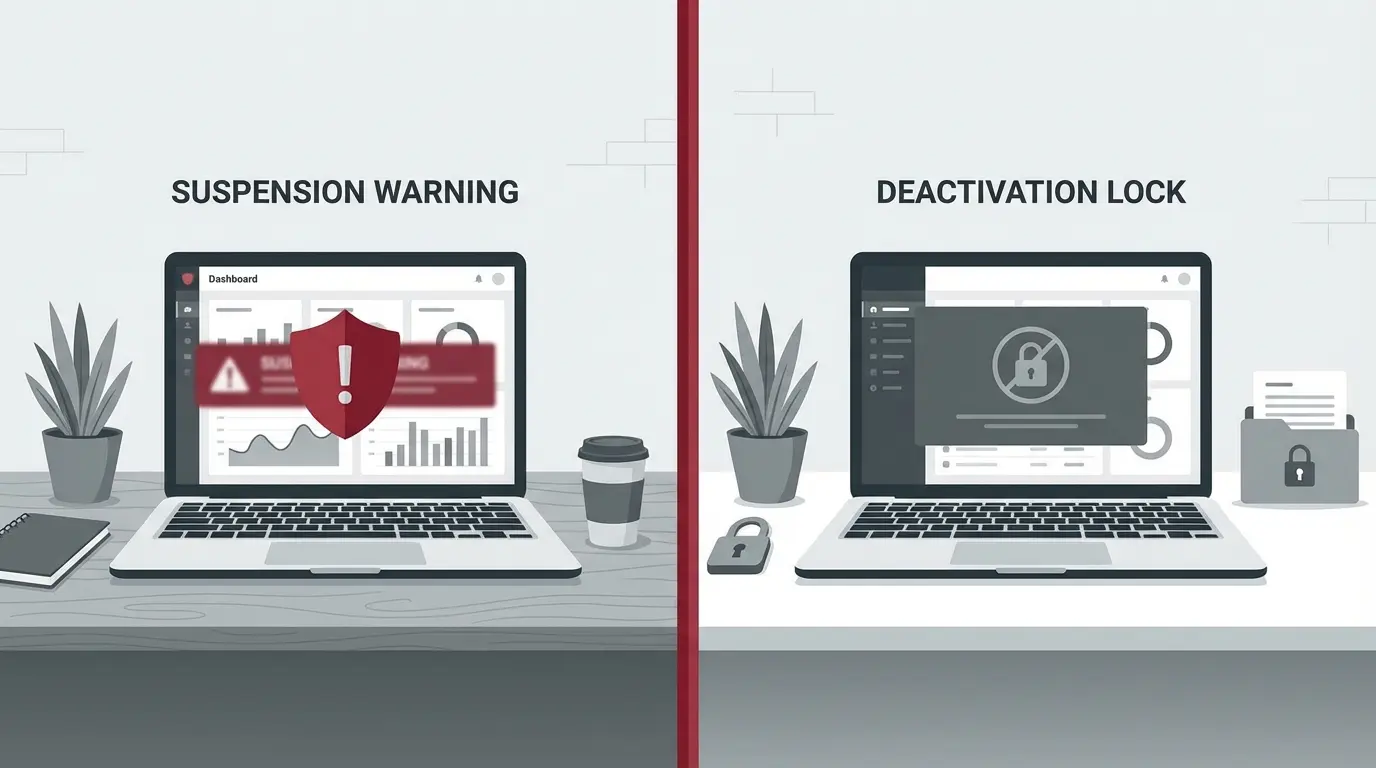
If you log into Seller Central and see your selling privileges are gone, you need to determine whether you are facing an Amazon deactivated account vs suspended account scenario.
That distinction is not cosmetic. It affects what you can access in Seller Central, what Amazon is requesting from you, how tightly your documentation is scrutinized, and what to expect around disbursements while the case is under review. Sellers often lose time by treating a deactivation like a routine suspension, or by assuming a suspension is automatically permanent.
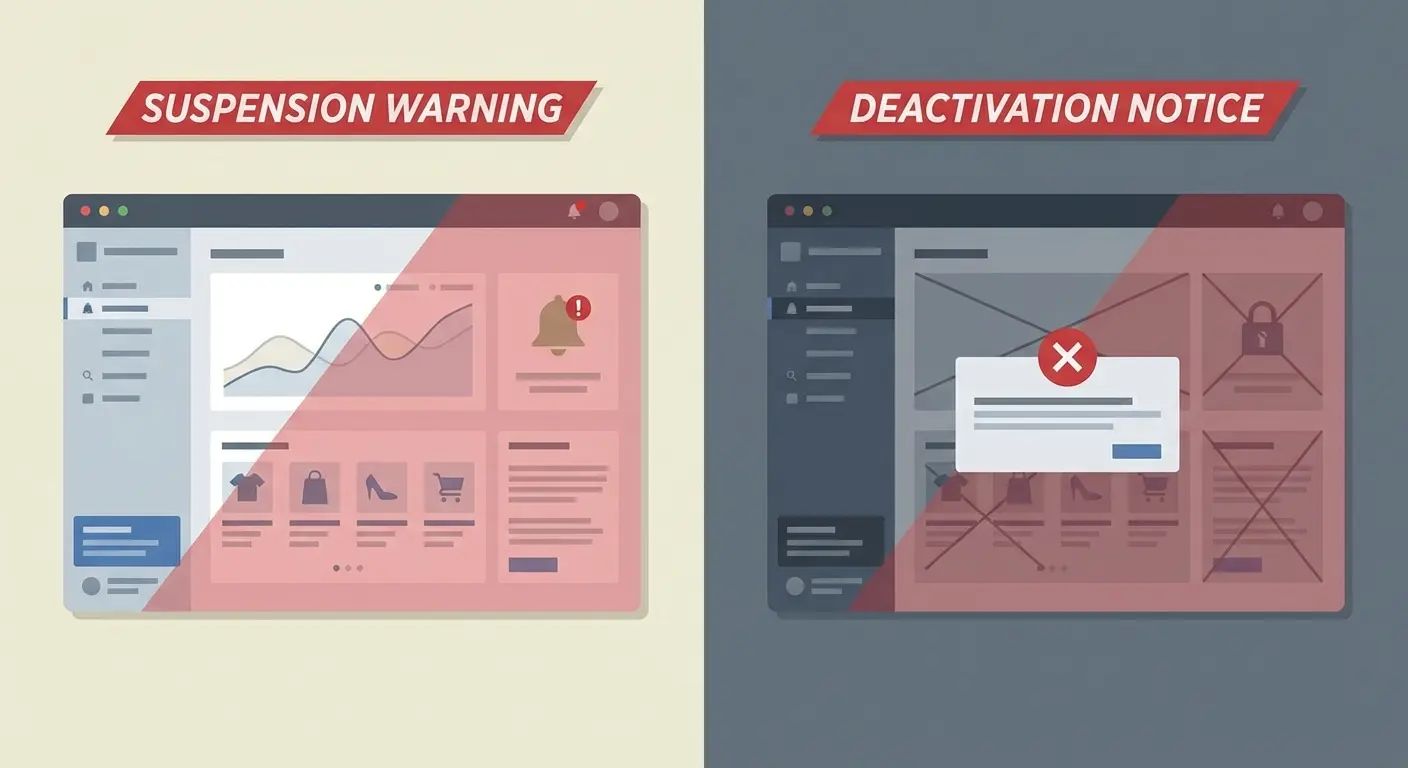
This guide breaks down the practical differences between an Amazon seller account deactivated status and an Amazon suspended seller account, how each typically happens, and how to approach recovery in a way that aligns with Amazon’s appeal process.
When Amazon Says “Suspended” vs “Deactivated,” It Signals the Type of Concern
At a high level:
An Amazon suspended seller account means Amazon has paused selling privileges due to a specific performance or policy issue that Amazon expects you to address through an appeal.
An Amazon seller account deactivated status usually indicates broader eligibility, trust, or compliance concerns that may require additional verification or documentation beyond a standard performance appeal.
In both cases, your listings can go inactive and revenue stops. The difference is the scope of the concern Amazon is trying to resolve.
A suspension is commonly associated with a defined trigger such as:
Order Defect Rate or customer experience metrics
Late shipment rate for FBM
Intellectual property complaints
An Amazon policy violation suspension tied to a listing or selling activity
A deactivation is more often associated with systemic or account-level risk factors such as:
Amazon related accounts deactivation concerns
Amazon identity verification failed outcomes
Repeated or severe policy issues
Serious authenticity or compliance concerns
Suspected circumvention or misuse of account features
In practice, suspension often reads as “fix the problem and show controls.” Deactivation often reads as “demonstrate eligibility and trustworthiness for the marketplace.”
What Changes When Your Account Is Suspended

When you have an Amazon suspended seller account, these outcomes are common:
Selling privileges are removed.
Listings become inactive or suppressed.
You usually retain partial access to Seller Central.
You can often access Performance Notifications and the Amazon seller account health dashboard.
Amazon provides a path to submit an Amazon account suspension appeal.
In many suspensions, funds may be held in reserve or delayed while Amazon evaluates risk, chargebacks, and potential A-to-z claims. The degree of withholding varies by case and is not the same for every suspension.
The recovery flow is typically: notification, appeal submission, review, decision. If the appeal is rejected, you revise and resubmit with substantive changes.
What It Means When Your Amazon Seller Account Is Deactivated

When an Amazon seller account deactivated notice appears, you may see:
A deactivation banner or an Account Health message indicating you cannot sell.
More limited access to parts of Seller Central, depending on the case.
Listings removed from sale across the account, not just a single ASIN.
Amazon selling privileges removed in a way that is not limited to one performance metric.
Disbursements can also be impacted. Sellers often describe the situation as frozen Amazon funds 90 days, but the timeline and outcome depend on the reason for enforcement, the status of orders, refunds, chargebacks, and buyer claims, plus Amazon’s internal review. There is no guarantee of an exact release date, and some cases can take longer.
Deactivation cases commonly involve requests for documentation, especially in:
Amazon identity verification failed situations, such as mismatches across ID, address, banking, or business details
Amazon related accounts deactivation actions, where another linked account is suspended or previously removed
Repeat or severe compliance issues where Amazon wants broader assurances
A deactivation response typically needs more than operational fixes. It must align your written explanation with verifiable records and consistent account data.
Why Sellers Misread Severity
Some sellers assume deactivation and suspension are interchangeable labels. In practice, Amazon’s wording often reflects how broadly it questions the account.
With a suspension, your job is to show you identified the root cause, corrected it, and put prevention controls in place.
With a deactivation, your job is to reestablish trust and eligibility at the account level, often through documentation and consistency across all account attributes.
A generic, short appeal that works for a late-shipment issue often fails when the Amazon account deactivated reason is identity, related accounts, or eligibility concerns.
How the Appeal Path Works in Practice
Both scenarios can require an appeal, but what Amazon expects can differ.
Suspension appeals

Typical steps:
Read the Performance Notification carefully and identify the specific policy or metric.
Review the Amazon seller account health dashboard for contributing indicators and recent trends.
Draft an Amazon Plan of Action (POA) that clearly includes:
Root cause
Corrective actions already taken
Preventive measures and controls
Submit via the appeal link or the channel specified in the notice.
Amazon’s reviewers typically look for specificity, evidence of operational control, and a credible prevention plan. If rejected, resubmit only after making meaningful improvements to the content and the underlying business process.
Deactivation responses
Depending on the case, you may need to:
Use the Account Health workflow to reactivate Amazon seller account access, if that option is presented
Upload identity or business documents
Provide invoices, supply chain documentation, or authorization letters where relevant
Explain potential linkages if Amazon indicates related accounts
When trying to recover deactivated Amazon account access, document quality and consistency often matter more than length. Blurry images, mismatched names or addresses, unsupported claims, or altered documents can lead to denial.
Case Examples Sellers Will Recognize (Hypothetical)
Case 1: Performance-based suspension
An FBM seller experiences late shipments after changing warehouse processes. The account is suspended.
Action taken:
Audited the workflow and identified the bottleneck.
Adjusted handling time and added carrier redundancy.
Submitted a POA with process changes and monitoring controls.
Result: After at least one revision, Amazon restores selling privileges.
This fits a typical suspension pattern: discrete operational issue with a specific fix.
Case 2: Related accounts deactivation
An seller opens a second account for a new entity but reuses overlapping identifiers such as devices, addresses, or financial details. Amazon deactivates the newer account and references Amazon related accounts deactivation.
Action required:
Provide a clear explanation of the relationship between entities.
Provide supporting documentation where requested.
Acknowledge the policy expectations and demonstrate compliant account structure.
In related-accounts cases, unsupported statements like “we are separate businesses” usually do not address the linkage data Amazon is reviewing.
Case 3: Identity verification failed
A seller updates banking details and is asked to re-verify. The submitted documents do not match the information on file, and Amazon identity verification failed is recorded, followed by account deactivation.
To reactivate Amazon seller account access, the seller typically needs to:
Ensure all Seller Central account fields match the documents exactly, including formatting where relevant
Submit clear, unaltered documents that meet the request
Avoid redactions or edits that could appear manipulated, unless the request explicitly allows them
Misunderstandings That Make Enforcement Worse
“I’ll just open a new account.”
Creating a new account to bypass an existing enforcement action can violate Amazon’s policies and can trigger further enforcement across linked accounts. It can also escalate into Amazon related accounts deactivation.
“More words mean a better appeal.”
Long appeals that focus on emotion, blame, or history often perform worse than structured, evidence-based submissions. Amazon expects direct causality and specific controls.
“If I keep submitting, someone will approve it.”
Repeated resubmissions without addressing the stated deficiencies can reduce your chances. Update the appeal only when you have new information, stronger documentation, or materially improved controls.
“Funds are gone forever.”
Disbursements can be delayed during enforcement reviews. Some sellers experience scenarios described as frozen Amazon funds 90 days, but outcomes and timing depend on claims risk, account status, and Amazon’s review. Do not promise yourself a fixed release date. Plan cash flow accordingly.
Where the Account Health Dashboard Fits

The Amazon seller account health dashboard is not just a warning panel. It is a real-time signal of risk classification based on performance and policy signals.
For suspended accounts, it commonly highlights:
Policy compliance issues
Customer complaints and returns
Performance metrics
For deactivated accounts, access may be limited, but earlier patterns can still help explain why Amazon escalated enforcement.
Edge Cases That Blur the Line
Multiple concurrent issues: a cluster of IP complaints and performance failures can lead to more severe enforcement.
Category or ASIN restrictions: some sellers confuse a category restriction with a full account action. The required response is often narrower and listing-specific.
Repeat issues: repeated violations can lead to escalated enforcement even if you were reinstated previously.
How to Choose the Right Next Move
When you are trying to reinstate suspended Amazon account access or recover deactivated Amazon account access, start with correct classification:
Is the issue tied to a specific metric, ASIN, or complaint type?
Is Amazon requesting identity or business documents?
Is most of Seller Central blocked?
Does the notice mention related accounts or verification?
If the problem is narrow, respond narrowly with a precise POA. If the problem is account-level, respond with documentation, consistency, and a trust-focused narrative.
The Real Difference Comes Down to Trust and Eligibility
A suspension usually questions execution. A deactivation often questions eligibility, identity, or overall trust. That is why the Amazon account deactivated reason matters as much as the label itself.
Execution problems are addressed with process changes and monitoring. Eligibility problems are addressed with documentation, transparency, and consistent account data.
What Experienced Sellers Should Remember
Amazon deactivated account vs suspended account is not just wording. It signals how Amazon is framing the risk.
An Amazon suspended seller account usually centers on a specific performance or policy failure that you can address in a structured appeal.
An Amazon seller account deactivated status often involves identity checks, related accounts, or repeated violations and may require deeper documentation.
A well-structured Amazon Plan of Action (POA) is the core tool for many suspensions.
If Amazon selling privileges removed appears alongside verification requests, treat the case as documentation-first and consistency-first.
If you need an Amazon account suspension appeal, keep it specific, evidence-based, and aligned to the notification.
When the goal is to reinstate suspended Amazon account access, do not resubmit without meaningful changes.
When the goal is to recover deactivated Amazon account access, align every document to the Seller Central data before submission.