Amazon FBA Logistics as a Strategic Lever

Olivia Reyes

How Amazon FBA Logistics Management Became a Strategic Lever, Not Just a Cost Center
Are you still treating Amazon FBA logistics management as a back-end operations task instead of a revenue lever?
That mindset was easier to defend when most last-mile execution depended on external carriers. Amazon has since invested heavily in its own logistics capabilities, while still using national and regional carriers where it makes sense. The result is not only faster shipping for many customers. It is also a meaningful shift in how sellers compete on availability, delivery promises, and cost structure.

What changed is not just delivery speed. It is influence. Amazon can shape inventory placement recommendations, delivery promise logic, and replenishment options through the tools and programs sellers choose. If you sell on Amazon today, you are operating inside Amazon’s fulfillment and performance framework whether you use FBA, FBM, Multi-Channel Fulfillment, or Amazon Buy with Prime integration.
Here is what that means in practice:
Logistics decisions can directly influence conversion, Buy Box competitiveness, and ad efficiency.
Margin pressure is increasingly tied to inventory design, not only product cost.
Amazon AWD inventory strategy and related replenishment workflows can shift planning decisions toward system-driven forecasting and transfer timing.
Multi-channel expansion via Amazon MCF setup service or Amazon Buy with Prime integration can extend Amazon fulfillment into off-Amazon orders.
Sellers who treat logistics as a strategic layer, not an operational afterthought, can compound advantages over time.
The shift changes how you outsource Amazon FBA logistics, how you manage FBM risk, and how you structure contingency capacity across your supply chain.
From Retailer to Logistics Platform: Why This Matters Now

Amazon’s expansion into delivery and fulfillment was partly a response to peak-season constraints and customer delivery expectations. Investing in its network helped Amazon protect customer experience and improve delivery predictability in many lanes.
For sellers, that evolution means Amazon is not only a sales channel. It is also a logistics platform with embedded performance incentives and program-specific tradeoffs.
This affects different seller types differently:
High-volume FBA brands feel it through storage limits, inbound constraints, and fee changes that vary by size tier, time of year, and program rules.
Hybrid FBA/FBM operators feel it through metric pressure, especially the need to improve Amazon OTDR metric where that metric applies, and to maintain valid tracking and on-time performance.
DTC brands expanding off-Amazon encounter it through Amazon Buy with Prime integration and Amazon Multi Channel Fulfillment agency models that replicate fast delivery expectations on other storefronts.
The timing factor is fee complexity. As Amazon continues refining fulfillment fees and inbound placement options, the margin impact can compound for sellers who are not actively managing logistics as a system.
This is no longer just about fast shipping. It is about competitive positioning inside Amazon’s fulfillment economy.
What Experienced Sellers Often Miss
Several second-order effects are easy to overlook if you focus only on line-item fees.
Speed is often a conversion baseline, not a durable differentiator. The more defensible advantage comes from in-stock consistency, clean variation structure, and inventory positioned to support reliable delivery promises.
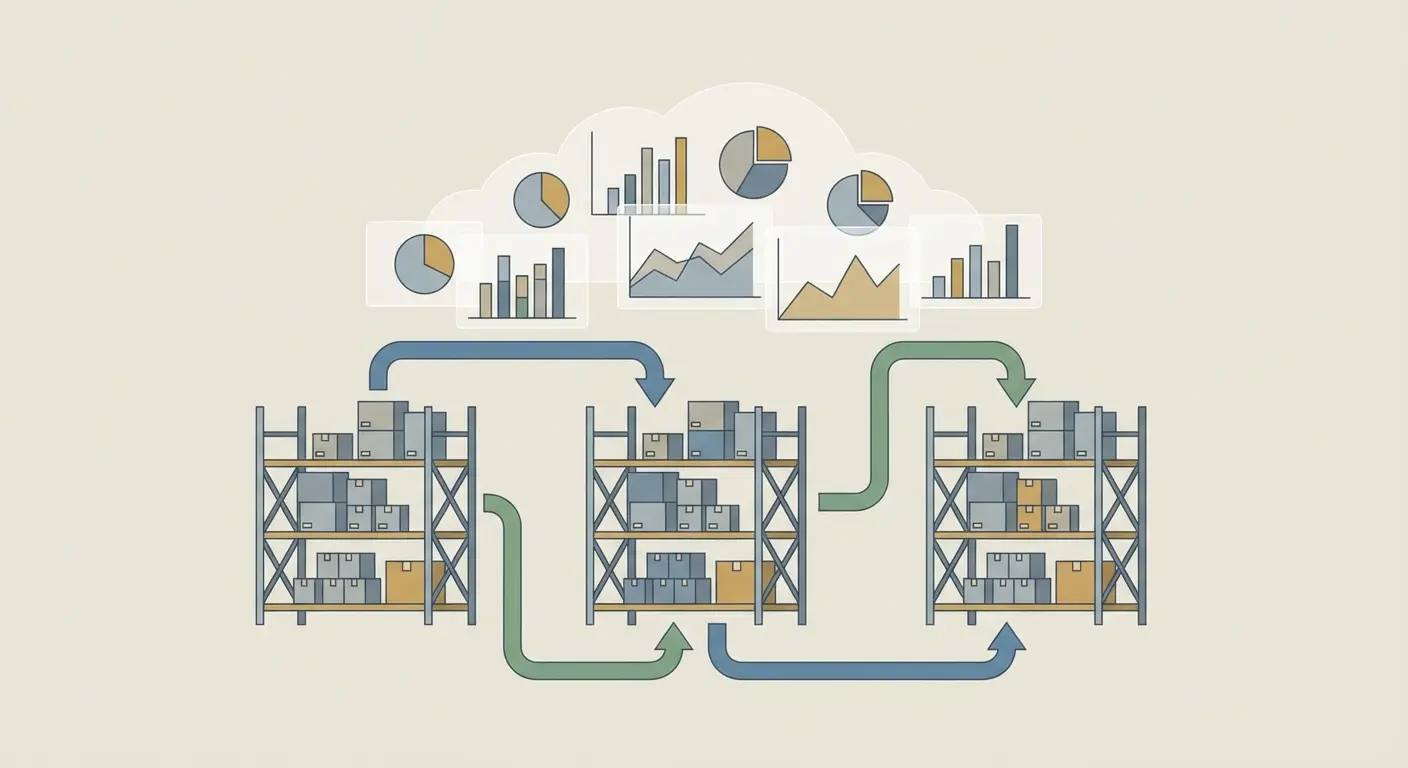
Inventory architecture influences fee exposure. A deliberate Amazon AWD inventory strategy can support replenishment flow for some catalogs, but it also increases dependence on Amazon-managed transfer timing and program rules.
Outsourcing does not remove accountability. When you outsource Amazon FBA logistics or engage an Amazon supply chain automation service, Amazon still evaluates performance and compliance at the account level. Delegation does not equal insulation.
Multi-channel leverage cuts both ways. An Amazon MCF setup service or Amazon Buy with Prime integration can improve customer experience on other channels, but it can also concentrate fulfillment risk inside a single ecosystem.
A useful heuristic is to optimize for inventory flow, not just shipping cost. Flow drives availability, metric health, and fee volatility.
What the Platform Signals Suggest
You do not need internal Amazon data to see the pattern. The signals are visible in seller-facing mechanics and program design:
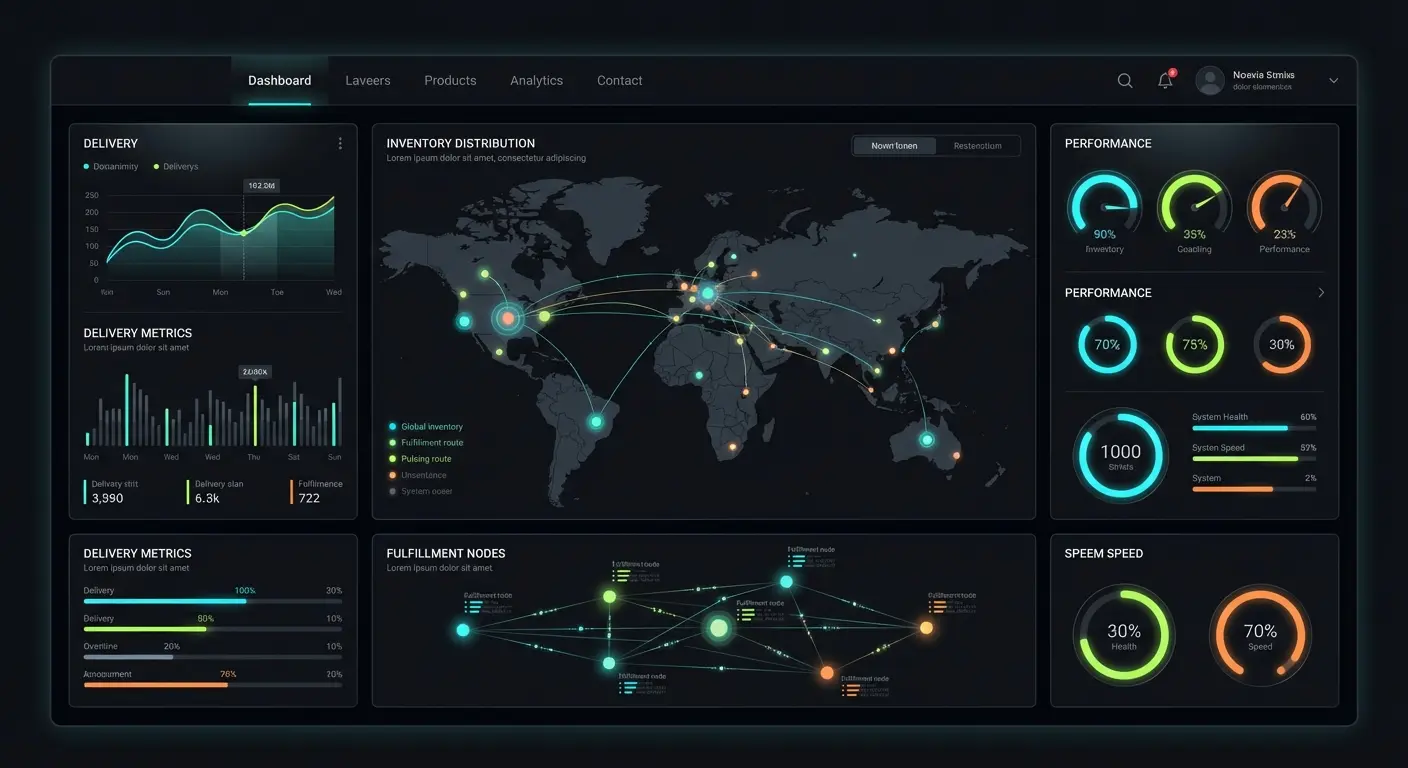
FBA inventory is often distributed across multiple fulfillment nodes to support delivery promises. Sellers who ship in ways that concentrate inventory can see additional placement-related fees or longer processing times, depending on the inbound option selected and current capacity.
Amazon Warehousing and Distribution (AWD) is positioned as upstream storage that can replenish FBA, subject to eligibility and program configuration. This supports Amazon’s push toward more integrated inventory flow.
FBM sellers can face close scrutiny on on-time delivery and other shipping metrics. If you do not improve Amazon OTDR metric where applicable and keep metrics within Amazon’s targets, Buy Box eligibility and account health can be affected, sometimes quickly.
Multi-Channel Fulfillment offers multiple speed tiers, and service levels can vary by destination and capacity. It reinforces Amazon’s ambition to be a default fulfillment layer for some off-Amazon demand.
The broader pattern is consistent: Amazon aligns seller incentives with network efficiency and customer delivery expectations.
Where the Model Breaks Down
Despite its scale, the system has friction points.
First, inbound variability still exists. Check-in delays, capacity constraints, and restock or storage limits can disrupt planning. Any Amazon AWD inventory strategy should account for latency between upstream storage and FBA availability.
Second, fee structures are dynamic. Efforts to reduce Amazon FBA fulfillment fees through packaging changes or size-tier optimization can be offset by updated fee tables, seasonal surcharges, placement-related fees, or policy changes.
Third, concentration risk is real. If you rely almost entirely on FBA, MCF, and Buy with Prime integration, you are more exposed to program rule changes, capacity constraints, and pricing updates. Diversification does not need to be dramatic, but it should be deliberate.
Finally, automation requires clean inputs. An Amazon supply chain automation service is only as effective as your demand signals, lead times, supplier reliability, and reorder discipline. Automation can amplify both accuracy and forecasting errors.
Assumption note: This framework fits branded or private-label operators with repeatable replenishment cycles. Wholesale and arbitrage models can face different constraints, especially around catalog volatility and sourcing variability.
Strategic Implications for FBA, FBM, and Hybrid Sellers
For FBA-first sellers, Amazon FBA logistics management belongs inside margin modeling, not only inside operations. Treat fulfillment fees, placement options, and storage exposure as controllable variables tied to packaging, case pack strategy, and replenishment cadence. The goal is not only to reduce Amazon FBA fulfillment fees, but to stabilize landed fulfillment cost relative to revenue.
For sellers evaluating AWD, the strategic question is control versus simplification. AWD can streamline inbound handling for some sellers, but it can also shift inventory orchestration toward program logic and system-generated transfers. It tends to fit best when forecasting is stable and lead times are predictable.
For FBM operators, expert Amazon FBM account management is increasingly about metric design. Carrier selection, ship-from coverage, cutoff times, and exception handling should be engineered to improve Amazon OTDR metric where required and to protect Buy Box eligibility.
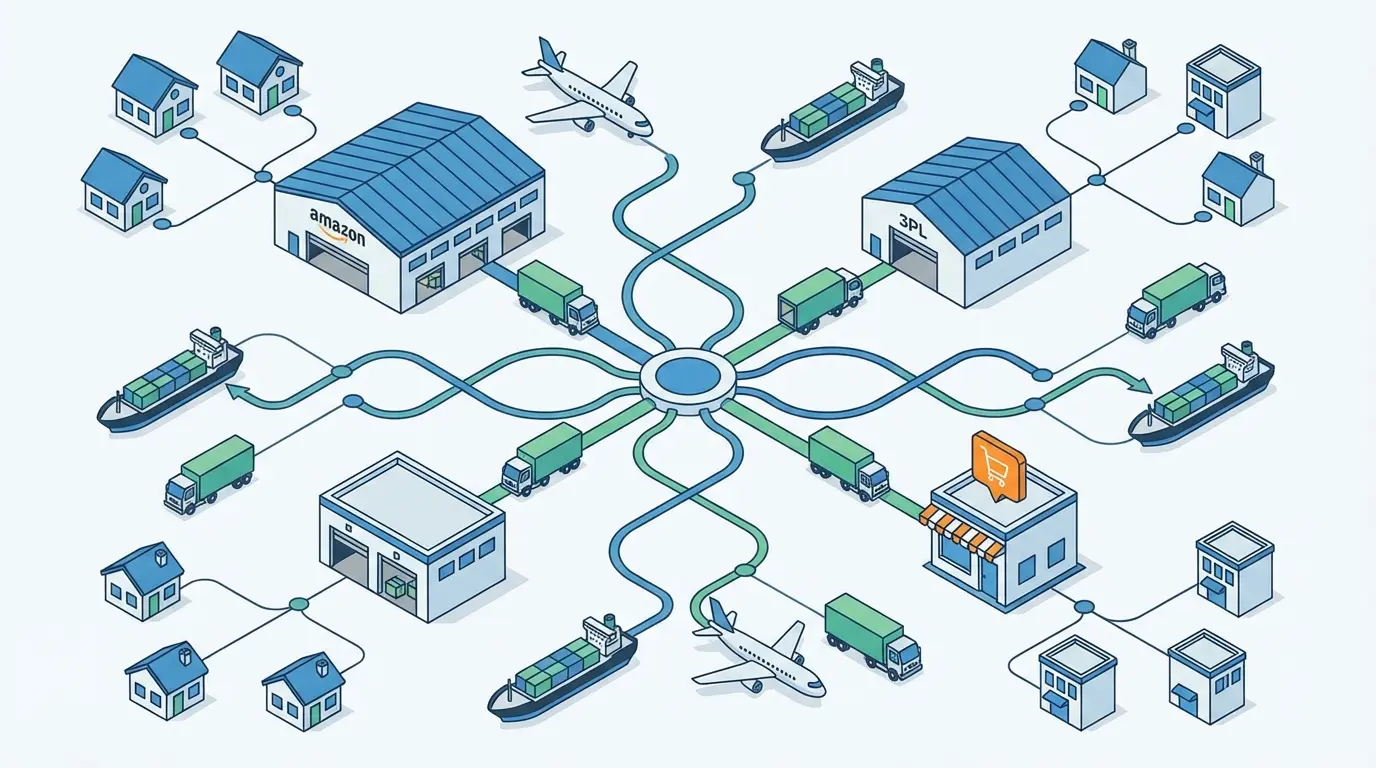
For multi-channel brands, an Amazon Multi Channel Fulfillment agency or an in-house MCF capability can unlock leverage when it is configured thoughtfully and monitored closely. The tradeoff is concentration risk. A blended model, where core SKUs run through FBA and MCF while secondary channels maintain optional 3PL capacity, reduces dependency.
For organizations that want to outsource Amazon FBA logistics without losing strategic control, the cleanest approach is to separate execution from governance. Let partners run day-to-day workflows, but keep ownership of forecasting assumptions, reorder points, and contingency planning.
One practical positioning rule is to design your logistics stack so that no single failure point can halt all revenue for more than a week.
Key Terms in Plain Language
Amazon FBA logistics management: Coordinating inventory planning, inbound shipping, storage, fulfillment, and fee-aware decisions inside FBA.
Amazon AWD inventory strategy: Using Amazon Warehousing and Distribution as upstream storage that can replenish FBA, based on program rules and configuration.
Amazon MCF setup service: Implementing Multi-Channel Fulfillment so Amazon can ship orders from non-Amazon channels.
Amazon Buy with Prime integration: Adding Buy with Prime to a DTC site so eligible orders can use Amazon fulfillment and display Prime-related benefits, subject to program terms.
Amazon supply chain automation service: Tools or agencies that automate forecasting inputs, replenishment workflows, and factory-to-warehouse coordination for Amazon-related inventory.
Expert Amazon FBM account management: Operational oversight of self-fulfilled accounts to maintain shipping performance, tracking quality, and policy compliance.
Amazon Multi Channel Fulfillment agency: A service provider that configures, monitors, and optimizes MCF operations for off-Amazon fulfillment.
Amazon became a delivery powerhouse to protect its customer promise. Sellers who treat logistics as a strategic operating layer can align decisions with the system instead of reacting to it.
Logistics is no longer the back room. It is the control panel.
Amazon FBA logistics management, Amazon MCF setup service, Amazon AWD inventory strategy, Amazon Buy with Prime integration, outsource Amazon FBA logistics, reduce Amazon FBA fulfillment fees, Amazon supply chain automation service, expert Amazon FBM account management, improve Amazon OTDR metric, Amazon Multi Channel Fulfillment agency