Amazon FBA Sellers in 2026: What to Watch

Olivia Reyes

The Future of Ecommerce for Amazon FBA Sellers 2026: What Actually Deserves Your Attention

If your 2026 plan is mostly “improve PPC, negotiate suppliers, and hope fees do not get worse,” you are probably under-planning. The future of ecommerce for amazon fba sellers 2026 is less about one big disruption and more about several systems colliding at once: AI-assisted discovery, rising fulfillment costs, social commerce, omnichannel operations, and the need to build demand you can influence outside Amazon.
Why 2026 looks different even if your catalog stays the same
Experienced sellers often make the same mistake when they think about future trends. They look for a new tactic instead of a new operating model. In practice, 2026 is likely to favor brands that can do three things at the same time: stay visible inside Amazon’s changing search environment, reduce dependence on any single traffic source, and fulfill orders profitably across more than one channel.
That matters because several pressures are stacking on each other. Amazon search and product discovery are becoming more interpretive and AI-assisted. Customer acquisition is getting less forgiving across paid channels. Social platforms are moving closer to native shopping. FBA economics continue to punish products with weak contribution margin, poor packaging efficiency, or unstable replenishment.
The sellers who should pay closest attention are not just aggregators or large brands. Mid-sized sellers are often the most exposed because they are big enough to feel fee pressure and channel complexity, but not always structured well enough to absorb it.
A useful way to think about 2026 is this: the winning brand is not the one with the most channels. It is the one that can move a shopper from discovery to repeat purchase with the least friction and the most control available within each platform’s rules.
The shifts behind the headline trends
Before talking tactics, it helps to define what is actually changing.
AI discovery is not just better search
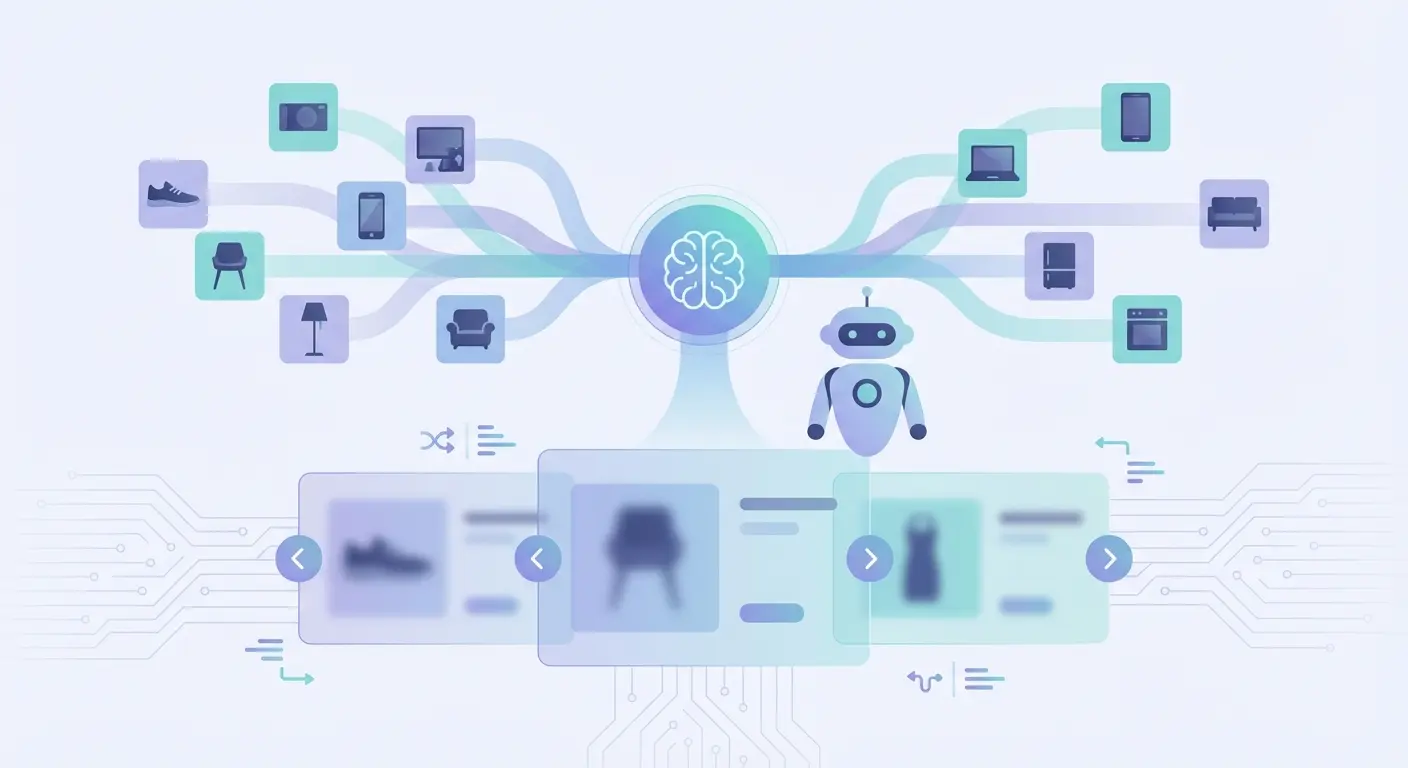
When sellers talk about AI search, they often mean shoppers typing longer queries. That is only part of it. The bigger change is that systems like Amazon’s Rufus can interpret shopper intent, compare options, summarize tradeoffs, and narrow choices based on context.
That is why optimizing amazon listings for rufus ai search is not the same as old-school keyword stuffing. The listing has to help Amazon’s systems understand what the product is for, who it is for, when it may be relevant, and what objections it addresses.
In practical terms, that means cleaner attribute coverage, tighter title logic, bullet points that answer real buyer questions, and images that support comparison, not just aesthetics.
DTC is not a replacement for Amazon
A lot of sellers think in extremes: either stay Amazon-first or abandon Amazon and go direct to consumer. Real brands usually do neither. The better question is how to transition from amazon fba to dtc brand without breaking cash flow, hurting inventory turns, or overestimating how much branded demand you actually own.
For most sellers, DTC should begin as a retention and margin layer, not as an aggressive top-of-funnel bet. If your product is reorderable, bundlable, or benefits from education, DTC has a stronger case. If it is mostly commodity search demand, DTC may work better as a selective offer channel than a primary engine.
CAC is now an operations problem too
Reducing customer acquisition cost for amazon brands is not just a media-buying challenge. It is tied to conversion rate, repeat rate, channel mix, and even fulfillment reliability. A brand with poor listing clarity, stockouts, and weak post-purchase retention will usually pay more for growth, even if ad metrics look acceptable on the surface.
That is why strong operators increasingly treat acquisition and retention as one loop. The first sale might happen on Amazon, but the economics improve only if the brand creates a path to second and third purchases somewhere it can communicate more directly and compliantly.
Omnichannel is a logistics discipline, not a branding slogan
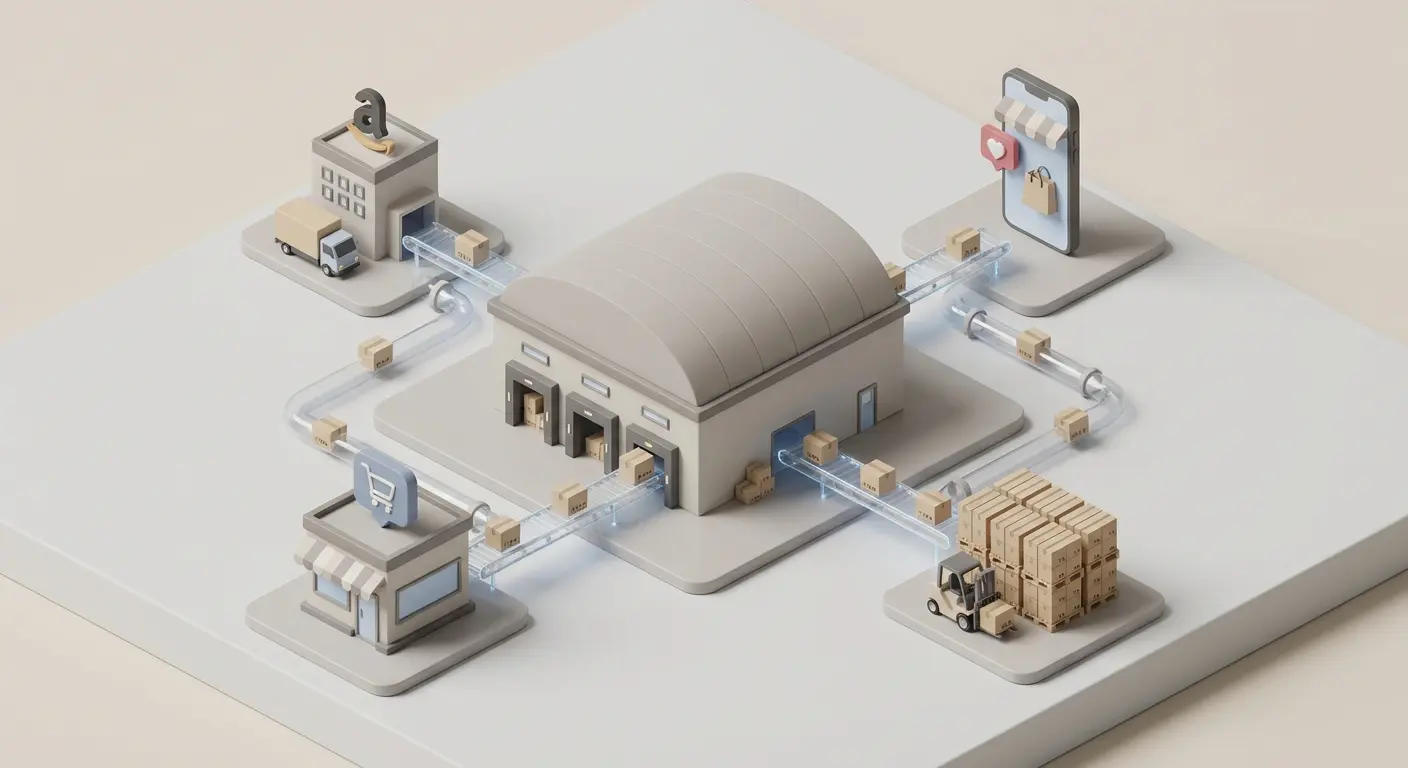
Managing omnichannel fulfillment for growing brands sounds strategic until inventory gets stranded in the wrong node and your best-selling SKU goes out of stock on Amazon during a promo week. Omnichannel only works if inventory visibility, reorder timing, and channel-specific service levels are designed intentionally.
This is where many growing brands create hidden damage. They add Shopify, TikTok Shop, wholesale, and maybe Walmart, but they still plan inventory like they are single-channel. That usually leads to stockouts on the most important channel or excess inventory in the slowest one.
What the next operating model looks like in practice
The simplest way to prepare for 2026 is to redesign around four linked layers: discovery, conversion, fulfillment, and retention.
Discovery will widen, but control will narrow
Buyers will still find products on Amazon, Google, TikTok, creator content, and referrals. What changes is how often platforms answer part of the question before the shopper ever reaches your storefront in a traditional way.
Inside Amazon, that raises the bar for product-page clarity. If Rufus or related recommendation systems are pulling signals from your listing, then vague copy becomes a visibility problem, not just a conversion problem.
A useful seller insight is to write listings as if a machine has to explain your product to a rushed human in one sentence. If your listing does not make that easy, you are likely under-optimized for AI-assisted discovery.
For optimizing amazon listings for rufus ai search, focus on:
product purpose before marketing language
compatibility, dimensions, materials, and use cases in plain English
objection-handling bullets that mirror shopper questions
image sets that show context of use, scale, and differentiation
backend attributes and variation structure that reduce ambiguity
Expectation vs. reality:
Expectation: AI search means adding more keywords and longer copy. Reality: AI discovery is more likely to reward structured relevance, explicit use-case language, and fewer unresolved ambiguities.
Conversion will depend more on context than persuasion
Traditional listing advice often overweights persuasion. In 2026, context becomes equally important. Shoppers increasingly arrive with summarized options, partial recommendations, or social proof already in mind. They do not always need more hype. They need fast confirmation.
If your page forces a shopper to infer basics like who this is for, whether it fits their setup, or why it costs more than alternatives, conversion suffers. That is especially true when traffic comes from broader discovery sources such as creator content or social commerce, where intent may be high but product knowledge is shallow.
Fulfillment will become a bigger part of strategy discussions
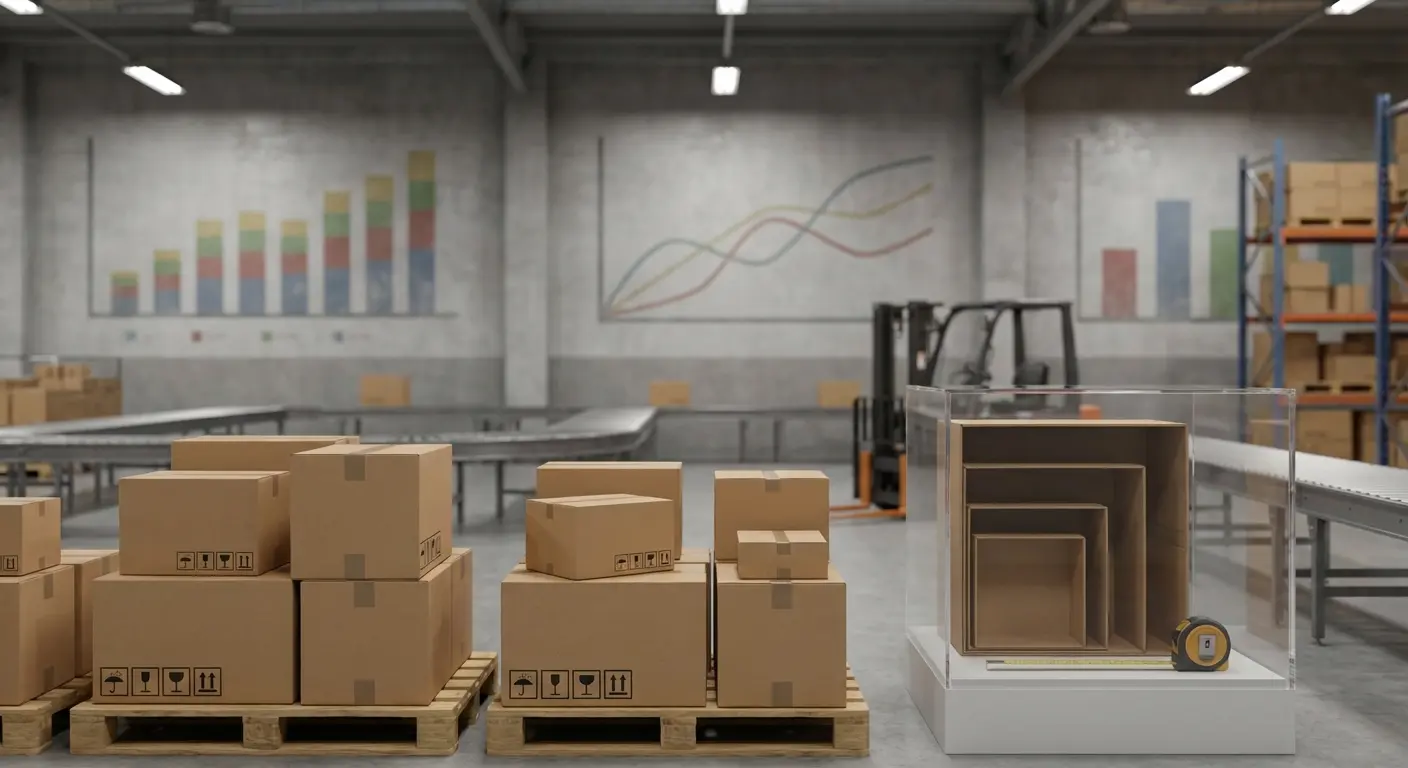
Overcoming rising amazon fba fulfillment fees 2026 is not only about trying to offset costs you cannot directly control. The stronger move is redesigning your offer and operations around fee sensitivity.
That can include:
improving packaging dimensions to reduce storage and fulfillment burden
splitting bulky bundles into more efficient configurations
moving long-tail or slower SKUs to a different fulfillment model
using FBA selectively for high-velocity ASINs while testing seller-fulfilled or third-party logistics for others
rechecking contribution margin at the ASIN level, not just brand level
Many sellers wait too long to do ASIN-level fee triage. They know fees are rising, but they continue to advertise low-margin products because top-line revenue looks healthy. In 2026, more brands will need a simple rule: if an ASIN cannot support realistic ad spend and current fulfillment costs, it should not get growth budget until the economics are fixed.
Retention becomes the margin lever you can still influence
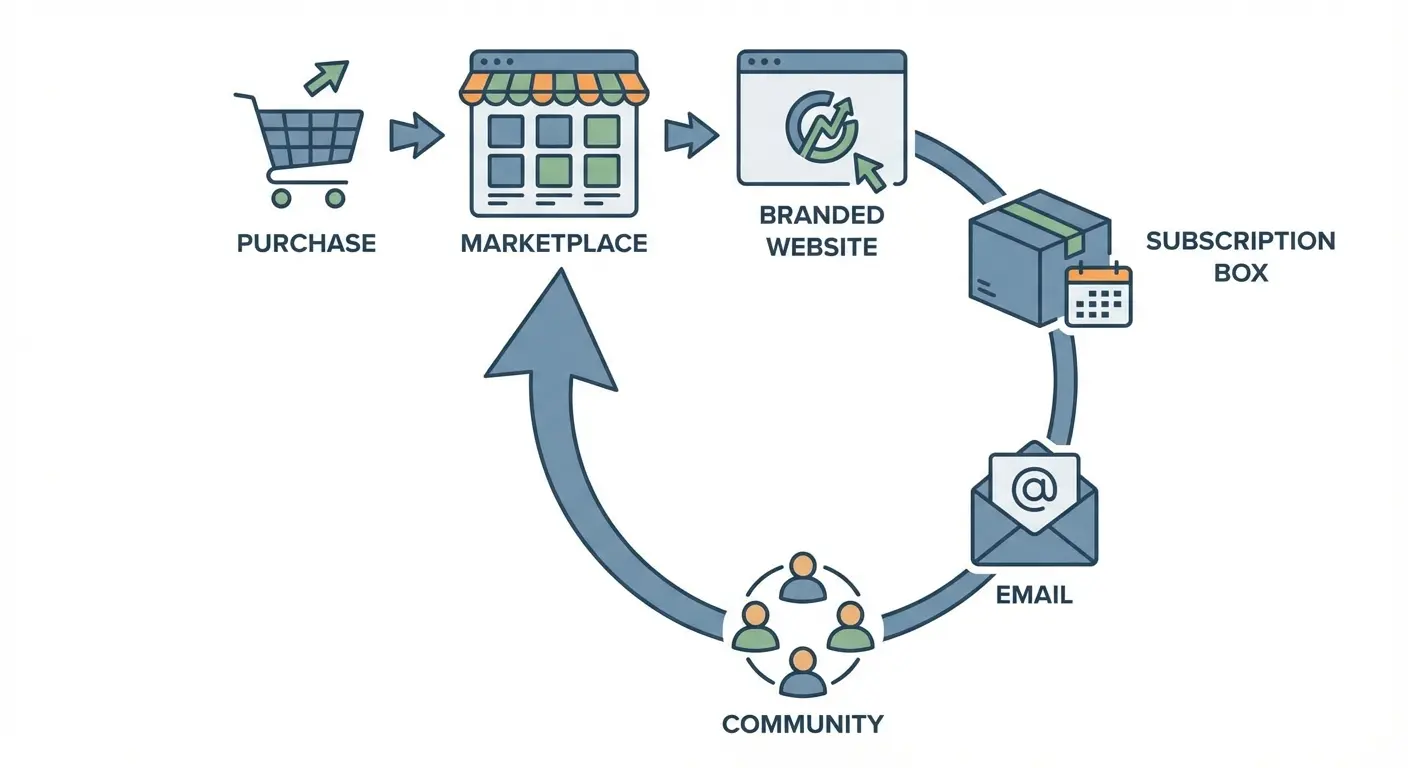
Building customer loyalty off amazon platform is one of the few defensible responses to rising acquisition costs. You cannot fully own the first transaction on Amazon, but you can build systems that make repeat purchase more likely through packaging, product experience, subscriptions where appropriate, community, and compliant post-purchase brand touchpoints.
This does not mean trying to divert customers from Amazon in ways that conflict with platform rules. It means giving customers enough brand memory and product satisfaction that when they are ready to buy again, your brand is the one they look for, whether on Amazon or elsewhere.
For reorderable products, DTC becomes especially useful here. The strongest case for how to transition from amazon fba to dtc brand is often not customer acquisition at all. It is lifecycle capture. If your DTC site can support subscriptions, bundles, educational flows, and email or SMS retention, then it can improve lifetime value even if Amazon remains your main acquisition engine.
Three realistic scenarios sellers will face
Case 1: The private label seller hit by fee pressure
Hypothetical example: a home goods seller has several steady ASINs, but unit economics have tightened due to storage and fulfillment costs. Their first instinct is to cut ad spend.
A better sequence is to review carton efficiency, packaging size, and ASIN contribution margin before touching traffic. One SKU may remain worth scaling, another may need a price reset, and a third may be better as a DTC bundle rather than an Amazon single unit. Overcoming rising amazon fba fulfillment fees 2026 often starts with product architecture, not ad optimization.
Case 2: The brand that wants to go DTC too early
Hypothetical example: a supplements brand sees strong Amazon sales and launches a Shopify site with aggressive paid social. Traffic comes, but CAC is high and conversion is weak.
The issue is not that DTC cannot work. It is that the brand tried to use DTC as a cold acquisition channel before building a retention reason. A more durable path is to use Amazon for broad intent capture, then build branded search, educational content, subscription offers, and repeat incentives on owned channels. This is the practical answer to how to transition from amazon fba to dtc brand: start where your economics are strongest, then expand where your customer relationship can deepen.
Case 3: The fast-growing brand adding social commerce
Hypothetical example: a beauty brand invests in creator content and wants an amazon social commerce and tiktok integration strategy. Sales rise, but inventory becomes unstable because TikTok demand spikes are not reflected in Amazon replenishment planning.
The fix is operational, not creative. Social commerce cannot be treated as extra demand layered on top of Amazon. It needs its own forecast assumptions, reserve logic, and SKU selection. Often the smartest move is to push hero SKUs in social, keep assortment narrower there, and protect Amazon inventory for core search demand.
Where sellers get this wrong
One common misunderstanding is treating AI visibility as a copywriting trick. It is more accurate to think of it as merchandising for machine interpretation. Good listings become easier to recommend, compare, and summarize.
Another is assuming every brand should diversify aggressively. Channel expansion only helps if the economics, operational complexity, and customer behavior justify it. More channels can produce more revenue and less profit.
A third mistake is thinking reducing customer acquisition cost for amazon brands is mainly about cheaper clicks. Often the bigger gains come from improving conversion quality, increasing repeat purchase, and cutting wasted spend on low-margin ASINs.
Sellers also underestimate how different brand building looks when it has to survive operational reality. It is easy to say you want omnichannel growth. It is harder to manage omnichannel fulfillment for growing brands when forecasts are noisy, lead times are unstable, and each channel has different service expectations.
The hard parts most strategy posts skip
Some categories will benefit more from these shifts than others. Products with obvious use cases, strong visual demonstration, repeat purchase patterns, or community appeal adapt better to AI discovery, social commerce, and DTC retention. Products that are highly commoditized may still grow, but they usually need sharper cost control and more disciplined SKU strategy.
Amazon also remains one of the strongest demand capture engines for many sellers. That means diversification should be selective, not ideological. If 80 percent of your profitable demand still originates on Amazon, your job is not to replace that. Your job is to protect it while creating a second path to margin and retention.
There is also a policy and compliance layer. Building customer loyalty off amazon platform should be approached carefully and within Amazon’s rules. Sellers should avoid assuming that every post-purchase tactic is acceptable simply because it works elsewhere. The safest mindset is to focus on brand recognition, product quality, and compliant owned-channel growth rather than trying to reroute Amazon customers in a way that creates unnecessary risk.
Finally, not every seller needs a full omnichannel stack in 2026. Some need tighter Amazon execution and a better DTC retention layer. Others need a real amazon social commerce and tiktok integration strategy because their category naturally converts through creators. The correct path depends less on trend headlines and more on your product’s buying behavior.
What to do next if you want to be ready before the scramble starts
Start with diagnosis, not expansion. Review your top ASINs by true contribution margin. Audit listings for AI readability and use-case clarity. Check whether your best customers have a reason to buy again from you intentionally, not just by chance. Then decide whether your next move is listing improvement, fee mitigation, DTC retention, or channel expansion.
If you only remember a few things, make them these:
The future of ecommerce for amazon fba sellers 2026 is about system design, not isolated hacks.
Optimizing amazon listings for rufus ai search means making products easier for machines to interpret and easier for humans to confirm.
Reducing customer acquisition cost for amazon brands depends as much on conversion and retention as on media efficiency.
How to transition from amazon fba to dtc brand is usually a retention strategy first, not a full traffic replacement plan.
Overcoming rising amazon fba fulfillment fees 2026 starts with ASIN-level economics, packaging, and channel-specific fulfillment choices.
Managing omnichannel fulfillment for growing brands requires inventory discipline before it requires more channels.
Building customer loyalty off amazon platform is one of the few durable ways to protect margin as competition and platform dependency increase.