Amazon Patio, Lawn & Garden Profit Guide

Sarah Johnson

Amazon Patio, Lawn & Garden Selling Guide: What Actually Decides Profit in a Seasonal, Bulky Category
Are you losing margin because demand is weak, or because your unit economics were fragile before the season even started? In Patio, Lawn & Garden, sellers often blame competition first. The bigger issue is usually a bad fit between product type, fulfillment model, listing expectations, and seasonal timing.
This amazon patio lawn garden selling guide is built for sellers who already know the basics and need sharper decision-making. If you are working through how to sell oversized items on amazon fba, how to reduce amazon fba fulfillment costs for bulky items, or how to rank products in amazon patio lawn garden without getting trapped by returns and storage fees, the answer is rarely a single tactic. It is usually a stack of operational choices that either reinforce each other or quietly break the model.

Where this category gets hard faster than most sellers expect
Patio, Lawn & Garden looks attractive because average selling prices can be higher, visual merchandising matters, and demand can spike when weather and season line up. The problem is that the category combines several difficult traits at once: bulk, seasonality, expectation mismatch, and in some subcategories, compliance sensitivity.
A standard-size consumable can sometimes survive weak forecasting, mediocre images, and a few inefficient shipments. Outdoor furniture, garden structures, lawn equipment, and seasonal sets usually cannot. One bad inbound plan, one slow spring, or one listing that undersells dimensions can turn a promising ASIN into a storage and returns problem.
Expectation vs reality is useful here:
Expectation: Higher ticket items mean more room for ad spend and healthier margin. Reality: Higher ticket often comes with larger dimensional weight, more customer hesitation, and more expensive mistakes.
Expectation: Seasonal demand creates easy peak months. Reality: Seasonal demand compresses the selling window, so inventory errors are punished faster.
Expectation: Better photos fix conversion. Reality: Better photos help, but in this category they also need to fix scale confusion, assembly anxiety, and durability doubts.
For most sellers, the real decision is not whether the category is good. It is whether a specific product can stay profitable after fulfillment, storage, advertising, damage risk, and returns are all accounted for.
What should matter most before you commit inventory
Experienced sellers often overfocus on demand and underweight recoverability. In this category, ranked criteria should look something like this.
Margin after the ugly costs, not before them
The first filter is contribution margin after bulky fulfillment fees, prep, packaging, storage, return handling, and likely promo pressure. This is the center of any serious discussion about how to sell oversized items on amazon fba.
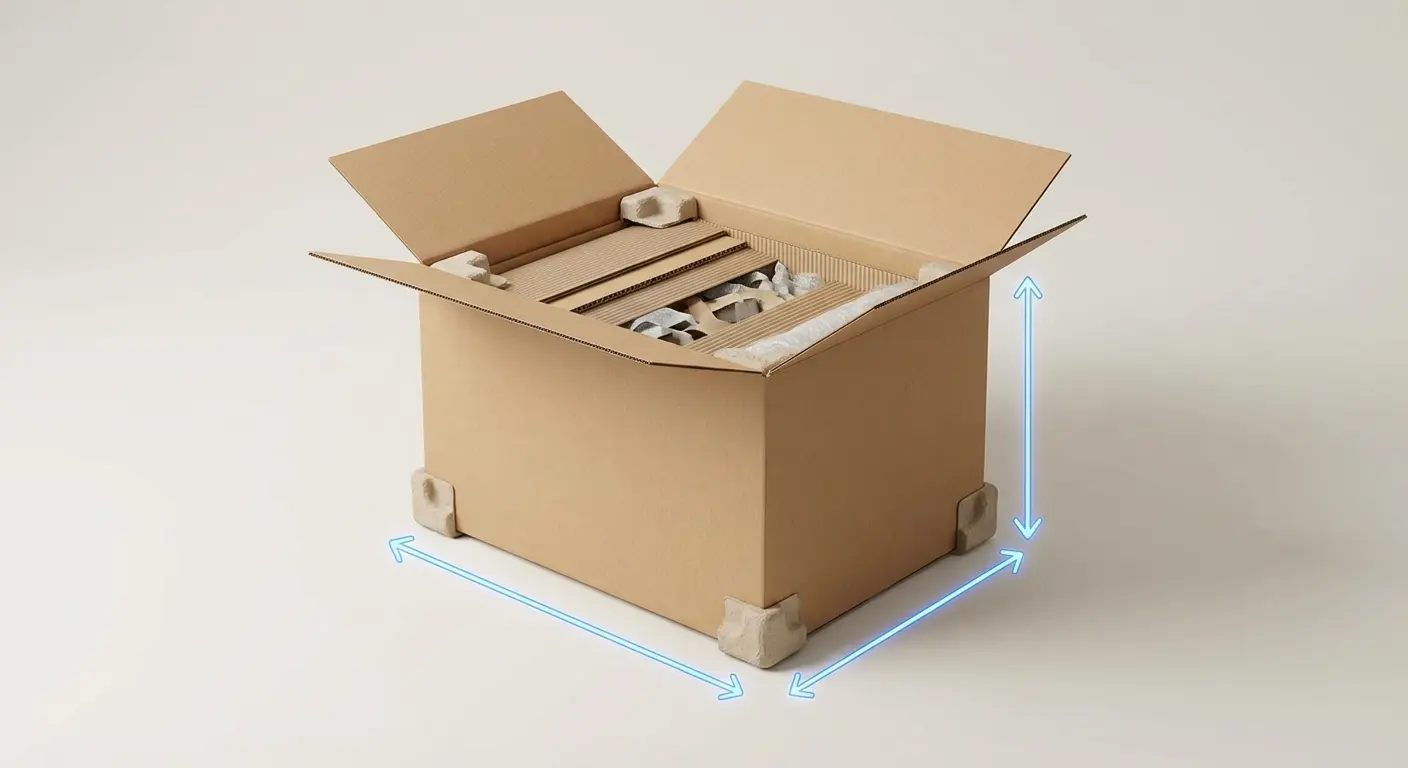
For bulky products, the wrong carton dimensions can matter as much as landed cost. A product that looks profitable in a sourcing sheet can become marginal once packaging pushes it into a worse fee tier. If the item requires reinforced packaging to survive parcel handling, your costs may rise twice, once in materials and once in shipping class.
A practical seller insight: if margin only works when returns stay unusually low and ad efficiency stays unusually high, the product is fragile.
Demand timing and replenishment flexibility
Seasonality comes second because this category often has a narrow period where ranking gains, sell-through, and pricing power align. A good product launched too late can miss the season and sit for months.
The key question is not just whether the item is seasonal. It is whether you can replenish quickly enough during peak demand without overcommitting before demand is proven. That is where amazon seasonal inventory management strategies become less about forecasting perfection and more about preserving optionality.
Products with stable year-round replacement demand, accessories, covers, spare parts, maintenance items, and consumables often give sellers a better inventory profile than headline seasonal products alone.
Return risk driven by expectation mismatch
If you need to know how to handle high return rates on amazon in this category, start upstream with listing design and product selection. Outdoor products get returned for reasons that are often predictable: size looked different, color looked different in sunlight, material felt lighter than expected, assembly was harder than expected, or durability assumptions were wrong.
For outdoor furniture in particular, the listing has to close the gap between showroom expectations and parcel-delivered reality. If you want to optimize amazon listings for outdoor furniture, dimensions alone are not enough. You need visible scale, context, material close-ups, care details, and plain-language construction notes.

High return rates do not only hurt margin. They can distort demand signals and lead you to reorder the wrong item at the wrong time.
Fulfillment model fit: FBA, FBM, or hybrid
Sellers often ask how to sell oversized items on amazon fba as if FBA is always the goal. It is not. For some Patio, Lawn & Garden products, FBA improves conversion and Buy Box competitiveness enough to justify the cost. For others, especially oversized, fragile, low-velocity, or highly seasonal products, FBM or a hybrid model can protect margin and reduce stranded inventory risk.
The decision should turn on fee structure, delivery expectations, return handling, and your ability to maintain service levels. FBA works best when conversion lift and Prime eligibility offset the storage and fulfillment burden. FBM can make more sense when dimensions are punishing, sell-through is uneven, or the product needs more controlled packaging.
Compliance exposure in sensitive subcategories
Pest control, weed prevention, treatment chemicals, and products making safety or efficacy claims need careful review before launch. amazon restricted product claims in pest control can be an avoidable source of suppression, or even a request for additional information, if your content, packaging, or documentation is sloppy.
This is not only about whether the product itself is allowed. The wording matters. Claims around killing, repelling, preventing infestation, toxicity, child safety, pet safety, or environmental outcomes can trigger review. Amazon may also require specific compliance documentation depending on the product type and the marketplace. In these subcategories, a listing writer can create account risk faster than a PPC manager can create revenue.

Choosing the right play based on the product you actually have
If the product is large, ships well, and has a strong perceived value advantage in Prime, FBA can still work even with high fees. This is most true when the packaging can be engineered tightly, damage rates are under control, and the listing does a good job reducing pre-purchase uncertainty. In that case, the focus shifts to amazon fba heavy and bulky shipping tips: reduce empty space, protect corners and surfaces, validate carton durability early, and avoid package redesigns after inventory has already scaled.
If the product is oversized but low-velocity, especially with uneven off-season demand, FBM or a split strategy usually deserves more attention. Sellers often discover too late that slow months are where the economics fall apart. managing amazon inventory during slow seasons is easier when inventory is not all sitting in FBA storage tiers waiting for spring.
If the product is visually driven, weather-sensitive, and expensive to return, content is doing more of the operational work than usual. In these cases, optimize amazon listings for outdoor furniture or similar browse-heavy products with one goal: answer objections before they become return requests. Show dimensions in scene, call out cushion thickness, specify frame material, explain weather limits, and set assembly expectations clearly.
If the product depends on broad generic search terms, the launch gets harder. Patio, Lawn & Garden CPCs can become inefficient quickly when your listing has not yet earned conversion history. Products with clearer long-tail demand, such as replacement cushions by exact size, grill covers by fit range, or raised garden bed kits by dimensions and material, usually give sellers a more controllable path for how to rank products in amazon patio lawn garden.
If the product sits near regulated language, especially in pest control, caution should override speed. A slower launch with cleaner content is often better than a fast launch followed by suppression. Claims should stay aligned with packaging, documentation, category policies, and applicable regulations.
The patterns that keep hurting sellers in this category
One common anti-pattern is choosing a winner from search volume alone. Search volume can hide operational weakness. A product may have obvious demand and still be a poor Amazon item if fees, damage, assembly complaints, and returns eat the spread.
Another is treating images as branding instead of pre-sale qualification. Attractive lifestyle images help click-through, but if they do not communicate scale, texture, included components, and realistic use conditions, they can increase returns. In this category, the listing is not just persuasion. It is screening.
Another mistake is using one annual buy plan for a seasonal business. amazon seasonal inventory management strategies should be dynamic, not static. Weather shifts, category competition, and ad costs move too much. Sellers who lock into a single large inventory position before early demand signals come in often spend the rest of the year working around that decision.
Another failure mode is trying to solve bulky-item economics only through pricing. If you are searching for how to reduce amazon fba fulfillment costs for bulky items, pricing is usually the last lever, not the first. Packaging efficiency, bundle architecture, fulfillment model, and product redesign often matter more. A price increase can help, but it rarely fixes a structurally bad fee profile.
There is also a catalog-level mistake: launching the hero product without the lower-risk attachment products that stabilize the account. Covers, replacement parts, care kits, accessories, and complementary add-ons often carry better margin profiles and less severe seasonality. They can support advertising efficiency and repeat purchasing even when the flagship item is slow.
Finally, some sellers write copy in restricted subcategories as if all claims are just conversion levers. In pest control, that is risky. amazon restricted product claims in pest control can be triggered by both explicit and implied language. If the product is claim-sensitive, every bullet and image overlay needs review.
Two hypothetical walkthroughs that show the tradeoffs
A patio furniture set with strong demand but weak operational tolerance
Hypothetical example: a seller is evaluating a four-piece outdoor conversation set. The keyword opportunity looks strong, visual appeal is high, and average selling price supports advertising on paper.
The first pass looks good until packaging is modeled. The carton size pushes the product into a costly fulfillment profile. Damage testing suggests reinforced outer packaging is needed, which raises cost and weight further. Return exposure is also high because color variation in outdoor light and customer expectations around cushion thickness are likely to create mismatch.
In this case, the better decision may not be to abandon the niche, but to reshape the offer. A smaller modular set, a single chair with matching accessories, or an FBM-first approach could preserve demand while reducing fee pressure. Listing strategy would need to be unusually explicit: true dimensions, close material photography, assembly steps, and environment-specific care notes. The main lesson is that demand alone did not justify FBA. Packaging and return risk had veto power.
A pest control item with decent margins and hidden listing risk
Hypothetical example: a seller is sourcing a garden pest deterrent. The unit economics look attractive, size is manageable, and seasonal demand is predictable. Compared with furniture, logistics look easy.
The issue appears in content review. The packaging and supplier materials use a mix of efficacy and safety claims that may not map cleanly to Amazon policy or applicable product rules. Marketing wants to lean into stronger language to improve conversion.
That is where restraint matters. If the product lives in a claim-sensitive zone, listing survival matters more than a slightly more aggressive click-through rate. The seller may decide to proceed only after reviewing packaging consistency, documentation readiness, and claim language across title, bullets, A+ content, images, and backend attributes. Here, the product is commercially viable, but only if compliance work is treated as part of launch, not as cleanup.
What usually improves results fastest
If your main problem is fee pressure, start with packaging geometry before touching bids. Many sellers asking how to reduce amazon fba fulfillment costs for bulky items are already too far downstream. Rework the box, nested configuration, component layout, and protective materials first. A small dimensional improvement can matter more than weeks of PPC optimization.
If your main problem is weak conversion, inspect whether the listing is actually answering the objections that matter in Patio, Lawn & Garden. To optimize amazon listings for outdoor furniture or similar products, prioritize scale proof, durability evidence, and realistic condition framing over generic lifestyle branding.
If your main problem is inconsistent rank, look at traffic quality before traffic volume. how to rank products in amazon patio lawn garden usually comes down to matching long-tail intent, not chasing the broadest category terms first. Specific fit, material, use case, and size modifiers often convert better and build cleaner relevance.
If your main problem is inventory drag, segment SKUs by in-season acceleration and off-season survivability. managing amazon inventory during slow seasons is easier when you stop treating all SKUs as equally deserving of FBA placement. Some belong in replenishable FBA flow. Others belong in reserve, FBM, or lower-exposure states until demand confirms.
If your main problem is returns, do not isolate customer service as the fix. how to handle high return rates on amazon starts with packaging, listing accuracy, assembly clarity, and post-purchase expectation setting. In this category, returns are often a merchandising problem that shows up as operations.
What to keep in front of you as you scale
Most Patio, Lawn & Garden failures are not caused by one catastrophic decision. They come from three or four reasonable decisions that do not work well together. A bulky item, launched late, with broad-keyword PPC, vague dimensions, and optimistic reorder timing can still look sensible in pieces. In combination, it becomes hard to recover.
Reliable sellers in this category tend to follow a few practical rules:
Choose products whose margins still work after fees, damage allowance, and realistic return assumptions.
Treat packaging design as a profitability lever, especially when learning how to sell oversized items on amazon fba.
Build content to reduce mismatch, not just improve click-through.
Use amazon seasonal inventory management strategies that preserve flexibility instead of forcing one big forecast.
Favor long-tail intent and product specificity when planning how to rank products in amazon patio lawn garden.
Keep low-risk accessory or replenishment SKUs in the catalog to offset seasonal volatility.
Review all claim-sensitive listings carefully, especially around amazon restricted product claims in pest control.
During slow months, reduce exposure to storage-heavy positions and reassess which SKUs truly deserve FBA.
If returns are rising, audit image realism, dimensions, assembly messaging, and packaging durability before changing price.
For bulky items, improving carton efficiency is often the cleanest answer to how to reduce amazon fba fulfillment costs for bulky items.
This category can be excellent, but it rewards operational honesty more than ambition. If the product, fulfillment model, content, and seasonality fit each other, growth is manageable. If they do not, the account spends peak season looking busy and off-season paying for it.