Amazon Removal Orders for Strategic FBA Control

Sarah Johnson

Amazon Removal Orders: A Practical Guide for Serious FBA Sellers

Are you paying storage fees on inventory you already know will not sell, but still hesitating to remove it?
For experienced FBA sellers, Amazon removal orders are not just a cleanup tool. They are a lever inside your broader Amazon FBA inventory management services strategy. Used well, they help you avoid Amazon long term storage fees, support an improve Amazon IPI score strategy, and unlock capital tied up in aging SKUs. Used poorly, they create extra fees, operational churn, and preventable stockouts.
This guide explains how removal orders function inside a mature FBA operation, where they fit into expert Amazon logistics management, and how to turn them into a deliberate Amazon aged inventory liquidation strategy instead of a reactive fix.
What an Amazon Removal Order Really Is (and What It Is Not)

At its core, an Amazon removal order is a request to have FBA inventory taken out of Amazon’s fulfillment network. You can typically choose to:
Return it to a designated address
Dispose of it
Liquidate it (when Amazon’s liquidation option is available and the inventory is eligible)
Most sellers first encounter removal orders when they notice rising storage fees or unfulfillable units accumulating. Strategically, removal orders are part of a broader control system for:
Aged inventory
Stranded listings and stranded inventory
Suppressed ASINs that need correction
Damaged or customer-returned units
Discontinued SKUs
They are not a substitute for forecasting. They are not a fix for weak product selection. And they are not free.
Each removal carries a per-unit fee based on the item’s size tier and shipping weight, and the fee schedule can change. The economics only make sense when you compare removal costs against ongoing storage fees, expected sell-through, and the opportunity cost of tying up capacity and cash.
A removal order is rarely about the unit itself. It is about protecting capacity, IPI, and working capital.
Why Removal Orders Matter More Than Most Sellers Realize

Amazon’s FBA model rewards inventory efficiency. Your Inventory Performance Index (IPI) is influenced by factors such as sell-through, excess inventory, and stranded inventory. A disciplined improve Amazon IPI score strategy usually includes recurring decisions about what stays in FBA and what gets removed.
The practical connection often looks like this:
Excess inventory contributes to weaker sell-through
Weaker sell-through can pressure IPI
Lower IPI can coincide with tighter capacity limits or fewer replenishment options, depending on your account and category conditions
Tighter capacity can constrain growth
Removal orders can reduce excess units and lower the percentage of aged inventory in your FBA footprint. That can support better inventory health over time, especially when paired with tighter replenishment discipline.
Removal orders also help you avoid Amazon long term storage fees, but only if the timing is proactive. Amazon assesses storage fees based on duration in the fulfillment network, and fee structures can vary by marketplace and change over time. Waiting too long can mean you pay storage for additional months and still pay removal later.
This is where expert Amazon logistics management becomes a differentiator. Advanced sellers review inventory on a predictable cadence and make removal decisions before fee cycles and capacity constraints force the decision.
How the Removal Process Works in Practice
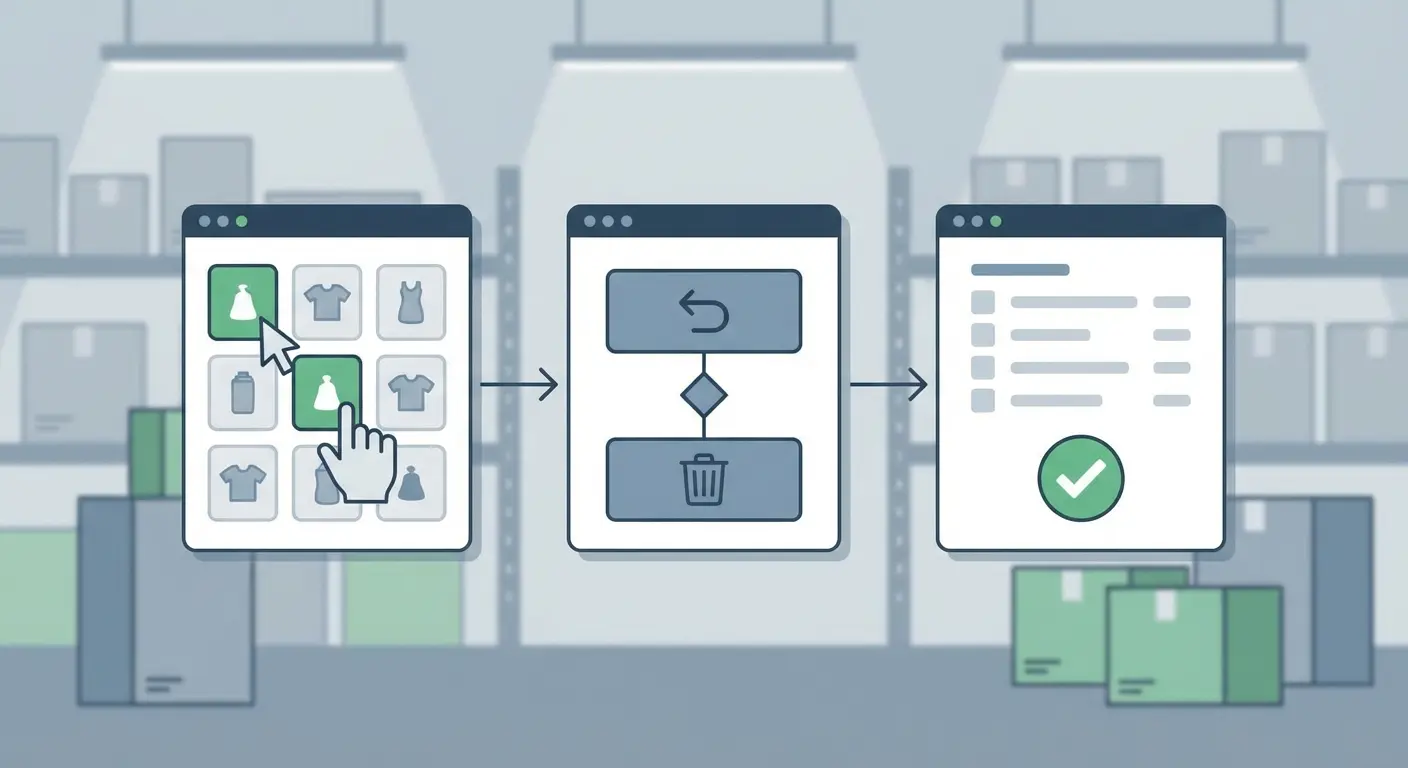
Mechanically, creating a removal order is straightforward:
Go to Manage Inventory or remove unfulfillable inventory workflows in Seller Central.
Select the SKU(s).
Choose to create a removal order.
Pick return, disposal, or liquidation if available.
Confirm quantities and submit.
Operationally, it is more complex.
Processing timelines vary widely by marketplace, volume, and time of year. During peak periods, removals can take longer than expected. Returned inventory may arrive in multiple shipments, and condition can differ from what you anticipated.
Plan for:
Warehouse intake capacity
SKU and lot-level reconciliation on arrival
Condition inspection and triage
Relabeling or repackaging where needed
Accounting adjustments for returns, write-offs, and recoveries
At higher volumes, removal management often becomes part of a broader outsource Amazon FBA account management setup, or it requires a formal internal SOP owned by operations. The removal order is just the trigger. The real work starts when cartons arrive.
Removal Orders as Part of an Aged Inventory Strategy

Most experienced sellers eventually formalize an Amazon aged inventory liquidation strategy. Removal orders are the execution layer of that strategy.
A decision sequence that holds up in practice:
Step 1: Diagnose why the SKU is slow
Listing issue?
Pricing misalignment?
Demand shift?
Seasonality?
Policy, compliance, or suppression problem?
If the issue is listing quality, expert Amazon catalog management may fix it. A missing attribute, variation misconfiguration, or suppressed content element can reduce discoverability and conversion.
Step 2: Attempt in-channel recovery
Before removing, try to sell slow moving Amazon FBA stock through:
Controlled price reductions that preserve brand integrity where possible
Coupons or promotions
PPC adjustments toward profitable queries and retargeting where appropriate
Bundles or multipacks, if compliant with Amazon policy and category rules
If contribution margin after ads is still negative or velocity remains too low, removal becomes the rational next move.
Step 3: Compare cost scenarios
Projected storage fees if kept
Removal fee per unit
Expected recovery through liquidation (if available) versus return-to-you
Resale margin off-Amazon after prep, shipping, and labor
Disposal cost and the value of freeing capacity
This comparison, done SKU by SKU, turns removal from an emotional reaction into capital reallocation.
Unfulfillable Inventory: Quiet Margin Killer
Unfulfillable units can accumulate unnoticed. These can include:
Customer returns marked damaged
Warehouse-damaged items
Expired or unsellable goods (for applicable categories)
Units with labeling or prep issues
Depending on the marketplace and inventory type, unfulfillable inventory can still generate storage-related costs and can also distort your view of true sellable coverage.
Effective Amazon unfulfillable inventory solutions require two habits:
Regular review of relevant FBA inventory and adjustment reports.
Clear SOPs for when to remove versus dispose, based on unit economics and compliance constraints.
Some sellers default to disposal for all unfulfillable units to simplify operations. Others remove and refurbish when margins justify it and when refurbishment and resale are compliant with applicable rules.
For higher-priced products, removal for inspection can recover real value. For low-cost standard-size goods, disposal is often more efficient once labor and shipping are included. The key is consistency and clear thresholds.
Reconciliation After Removal: Where Profit Is Recovered

Removal orders introduce another operational risk: quantity discrepancies.
Units may:
Not arrive
Arrive in different condition than expected
Be shorted
Be lost in transit or misrouted
This is where an Amazon inventory reconciliation service approach matters. Even if you do not outsource it, you need a process.
After removal:
Compare expected vs received quantities.
Check removal order status and reports in Seller Central.
Cross-reference with inventory adjustments and inventory event history where applicable.
Open cases when something is missing and the situation appears eligible under Amazon’s reimbursement and investigation policies, which can have deadlines and documentation requirements.
Advanced sellers treat removal reconciliation with the same seriousness as inbound reconciliation. Otherwise, leakage compounds quietly.
Three Real-World Scenarios
Case 1: Seasonal SKU with Missed Forecast (Hypothetical)
A seller overestimates Q4 demand for a holiday product. By January, 2,000 units remain.
Expectation: it will sell next season. Reality: extended storage time, capital lockup, and uncertain capacity.
Instead, the seller runs controlled markdowns in January. The remaining 800 units are removed in February, repackaged into compliant bundles, and sold off-Amazon at a small loss.
Result: reduced storage exposure, healthier sell-through metrics, and freed FBA capacity for higher-margin spring products. The removal order protects the next season’s growth.
Case 2: Listing Suppression Masquerading as Low Demand (Hypothetical)
A private label SKU shows declining velocity and the team prepares a removal order.
Before executing, they audit the listing. A required compliance attribute is missing, reducing visibility in key filters.
After fixing the listing through expert Amazon catalog management, velocity recovers within weeks. No removal needed.
Lesson: diagnose before you liquidate.
Case 3: Damaged Returns in a Premium Category (Hypothetical)
A seller in electronics sees rising unfulfillable returns. Disposal is simple but expensive in lost margin.
They create removal orders monthly, inspect returned units, refurbish where possible, and resell through secondary channels in a compliant condition category.
The removal fee is justified by recovered value. Here, removal becomes a structured Amazon unfulfillable inventory solution rather than a cleanup cost.
Where Sellers Misjudge Removal Orders
Even experienced sellers fall into predictable traps.
“Removal always improves IPI.” Only if excess and aged inventory meaningfully decline and replenishment behavior changes. If you keep over-shipping slow SKUs, any improvement can be temporary.
“Liquidation is always better than removal.” Not necessarily. Liquidation recovery rates can vary, and liquidation is not always available. For some SKUs, return-to-you and off-platform resale yields a better outcome after costs.
“I will just send it back to FBA later.” Resending is possible in many cases, but requirements can change. You may need relabeling, different prep, or new packaging to meet current inbound rules, and capacity limits can affect timing.
“It is cheaper to wait.” Delaying removal often increases cumulative storage costs and still leaves you paying removal later.
“This is just an operations task.” Removal decisions affect cash flow, capacity, IPI inputs, and catalog health. They are strategic.
Limits, Friction, and Operational Realities
Removal orders are not instantaneous. During high-volume periods, delays can stretch significantly. That affects cash flow planning and warehouse scheduling.
Returned inventory may arrive:
Unsorted
Partially fulfilled
With packaging damage
Be operationally ready before creating large-scale removal orders. That includes:
Confirmed warehouse space
Receiving labor capacity
SKU-level tracking and disposition workflows
Clear accounting treatment
For larger accounts, removal planning often integrates with outsource Amazon FBA account management or a specialized 3PL partner experienced in FBA returns and relabeling.
Margin math also matters. For low-cost, bulky items, removal plus handling can exceed resale value. In those cases, disposal can be the rational choice.
Building Removal Into a Professional FBA System
At scale, removal orders should not feel reactive. They should follow a recurring review cycle:
Monthly aged inventory review
Sell-through analysis by SKU
Unfulfillable unit audit
IPI trend tracking
Fee impact projection
This transforms removal into part of expert Amazon logistics management.
If your catalog is complex, expert Amazon catalog management becomes tightly connected to removal strategy. Variation structure, parent-child issues, stranded inventory, and suppressed ASINs can all create false “slow movers.” Fixing the catalog can prevent unnecessary removals.
If your team lacks bandwidth, structured outsource Amazon FBA account management can incorporate:
Aged inventory monitoring
Removal scheduling
Reconciliation workflows
Liquidation coordination where available
The goal is not fewer removal orders. The goal is smarter ones.
What Experienced Sellers Should Remember
Removal orders are a capital allocation decision, not just an inventory action.
They are one of the fastest ways to avoid Amazon long term storage fees when used proactively.
A disciplined improve Amazon IPI score strategy often requires regular removal of excess and aged units.
Amazon unfulfillable inventory solutions should include scheduled review and structured removal or disposal.
Every removal order should be reconciled with an Amazon inventory reconciliation service discipline to minimize leakage.
An Amazon aged inventory liquidation strategy works best when preceded by listing audits and in-channel recovery attempts.
Strong expert Amazon logistics management turns removal orders from reactive cleanup into strategic inventory control.
To keep removal decisions connected to the full commercial picture, many teams pair them with expert Amazon catalog management and, when volume demands it, Amazon FBA inventory management services that can also support receiving, grading, and relabeling. When the goal is to sell slow moving Amazon FBA stock without burning cash, removal is often the bridge to secondary channels or repack workflows, and it is also a practical lever to protect capacity over time.
Removal orders do not increase revenue directly. In a mature FBA operation, they protect margins, preserve capacity, and reduce avoidable fees so the business stays financially flexible.