Amazon Sports Equipment Fees, Compliance, and Returns

Sarah Johnson
Selling Sports Equipment on Amazon: What Actually Matters for Fees, Compliance, Returns, and Seasonality
If margin disappears the moment a sports SKU moves into FBA, the issue usually is not pricing first. It is often a size-tier, storage, or returns problem that was not modeled early enough. Selling sports equipment on Amazon can work well, but this category punishes loose planning more than many lighter, simpler products do. The products are often bulky, seasonal, safety-sensitive, and more likely to come back opened, used, or incomplete. Sellers who do well here usually win by controlling avoidable operational loss, not by writing better bullet points alone.
Why sports equipment behaves differently on Amazon

Sports & Outdoors is a broad category, but operationally it breaks into several distinct product types:
compact accessories, such as grips, bands, tape, and small recovery tools
fit-sensitive or use-sensitive gear, such as helmets, pads, gloves, and wearable supports
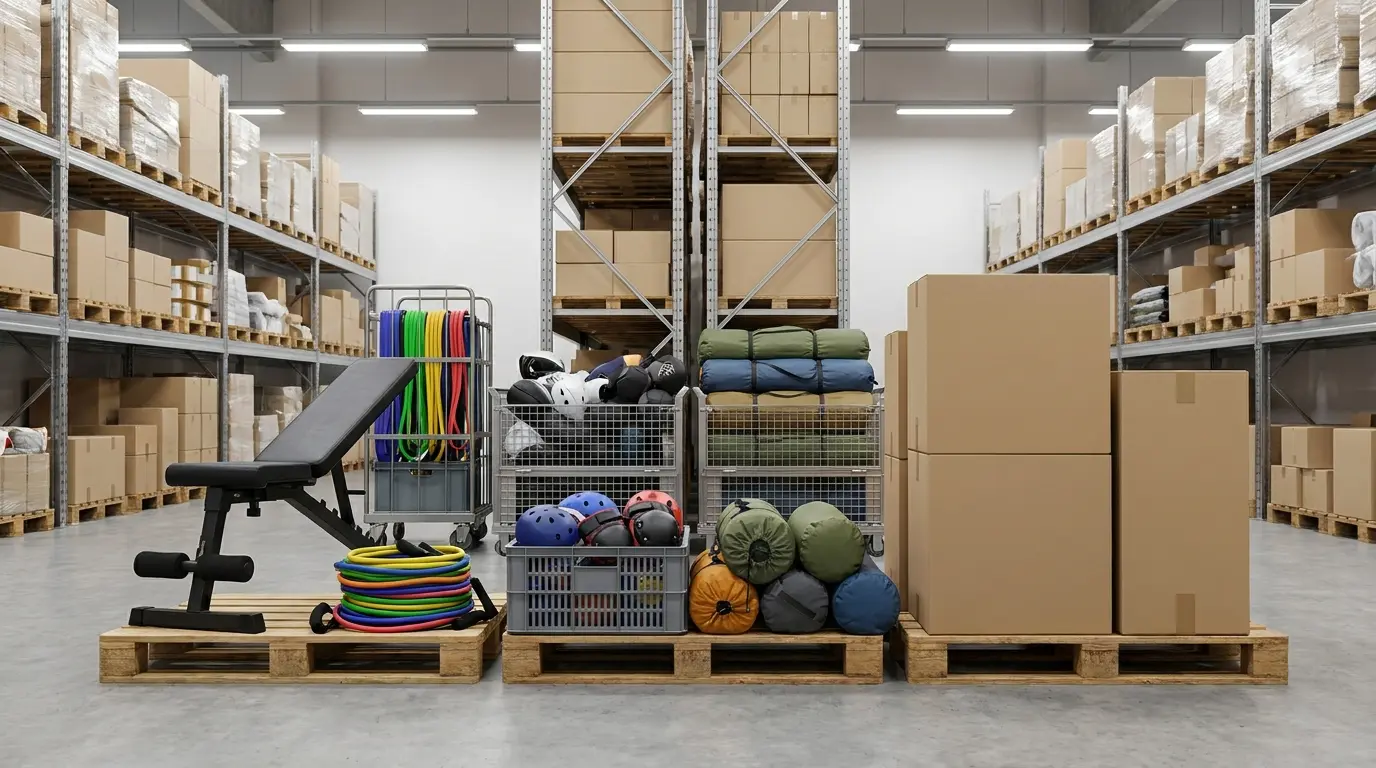
bulky and heavy products, such as benches, nets, coolers, goals, racks, weights, and large outdoor gear
seasonal products, such as winter sports accessories, summer field gear, and camping equipment
Those groups behave differently in fees, conversion, return rates, and compliance exposure. That matters because selling oversized sports equipment amazon fba 2026 is not only a logistics question. It affects pricing, listing strategy, packaging design, reorder timing, and whether FBA is the right fulfillment method for that SKU.
Another important distinction is category access versus product compliance. Getting ungated in sports and outdoors amazon is usually only one gate. It does not mean every item in that category is automatically ready to sell. Certain products may still trigger documentation requests, listing review, safety flags, or post-listing suppression if Amazon requests evidence that the item meets applicable requirements.
For experienced sellers, the practical scope is simple. Before launch, you need to know three things with reasonable confidence. First, where the SKU falls in Amazon's fulfillment economics. Second, what documentation the product may need. Third, what kind of returns behavior the product invites.
Where most sellers misread the unit economics
The common expectation is that FBA solves conversion and Prime eligibility, and the rest is a normal margin calculation. In reality, sports margins are often determined by dimensions, storage exposure, and return disposition more than ad efficiency.
Expectation: "FBA will still be fine if the item has good ASP"
Reality: size tier can outrun ASP surprisingly fast

For bulky products, reducing fba fees for heavy sports items starts before the shipment is created. The first lever is packaging engineering, not a coupon or repricer. Small dimensional changes can move a SKU into a more favorable fee bracket, reduce inbound costs, and lower storage burden. That does not mean making the box smaller in a vague sense. It means redesigning packaging around product protection and dimensional thresholds together.
Do not approve final retail packaging until someone has checked the exact packed dimensions against expected FBA economics. If a product sits near a threshold, even minor changes such as foam inserts, corner protection, or retail-ready outer boxes can push the SKU into a worse fee profile for its entire life.
The second lever is channel split. Some sports products belong in FBA for discovery and conversion, but not necessarily in FBA for all units or all year. Large sporting goods often perform better with a hybrid model: fast-moving or highest-converting child variations in FBA, slower or awkward units in FBM or seller-fulfilled through a 3PL. This is especially relevant for fba storage fee management for large sporting goods, because slow inventory in this category becomes expensive quickly.
The third lever is inventory age discipline. Sports equipment is one of the easiest categories to overestimate because demand can look broad while actual sell-through is narrow by season, sub-niche, or use case. Large SKUs tie up cash and cubic feet at the same time. That is where otherwise solid catalogs start leaking profit.
Compliance is not paperwork you handle later
amazon sports category safety compliance requirements vary by product type, materials, intended user, and claims made on the detail page. Generic advice here is risky. Some items are straightforward. Others can trigger requests tied to labeling, testing, warnings, age grading, or safety standards, especially if the product is protective, load-bearing, electronic, intended for children, or marketed with explicit safety or performance claims.
The practical rule is simple. Treat compliance as part of listing creation, not as a post-launch admin task.
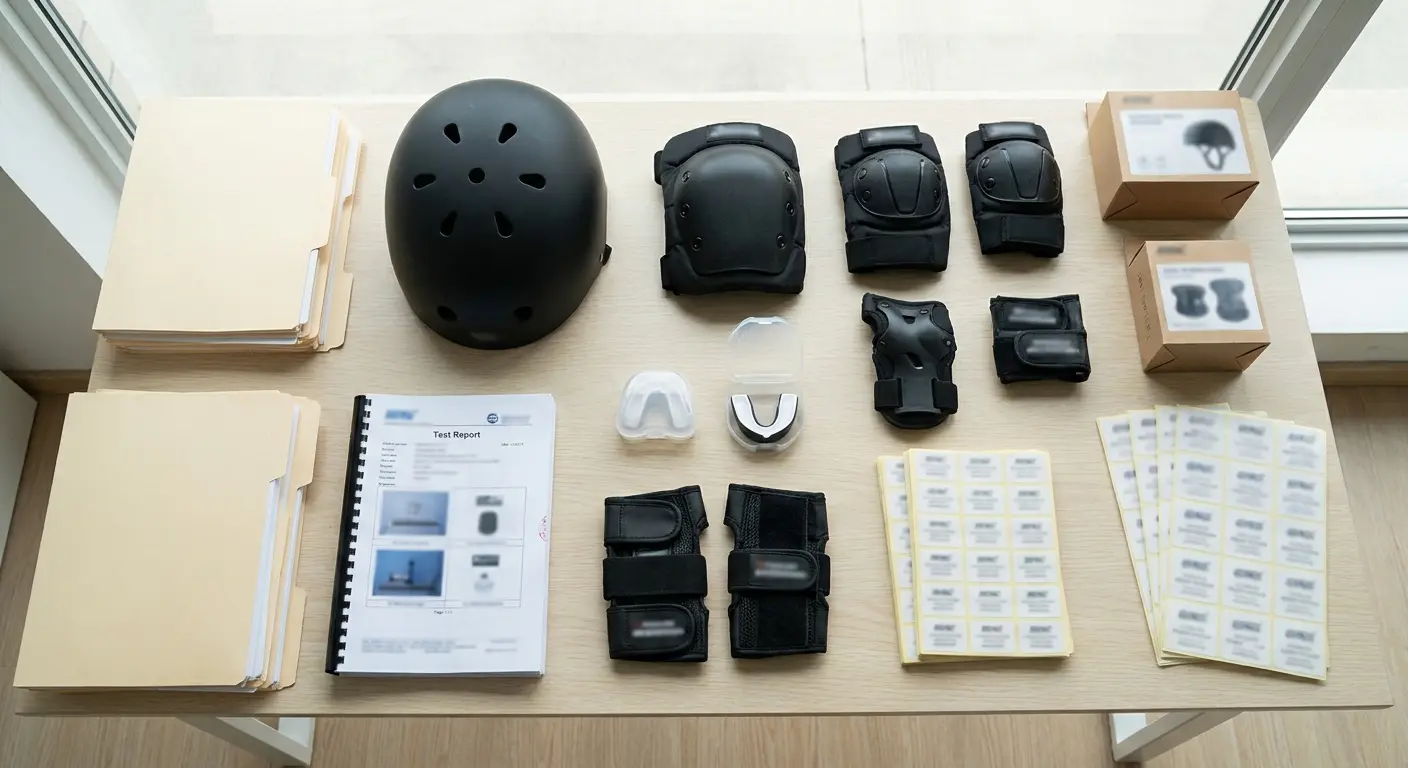
That means keeping a document set ready before inventory lands:
supplier identity and sourcing records
test reports or certifications where applicable
product labels, warnings, and instruction materials
images of packaging and product markings
exact product specifications that match the listing
What causes trouble is usually mismatch. A report covers one variation, but the listing includes three. The packaging image shown to Amazon does not match the final unit. The product title claims impact protection or professional-grade use, but the documents do not support those claims. In sports, listing language can create compliance scrutiny almost as easily as the product itself.
If category approval is needed, getting ungated in sports and outdoors amazon is best handled with clean, consistent documents from the start. Experienced sellers know the approval itself is not always the hard part. The harder part is keeping ASINs live after catalog edits, variation changes, or compliance reviews.
Listing strategy for sports products has changed
A sports listing has always needed clear use-case communication. What is different now is how search and discovery systems interpret listing content. amazon listing optimization for sports products rufus ai is less about stuffing more features into bullets and more about making the listing easier for both shoppers and Amazon systems to understand in concrete, use-oriented language.
For sports products, the strongest listings answer five questions quickly:
who the product is for
what activity or setting it is designed for
what dimensions, fit, capacity, or resistance level mean in use
how it should be used or assembled
what it does not include or is not designed for
That last point is underrated. In this category, returns often happen because the buyer assumed compatibility, included accessories, or performance levels that were never explicitly promised. A good listing does not just persuade. It narrows interpretation.
Images matter more than usual because many sports products require scale and context. A resistance band set, training ladder, weight bench, or camping chair can look straightforward in isolation and still create buyer confusion. Use images that communicate setup footprint, included parts, weight or size references, and intended environment. If assembly is involved, show the assembled state and the key dimensions in a way a rushed buyer can understand.
Returns are not only a customer service issue
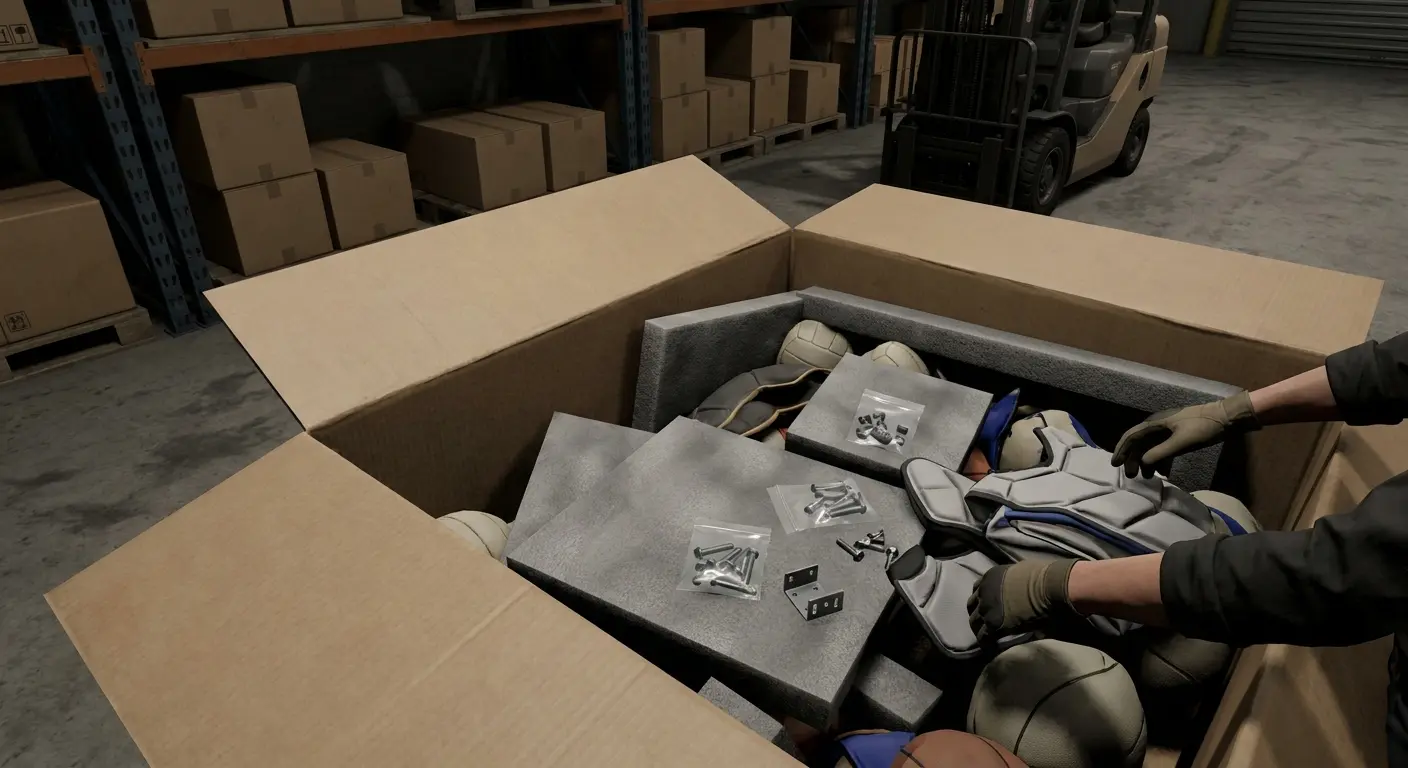
how to handle bulky item returns amazon fba is where many sports sellers discover the model was weaker than expected. Large sports items come back with a few recurring patterns:
the buyer did not understand size, weight, or footprint
the item was difficult to assemble or repack
the item arrived with cosmetic shipping damage
the buyer used it and then decided it was not suitable
parts were missing after the return, making the unit hard or impossible to resell as new
The first job is reducing preventable returns before the order happens. Clear dimensions, compatibility notes, setup instructions, and "what's in the box" content often do more work here than ad optimization.
The second job is deciding which SKUs should go through FBA at all. FBA is convenient, but convenience is not the only variable. With bulky sports products, a returned unit may come back in poor condition, with missing parts, or in packaging that can no longer protect it. For some products, seller-fulfilled handling through a controlled workflow is worth the lower conversion.
The third job is designing return resilience into the packaging. If the carton cannot survive one outbound trip and one inbound return trip, expected recovery value is already lower than it looks. Sports products with multiple hardware components, or soft goods paired with rigid frames, are especially exposed here.
A useful heuristic is simple. If a bulky item is hard for a customer to repack correctly, assume the effective return loss rate is higher than the nominal return rate suggests.
Seasonality is usually mismanaged in two directions
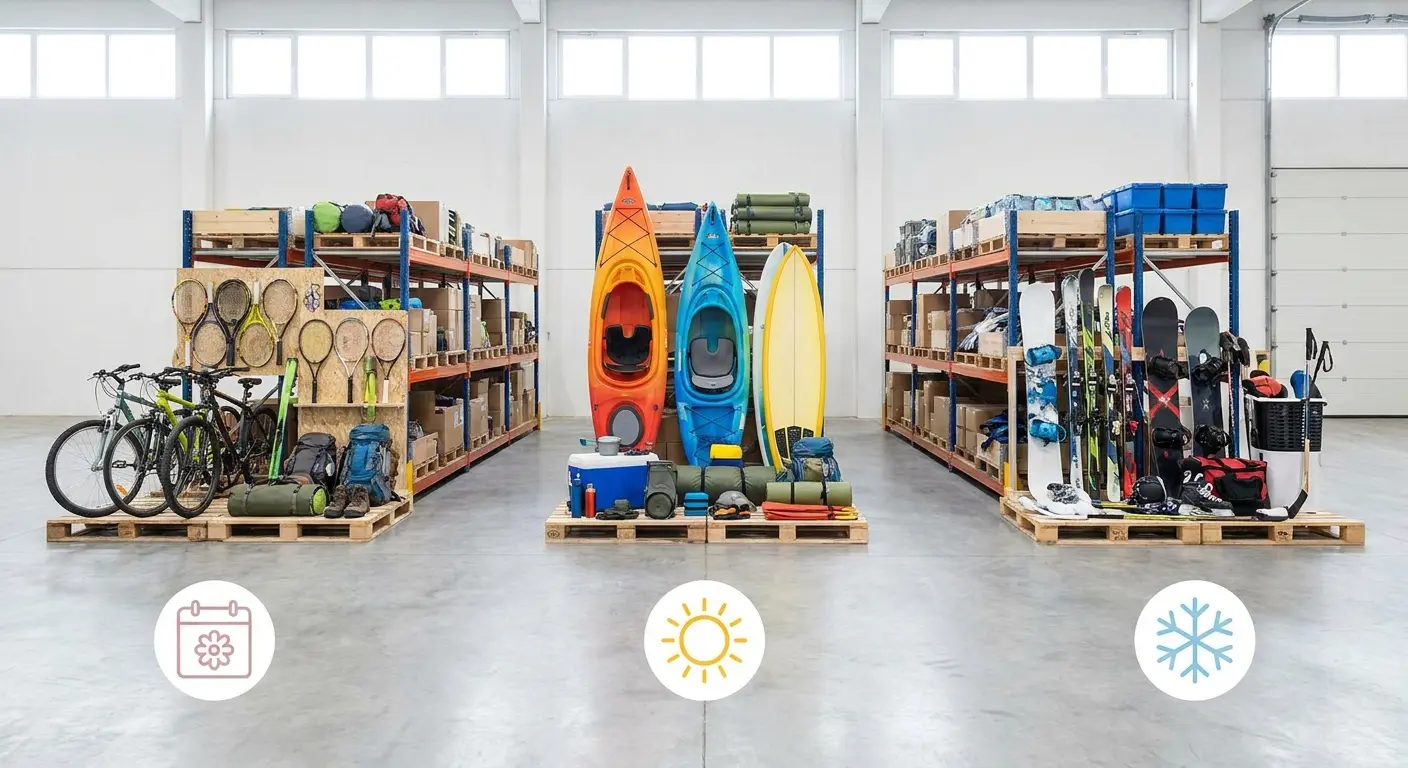
managing seasonality for outdoor sports equipment fba is not just about having enough stock before peak. It is also about exiting the season cleanly.
Most sellers make one of two mistakes. They either under-order and lose rank during the demand spike, or they over-order and pay storage into the off-season while trying to hold price. In sports, rank recovery after a seasonal stockout can be slower than expected because demand windows are short and competitive traffic intensifies at the same time.
A more reliable pattern is phased positioning. Put inventory into FBA according to the part of the season you are entering, not the full season volume you hope to sell. Keep reserve stock accessible outside FBA if replenishment timing allows. This reduces exposure if demand comes in late, shifts geographically, or underperforms because of weather or trend changes.
Seasonal catalogs also need listing timing discipline. If you wait until the demand spike to finish creatives, launch ads, or fix indexing, you are already late. Outdoor sports equipment often needs educational listing content because the buyer is comparing specs for a specific use. That work has to be ready before the market gets noisy.
For fba storage fee management for large sporting goods, the key is simple. Off-season inventory should have to earn its place in FBA. If sell-through is slowing and replenishment lead times are manageable, it is often better to hold reserve externally than to let aged units sit in Amazon's network by default.
Three realistic scenarios sellers run into
A bulky home fitness SKU with strong conversion but weak margin
A seller launches an adjustable workout bench. Click-through and conversion are good. Reviews are solid. After a few months, net margin is thin. The reason is not ad spend. The packed dimensions place the item in a more expensive fulfillment profile, storage costs are elevated, and return recovery is poor because damaged cartons reduce resale value.
What often fixes this is a packaging redesign, not a headline rewrite. In some cases, splitting the bench into a better-protected pack configuration helps. In others, the answer is moving part of the offer to FBM while keeping a core ASIN presence in FBA.
A seasonal outdoor item that sells out at exactly the wrong time
A seller of field training equipment sees strong spring demand, stocks conservatively, then goes out of stock during the best six-week window. The seller avoids excess inventory, but loses rank and misses the season's most profitable period.
The better pattern is staged replenishment with external reserve stock and an earlier listing-readiness calendar. managing seasonality for outdoor sports equipment fba means planning for rank continuity, not just avoiding leftovers.
A protective gear listing gets suppressed after launch edits
A seller gets a safety-related sports item live, then updates the title and bullets to improve conversion by adding stronger protective claims. The ASIN later triggers a documentation request, and the current document set does not clearly support the revised listing language.
This is common enough to respect. amazon sports category safety compliance requirements are often enforced when listings drift beyond what the product file and support documents clearly establish.
What experienced sellers often get wrong in this category
One misunderstanding is assuming all sports products should be merchandise-led. In reality, many are instruction-led. Buyers need help understanding fit, resistance, setup, compatibility, or use conditions. If the listing teaches poorly, conversion suffers and returns rise.
Another is treating oversized sports products as premium-margin products by default. A higher price does not guarantee healthier profit when inbound, fulfillment, storage, and return loss all stack up.
Another is using broad seasonality assumptions. Outdoor is not one season. Demand patterns differ by region, sport, weather, school calendars, and event timing. The replenishment plan should follow the product's use cycle, not the category name.
A final one is believing ungating equals long-term safety. getting ungated in sports and outdoors amazon is only part of operating stability. Listing edits, variation changes, and evolving product claims can reopen risk.
Where the model gets messy
Some sports products are poor FBA candidates even if they technically qualify. Odd shapes, fragile frames, products that are difficult to package securely, or items with high assembly confusion can create a return and damage profile that FBA does not manage well economically.
Another edge case is products that sit between sports, toys, medical-adjacent support, or protective equipment. Those can attract extra review because the intended-use claims cross category boundaries. The product itself may be acceptable, but the wording, imagery, or age targeting can complicate the listing.
International sourcing adds another layer. If a supplier changes materials, closures, straps, electronics, coatings, or labels without clean version control, you can end up with inventory that is functionally similar but documentarily inconsistent. Amazon often cares about that difference during compliance review.
There is also a hard truth on some oversized items. Sometimes the best answer is not reducing fba fees for heavy sports items, but stopping the attempt to force that SKU into FBA. If the economics only work under ideal return conditions and perfect storage turnover, the model is too fragile.
The operating rules that usually hold up
If you are building or cleaning up a sports catalog on Amazon, these rules tend to survive contact with reality:
Model FBA economics from final packed dimensions, not product dimensions or supplier estimates.
Treat compliance documents and listing claims as one system. If one changes, review the other.
Use listings to narrow buyer assumptions, especially on fit, size, compatibility, setup, and included parts.
For bulky products, assess return recovery value before committing fully to FBA.
Plan seasonal inventory around rank continuity and off-season exit, not just peak demand.
Keep reserve inventory optionality outside FBA when the item is large or demand is weather-sensitive.
If a SKU is profitable only when returns are unusually low, assume the model needs work.
Sports equipment can be a strong Amazon category, but it rewards sellers who operate with mechanical discipline. Good demand helps. Clean execution matters more.