Amazon Traffic vs Conversion: What’s Broken?

Sarah Johnson

Amazon Traffic vs Conversion Problem: How to Know What’s Broken
Are you trying to fix high ACoS Amazon PPC by raising bids, when the real issue is that your listing is not converting the traffic you already have?
Most experienced sellers hit this wall eventually. Sales flatten, ACoS creeps up, and you see clicks but no orders. In other cases, impressions disappear and you assume conversion is the problem when the listing is not getting seen due to ranking shifts, budget limits, or competitive pressure.
The difference between a traffic problem and a conversion problem sounds basic. In practice, it is one of the most expensive misdiagnoses in Amazon selling.
This guide shows how to identify what is actually broken, what matters most when deciding, and how to avoid pouring money into the wrong fix.

What You’re Actually Deciding (and Why It’s Expensive to Get Wrong)
At a high level, you are deciding whether your constraint is:
Not enough qualified shoppers reaching your listing (traffic problem), or
Enough shoppers reaching it, but not enough buying (conversion problem)
The reason this matters is leverage.
If traffic is the issue, listing tweaks alone usually will not move the needle. You need visibility through SEO, ads, or an Amazon external traffic strategy.
If conversion is the issue, scaling traffic often amplifies waste. More clicks can simply mean more lost ad spend and higher ACoS.
This is why many sellers who attempt to fix Amazon conversion rate by spending more on ads see performance deteriorate. Revenue decline can look like a visibility issue even when the funnel is leaking on the detail page.
Expectation vs reality:
Expectation: “If I get more traffic, sales will rise.”
Reality: traffic multiplies whatever conversion performance already exists, good or bad.
Before hiring an Amazon PPC management agency or investing in an Amazon listing optimization service, the core question is simple: where is the bottleneck?
The Metrics That Actually Decide It (Ranked by Importance)
Not all metrics carry equal weight. Here is how experienced sellers should prioritize them when diagnosing traffic vs conversion.
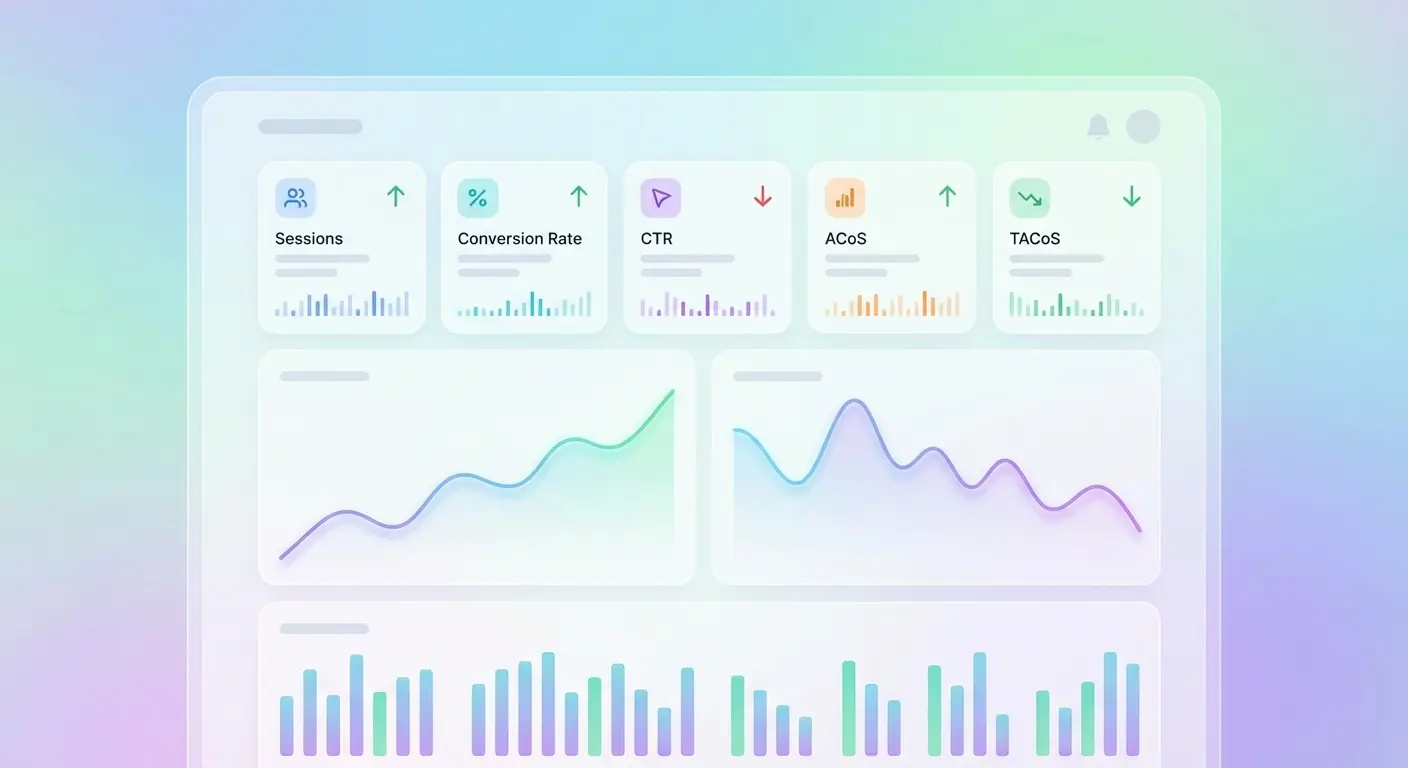
1. Unit Session Percentage (Conversion Rate)
This is your first diagnostic anchor.
If your conversion rate is structurally low relative to similar products in your category and price band, you likely have a listing or offer problem. More traffic rarely fixes that by itself.
Key patterns:
Stable sessions, declining Unit Session Percentage usually points to a conversion issue.
High click-through rate but weak order volume often points to an on-page conversion issue.
Strong add-to-cart but low purchase can indicate price, delivery promise, or trust friction.
If you consistently see clicks but no sales on Amazon, the constraint is often the offer or the listing experience. It can also be operational, such as Buy Box loss, longer delivery times, or variation issues, so verify those factors before assuming it is purely creative.
2. Sessions Trend vs Sales Trend
Look at direction, not just raw numbers.
Sessions down, conversion stable often indicates a traffic problem.
Sessions stable, sales down often indicates a conversion problem.
Both down can happen when traffic declines first and then conversion degrades due to weaker placement, weaker shopper intent, or competitive shifts.
Separate volume from efficiency before making changes.
3. Click-Through Rate (CTR)
CTR helps determine whether your issue begins on the search results page.
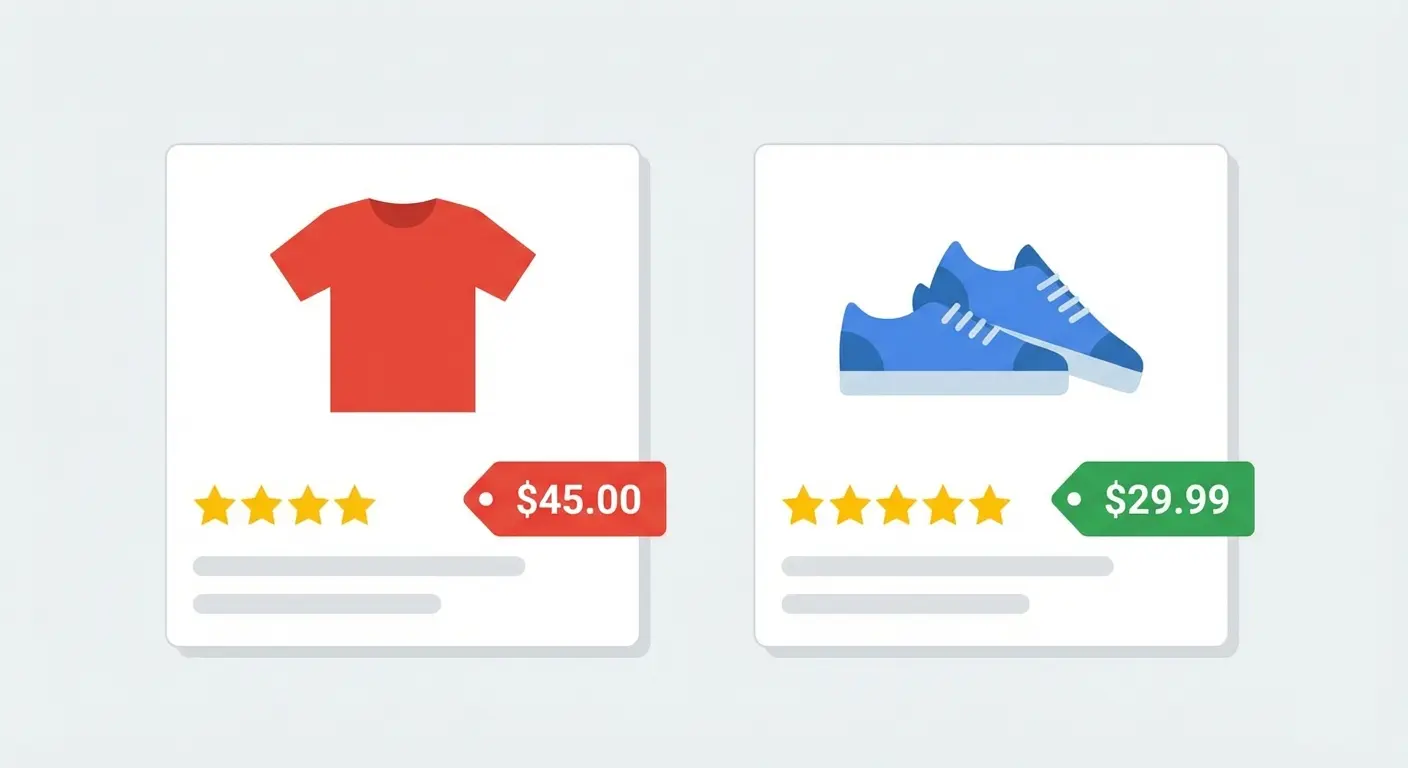
If impressions are healthy but CTR is low, your main image, price positioning, Prime delivery promise, coupon/badge presence, or review profile may be uncompetitive. This is where an Amazon main image design service or tighter positioning can materially improve Amazon click through rate.
Low CTR is a traffic issue in effect, but it is often caused by creative and competitive positioning, not just keyword coverage.
4. ACoS and TACoS Trends
High ACoS does not automatically mean PPC is “bad.” It depends on what changed.
If ACoS rises while conversion drops, that often reflects a listing or offer issue. You are paying for similar traffic but closing fewer buyers.
If ACoS rises because you expanded into broader keywords or placements, conversion can dip temporarily as you reach less-qualified audiences.
When sellers try to fix high ACoS Amazon PPC without checking conversion rate, Buy Box, and delivery promise first, they can end up pausing campaigns that were strategically correct while ignoring the true root cause.
5. Buy Box and Offer Health
Suppressed listings, Buy Box loss, or slower delivery can mimic conversion problems.
If Buy Box ownership fluctuates, conversion rate can suffer even if the listing content is strong. Pricing changes, fulfillment method, inventory levels, account health signals, and competitor behavior can all influence Buy Box eligibility.
This is where expert Amazon account management is often about operational control as much as marketing.
If You See X, Consider Y
Instead of generic advice, here are scenario-based interpretations.
If impressions are falling but conversion is steady
You likely have a visibility issue.
Possible causes:
Ranking loss due to reduced sales velocity
Budget caps limiting ad exposure
Indexing loss for priority terms
Increased competition in top placements
Seasonality or demand shifts
In this case, focusing on listing copy tweaks is secondary. First restore impressions through SEO repair, campaign restructuring, or broader targeting.
An Amazon PPC management agency can help here, but only if they diagnose beyond “increase bids.”
If impressions and clicks are strong but orders are weak
This is a common conversion failure pattern.
Look at:
Main image clarity and competitiveness
Price relative to review count and perceived value
Variation setup and whether the selected child is the intended best seller
A+ Content and image stack depth
Objections not addressed in bullets and images
Negative review themes, including sizing, durability, or misleading expectations
Delivery promise and returns friction
An Amazon listing audit service can surface structural weaknesses. Internal review mining and competitor comparison can be just as powerful if done objectively.
If your product is priced similarly to a competitor with substantially more reviews, your offer must outperform visually and positionally. Otherwise, shoppers often default to social proof.

If conversion rate is unusually high but volume is low
Very high conversion can mean you are mostly reaching bottom-of-funnel traffic. You may be underinvesting in discovery keywords, category targeting, or external audiences.
Here, scaling traffic may lower conversion slightly while increasing total profit. A broader Amazon external traffic strategy or upper-funnel PPC expansion may be justified if attribution, inventory depth, and margins support it.
If CTR is weak across most campaigns
That points to search result positioning more than on-page depth.
Consider:
Main image contrast against competitors
Packaging clutter and readability at thumbnail size
Price anchoring and coupon strategy
Star rating and review count relative to the page average
Prime eligibility and delivery speed
Before rewriting bullets, fix what shoppers see in the first two seconds of scanning.
Common Misdiagnoses That Waste Money
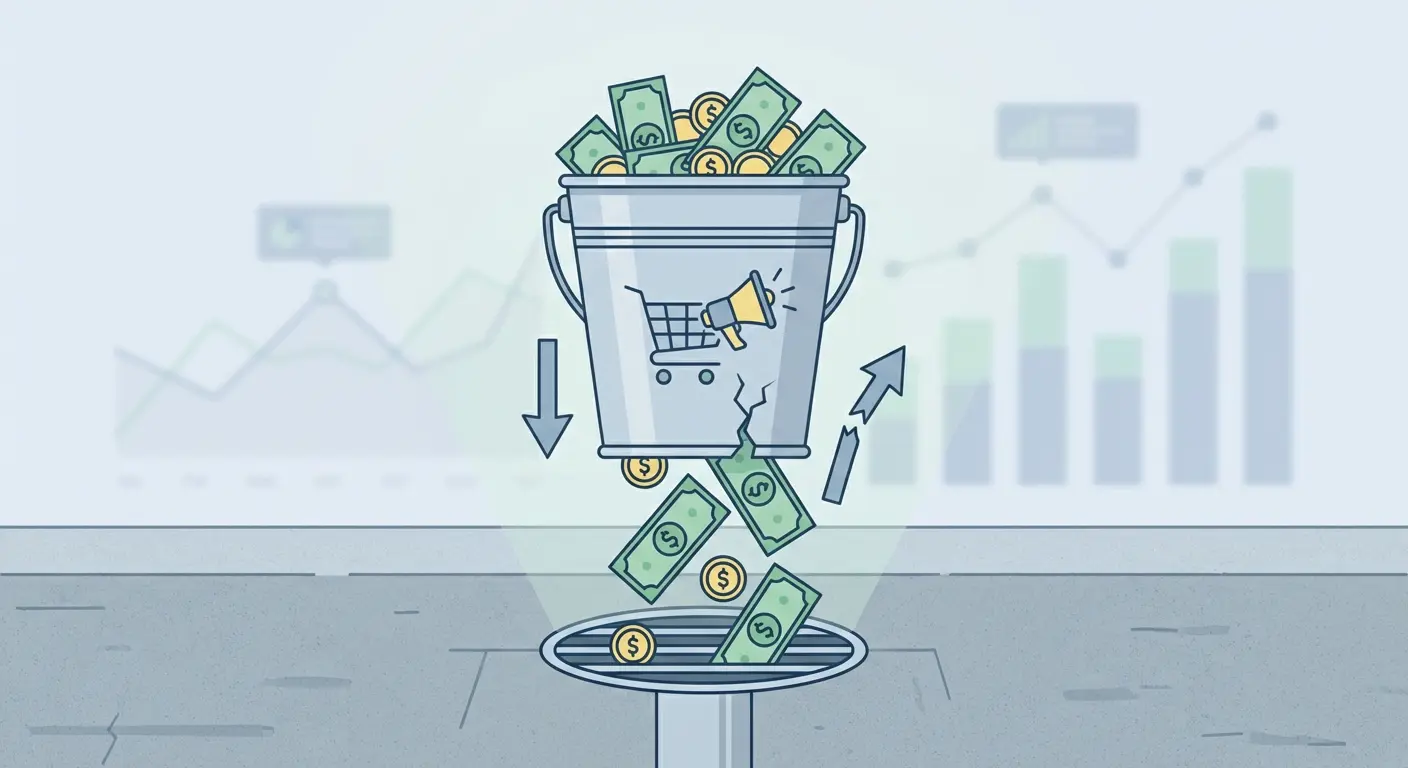
Throwing More Ad Spend at a Weak Listing
If conversion is broken, scaling traffic increases waste. Ads cannot reliably compensate for unclear positioning, weak imagery, or an uncompetitive offer.
Cutting Price to Fix Conversion Without Diagnosis
Price drops can mask underlying issues.
If conversion improves only when price drops below profitability, the problem may be differentiation or perceived value, not price alone.
Obsessing Over Revenue Instead of Efficiency
Revenue growth with deteriorating TACoS can signal reliance on paid traffic without enough organic reinforcement. Traffic and conversion should be evaluated together.
Hiring the Wrong Type of Help
If traffic is the constraint, an Amazon listing optimization service alone will not solve it.
If conversion is broken, a PPC-only fix can stall.
The most effective partners, whether an Amazon PPC management agency or a team offering expert Amazon account management, start with diagnosis before implementation.
Two Short Decision Walkthroughs
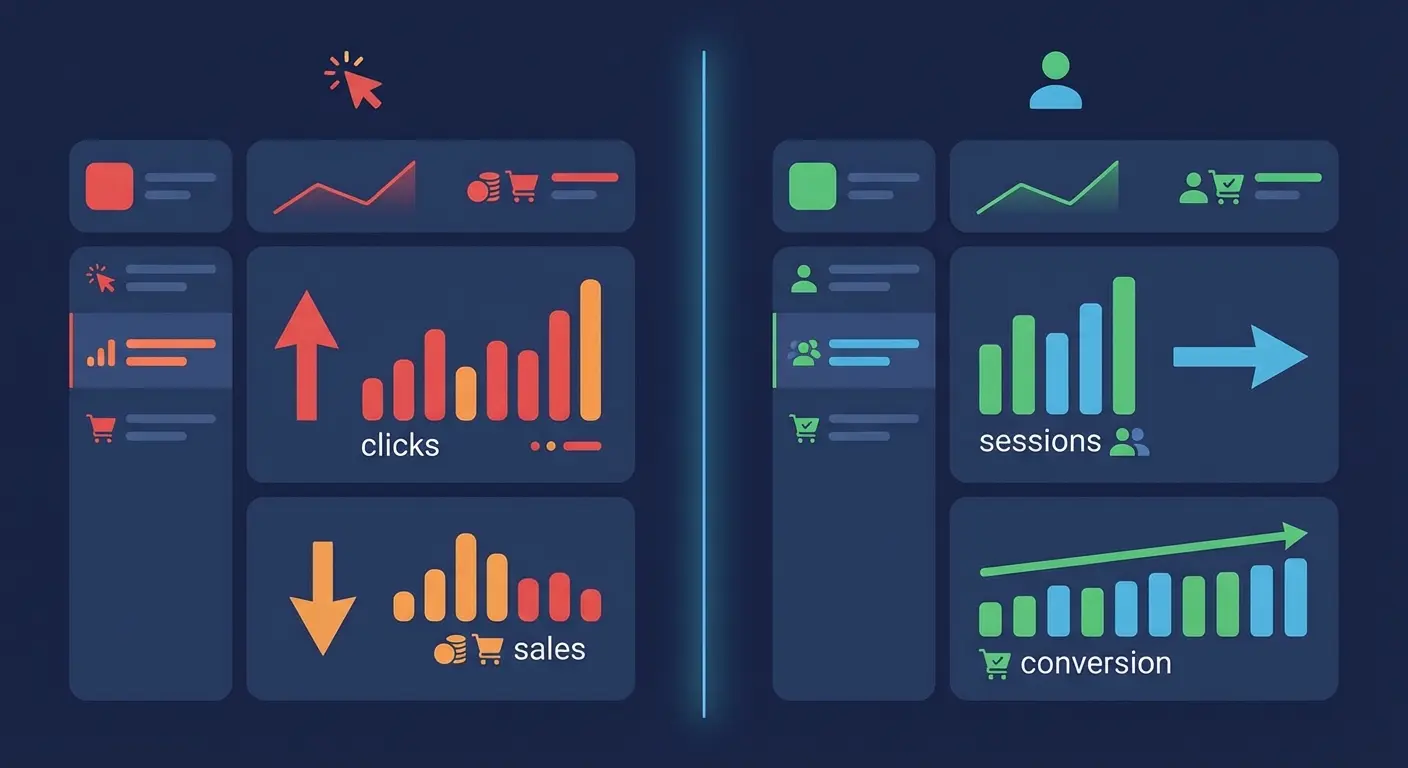
Walkthrough 1: The “Clicks but No Sales” Scenario
Hypothetical case:
Impressions: stable
CTR: 0.8% (versus a higher competitive set)
Conversion rate: 6%
ACoS: rising
Diagnosis:
Traffic is reaching the listing, but CTR and conversion are weak. The issue starts at search results and continues on-page.
Priority actions:
Redesign the main image to improve clarity and differentiation at thumbnail size.
Improve value communication in the first two bullets and the first image callouts.
Address top negative review themes directly in images and A+ Content where appropriate.
Reassess pricing, coupon strategy, and delivery promise against the top competitors.
In this scenario, hiring an Amazon main image design service plus a structured listing overhaul often makes more sense than increasing bids.
Trying to fix high ACoS Amazon PPC by cutting keywords can reduce learning and does not address the root cause.
Walkthrough 2: The “Sales Dropped Suddenly” Scenario
Hypothetical case:
Sessions: down 35% month over month
Conversion rate: stable at 14%
ACoS: stable
Buy Box: consistent
Diagnosis:
Conversion is healthy. The issue is traffic loss.
Likely causes:
Keyword ranking drop
Budget caps
A competitor taking top placements
Seasonality or demand shift
Priority actions:
Audit lost keywords, indexing coverage, and ranking changes.
Expand exact-match and phrase-match coverage where profitability supports it.
Adjust top-of-search placement and bids strategically, with guardrails.
Evaluate an Amazon external traffic strategy using Attribution and controlled landing experiences where applicable.
Here, stronger campaign structure and traffic expansion are appropriate. A listing rewrite alone is unlikely to solve a traffic drop.
The Real-World Constraints Sellers Forget
Inventory Position
Traffic scaling without inventory depth can backfire. Stockouts and long restock periods can reduce sales velocity and harm visibility. Pair traffic decisions with supply forecasting.
Review Velocity and Post-Purchase Experience
If conversion is decent but review growth is stagnant, long-term competitiveness can erode. Conversion work includes expectation-setting, packaging accuracy, and product quality, not just listing polish. Stay compliant with Amazon’s review and messaging policies when requesting reviews.
Category-Specific Norms
Conversion expectations differ by price band, complexity, and replenishment behavior. A $15 impulse product behaves differently from a $200 considered purchase.
What to Do Before You Hire Anyone

Before engaging an Amazon listing audit service, Amazon PPC management agency, or broader expert Amazon account management, prepare:
Clean reporting on sessions, CTR, conversion rate, ACoS, and TACoS
A competitor set with price, review count, and offer comparison
A breakdown of branded vs non-branded traffic and keyword clusters
Notes on Buy Box percentage, fulfillment method, and delivery promise changes
If a provider jumps straight to tactics without reviewing these inputs, that is a risk sign.
For many brands, Amazon seller conversion optimization starts with basic clarity. Why did the shopper click, and why did they hesitate? When that is answered, it becomes far easier to decide whether you need creative fixes, offer fixes, or traffic fixes. In some cases the answer is a targeted Amazon listing optimization service. In others it is campaign architecture, or a disciplined approach to fix high ACoS Amazon PPC. In many accounts, the fastest wins come from an Amazon listing audit service paired with ads that match shopper intent, not just search volume.
Core Principles to Remember
Traffic multiplies conversion. Fix the weaker variable first.
Stable conversion with declining sessions usually signals a visibility problem.
Strong traffic with weak orders points to listing or offer issues.
High ACoS is often a symptom, not the disease.
Main image and price positioning influence both CTR and conversion.
Very high conversion with low volume can indicate underexposed traffic.
Diagnose before hiring an Amazon listing optimization service or scaling ads.
When you can clearly identify whether the constraint is traffic or conversion, you can allocate spend intentionally, reduce wasted clicks, and build a repeatable process to fix Amazon conversion rate and improve Amazon click through rate without guessing.