Amazon UGC Strategies for Compliant Growth

Sarah Johnson

Amazon User-Generated Content Tips That Actually Work (Without Risking Your Account)
Are you collecting Amazon user-generated content but not seeing any measurable lift in conversion rate or sales?
Most experienced sellers already understand that reviews, photos, and videos matter. The real issue is operational: how do you systematically generate, monitor, analyze, and deploy UGC without violating policy, overwhelming your team, or drowning in tools?
This is where disciplined review management, smart automation, and the right b2b software for Amazon sellers make the difference. Below is a practitioner-level FAQ focused on what tends to work in the field while staying inside Amazon policy.

How should experienced sellers think about Amazon user-generated content today?
Treat Amazon UGC as conversion infrastructure, not marketing fluff.
Reviews, customer photos, videos, and Q&A can influence click-to-conversion performance. They also shape how your listing performs over time because stronger conversion can support organic visibility in Amazon’s retail systems. The goal is not “more reviews.” The goal is better-informed buyers who convert with fewer objections.
Expectation vs reality: You expect UGC to magically increase sales. In reality, UGC often reduces friction. Sales increase when friction drops.
Your job is to systematically reduce that friction.
What’s the safest way to increase review volume without risking suspension?
Use a compliant automated amazon review request tool inside Amazon’s guidelines.
Amazon allows sellers to request reviews using the “Request a Review” button in Seller Central. Some third-party tools also automate sending Amazon’s review request message, but you should confirm the tool is using the approved Amazon template and follows Amazon’s communications rules. You cannot offer incentives, filter for positive experiences, or pressure buyers.
Failure mode: Manual requests get inconsistent. Teams forget. Volume stalls.
Mitigation: Automate the process and audit it regularly to ensure it sends only Amazon-compliant templates and does not add unapproved messaging.
Consistency beats creativity here.
Do I really need amazon review management software if I’m already checking Seller Central?
If you manage more than a handful of SKUs, it can be worth it.
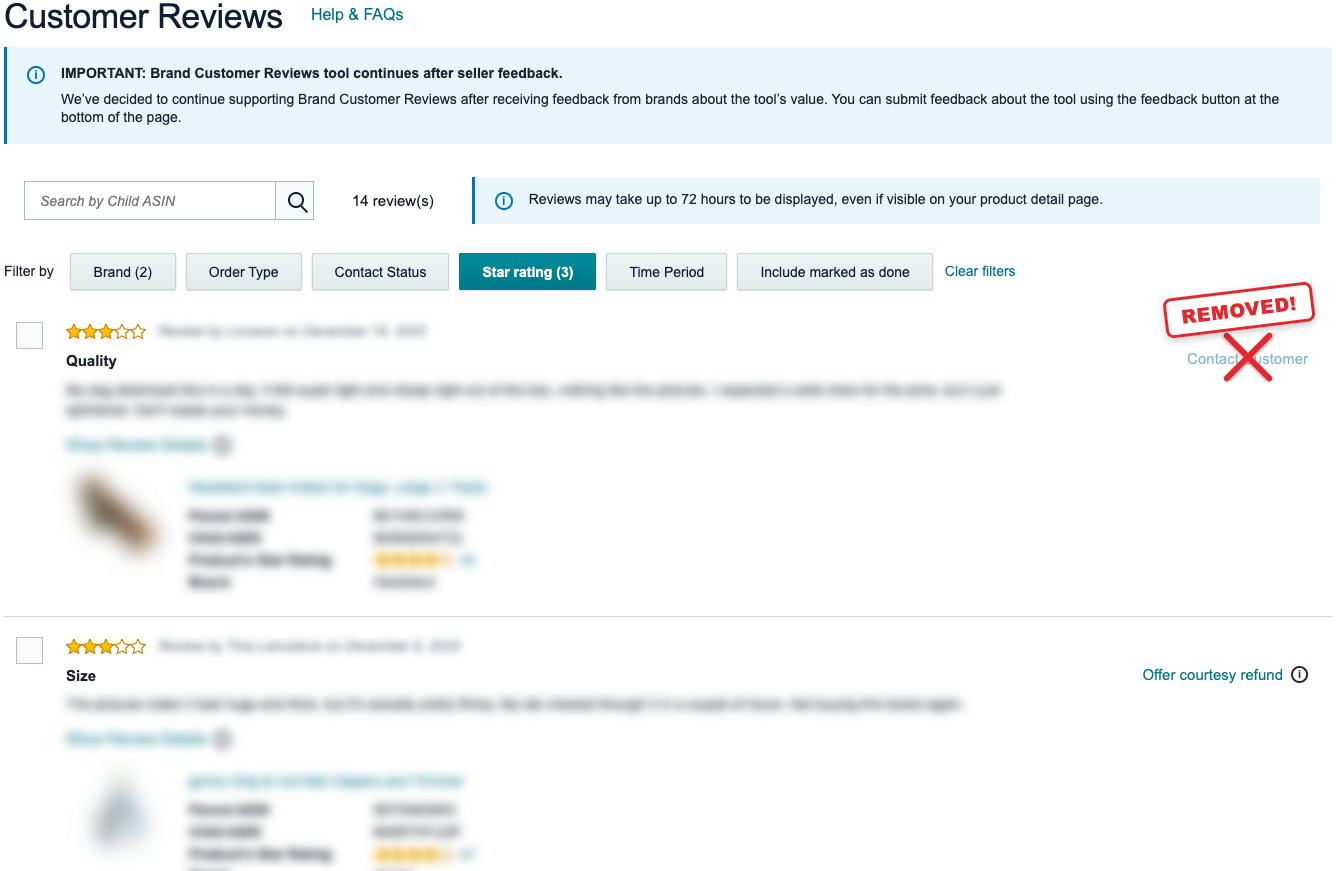
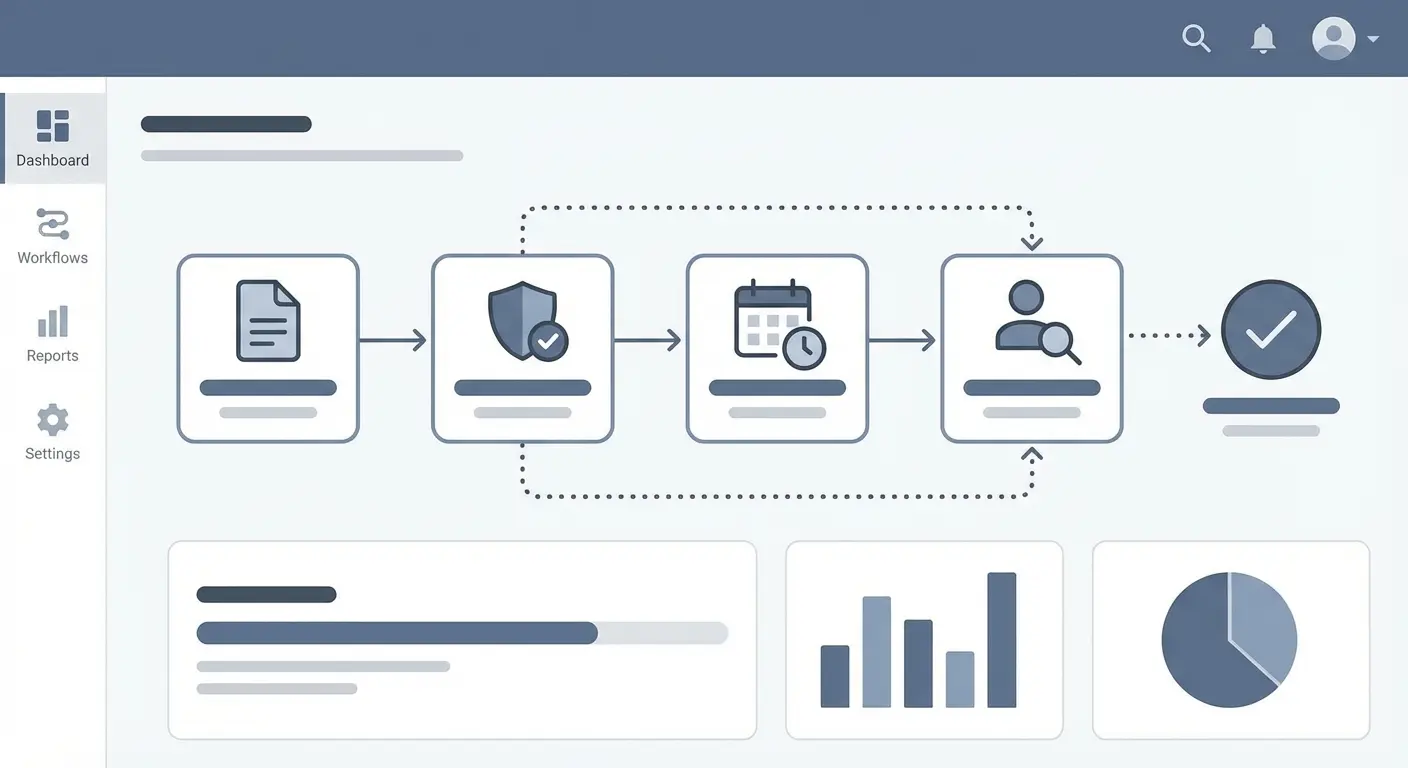
amazon review management software can centralize review monitoring across ASINs and marketplaces, flag sudden rating shifts, and support workflows for triage. Seller Central shows reviews and account signals, but many sellers want more structured tagging, trend views, and operational handoffs.
Constraint: Time is limited. You cannot manually read hundreds of reviews weekly.
Reliable pattern: Use software to surface anomalies, such as sudden rating drops or recurring complaints, then manually review the flagged subset.
You are not outsourcing judgment. You are outsourcing detection.
How do I turn raw reviews into actual listing improvements?
Use amazon review analytics software to extract patterns, not anecdotes.
Individual reviews are emotional. Aggregated review data is strategic. Look for repeated themes around sizing, packaging, instructions, durability, missing parts, or expectation mismatch.
Seller insight: If three unrelated customers mention the same issue within 30 days, treat it as potentially systemic, not random.
Then apply changes where they matter:
Update bullet points to preempt confusion.
Add images clarifying sizing, dimensions, or use cases.
Improve packaging, inserts, or onboarding instructions, while keeping inserts compliant with Amazon policy.
Adjust A+ Content to address common objections.
UGC is feedback. Your listing should visibly evolve because of it.
What role does an amazon customer feedback tool play beyond product reviews?
Product reviews and seller feedback are separate systems with different impacts.
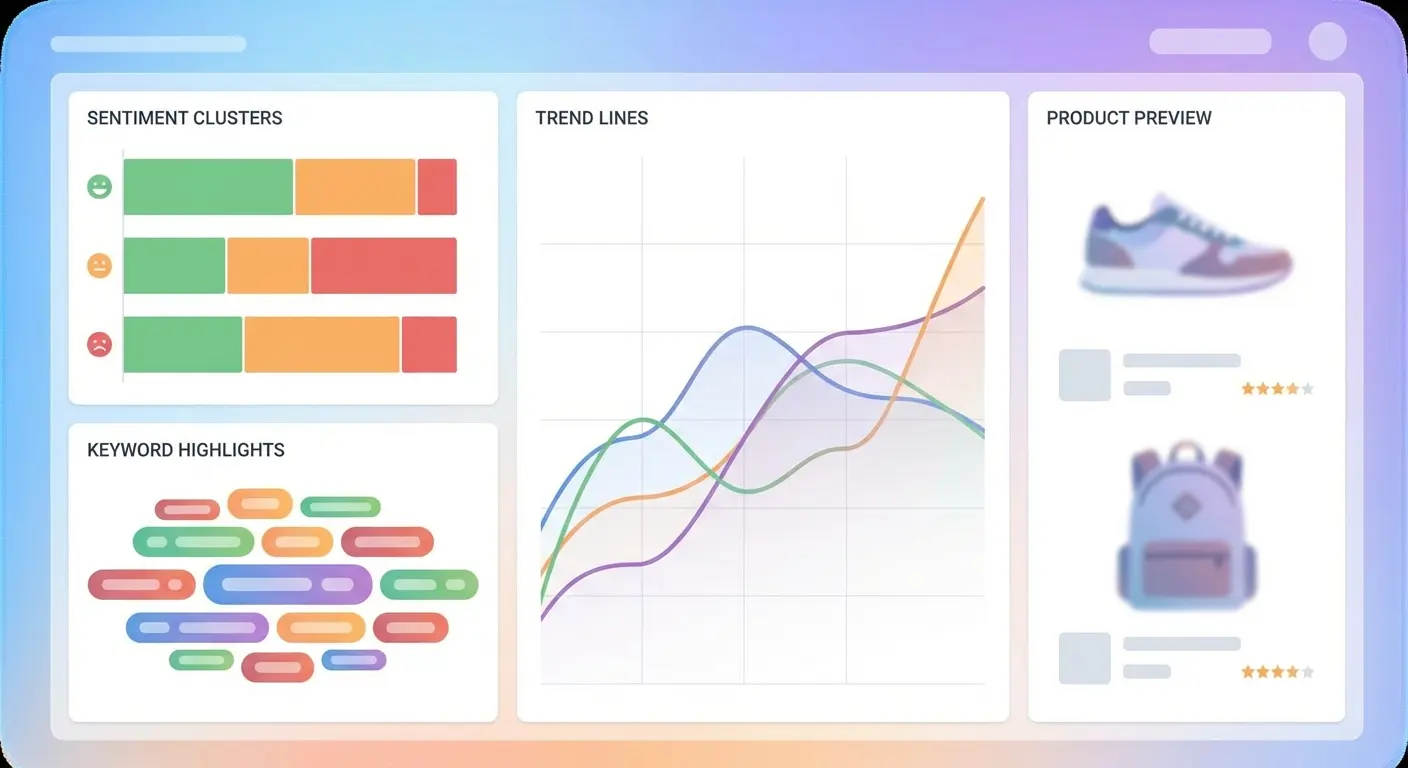
An amazon customer feedback tool can help you monitor:
Seller feedback (relevant to account performance and buyer trust).
Product reviews (relevant to conversion).
Customer Q&A (relevant to buyer clarity and objections).
Failure mode: Sellers focus only on star rating and ignore unanswered customer questions.
Mitigation: Set alerts for new Q&A entries and negative seller feedback. Respond quickly and professionally, and stay within Amazon’s messaging and moderation rules. Silence in Q&A can reduce buyer confidence, especially on higher-consideration products.
Is there actually “software to get Amazon reviews,” or is that risky territory?
Be careful with the wording.
There is no legitimate software to get amazon reviews in the sense of generating artificial, incentivized, or guaranteed reviews. Any tool that promises guaranteed review counts, promises positive reviews, or claims it can “remove” legitimate negative reviews should raise concern.
Legitimate tools typically do two things:
Automate compliant review requests.
Help you monitor and analyze incoming reviews.
If a tool claims to influence review sentiment or route unhappy buyers away from leaving a review on Amazon, it is a compliance risk.
How should UGC influence listing optimization?
This is where amazon listing optimization software and review analytics intersect.
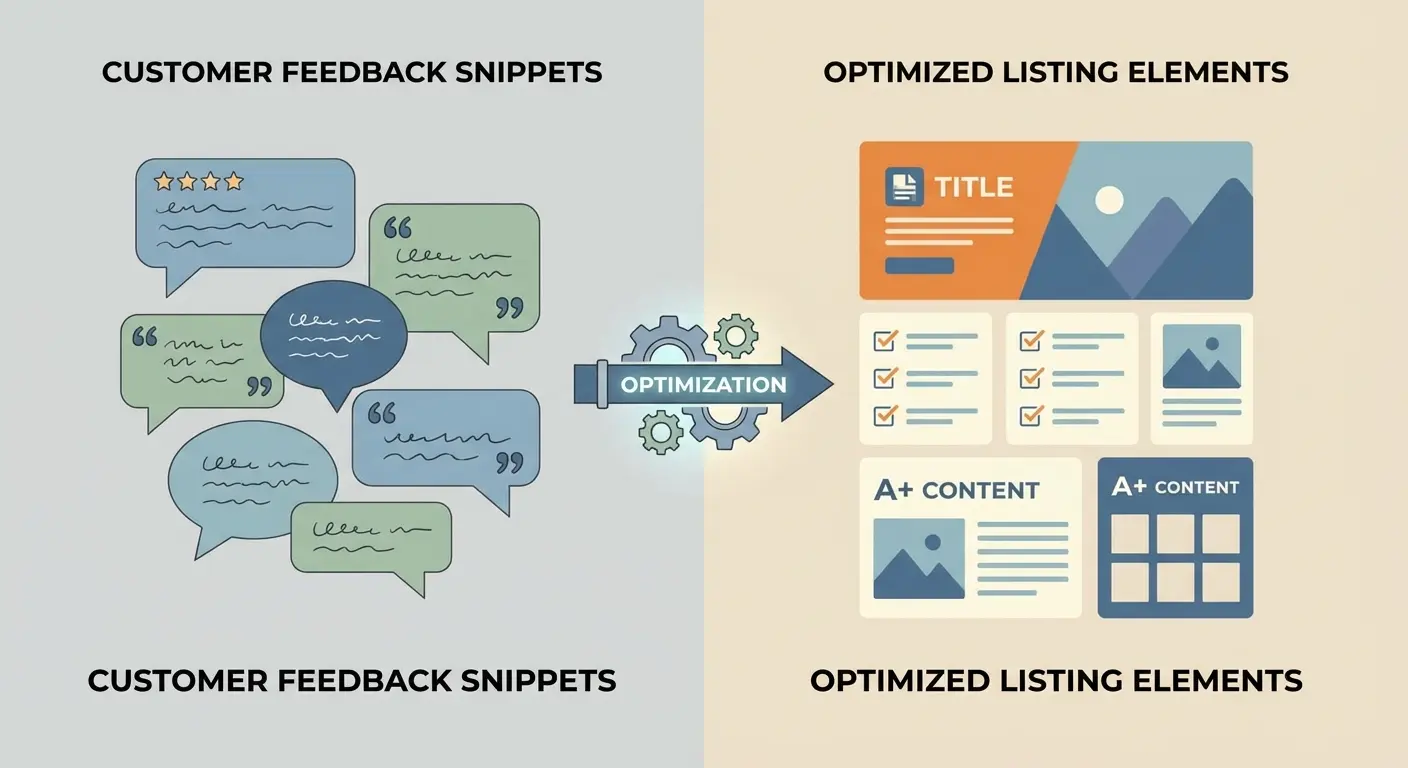
Many sellers optimize listings around keyword volume. That is necessary but incomplete. UGC shows how customers describe outcomes, use cases, and objections in their own language, which can complement keyword research.
Pattern that works:
Extract recurring customer phrases from reviews and Q&A.
Cross-check against keyword tools and brand positioning.
Integrate high-intent language into titles, bullets, and A+ Content where accurate and relevant, and use backend search terms within Amazon’s current guidelines.
You are aligning search demand with real buyer vocabulary.
Can an amazon seller ugc platform help beyond reviews?
Yes, but be precise about its role.
An amazon seller ugc platform typically helps you:
Collect user photos or videos outside the Amazon review flow.
Organize usage rights and permissions for repurposing.
Route approved content into ads or external landing pages.
Constraint: You cannot control what customers upload to the listing’s review section, and you should not try to steer review content.
Mitigation: Encourage honest sharing of experiences through compliant channels. Then request permission to reuse that content in formats you control, such as Sponsored Brands video, Sponsored Display creatives, Amazon Posts (where available), or off-Amazon ads. Keep claims accurate and avoid implying that UGC represents typical results unless you can substantiate it.
Authenticity is the asset. Over-polishing UGC can reduce credibility.
How does amazon seller marketing automation fit into UGC strategy?
amazon seller marketing automation connects touchpoints that would otherwise stay disconnected.
Examples:
Triggering compliant review requests.
Sending post-purchase education messages in permitted channels, while respecting Amazon’s buyer-seller messaging rules and any applicable privacy requirements.
Segmenting repeat buyers for product launches on your owned channels, where allowed.
Failure mode: Automation becomes noise if messaging is generic or too frequent.
Reliable pattern: Automate process, not persuasion. Keep messages short, helpful, and policy-aligned. The goal is to increase the chance of successful product use, not to manipulate outcomes.
Automation should reduce operational drag, not create compliance risk.
What’s the best way to track UGC performance over time?
Use a tool to track amazon product reviews combined with conversion metrics from Business Reports and brand analytics tools available to your account.
Track:
Review count growth rate.
Star rating trends.
Review velocity by SKU.
Conversion rate shifts after rating changes.
Example: If your rating drops from 4.5 to 4.2 and conversion declines in parallel, you have a correlation worth investigating. Verify by checking for inventory changes, price changes, traffic mix changes, and recent fulfillment issues.
Without structured tracking, you react emotionally to individual reviews. With data, you identify patterns earlier.

How do B2B software tools for Amazon sellers support larger catalogs?
As SKU count grows, manual oversight breaks down.
b2b software for Amazon sellers can consolidate:
Review monitoring.
Feedback management.
Automation workflows.
Analytics dashboards.
Constraint: Larger platforms can be complex and underused.
Mitigation: Define internal KPIs first. For example:
Maximum acceptable rating drop per month by parent ASIN.
Response time targets for negative seller feedback.
Review request coverage rate per eligible order.
Then configure tooling around those KPIs. Tools should reinforce decisions you already made.
Should I respond to negative product reviews?
In most categories, sellers cannot publicly reply to product reviews like they can respond to seller feedback. Available options depend on Amazon’s current features and eligibility.
What you can usually do:
Address recurring issues in updated listings and creatives.
Improve the product, packaging, or instructions.
Use Buyer-Seller Messaging carefully when there is a legitimate customer service need, and avoid language that pressures the customer to change or remove a review.
Expectation: One interaction fixes perception.
Reality: Systemic fixes improve future reviews. That is what compounds.
Focus less on defending a single review and more on eliminating the root cause behind it.
How do I integrate UGC into ads without losing control of brand messaging?
UGC works best when it complements structured brand content.
Reliable pattern:
Use customer language in creatives only when accurate and when you have rights to use it.
Highlight real use-case photos in video ads that comply with Amazon Ads policies.
Test UGC-style creative versus studio content and measure impact on CTR and conversion.
Constraint: Not all UGC aligns with brand positioning, and not all UGC is legally reusable.
Mitigation: Select content that reinforces your product’s core promise. Avoid heavily edited testimonials that look scripted. Keep substantiation in mind for performance claims.

Tricky Situations Sellers Run Into
What if my competitor is clearly using fake reviews?
Do not retaliate by copying the tactic.
Document what you see and report it through Amazon’s official channels designed for reporting abuse. Meanwhile, double down on compliance, product quality, and consistent review requests. Enforcement outcomes can be unpredictable, so avoid building your strategy around what you think will happen to a competitor.
Your moat is operational discipline.
What if my product is good but early negative reviews tanked the rating?
This is common when early manufacturing, prep, or instructions are inconsistent.
Steps:
Fix the product or packaging first.
Update listing content to clarify expectations and reduce misuse.
Increase compliant review request consistency.
Monitor rating trend over the next 60 to 90 days.
You generally cannot remove legitimate reviews, but you can improve the underlying experience and let new orders generate new, honest feedback over time.
What if I’m getting reviews, but none include photos or videos?
Most customers will not create visual UGC unless the product naturally invites it.
Focus on:
Delivering a product worth showing.
Improving unboxing and first-use experience.
Reducing setup errors with clearer instructions.
You can also use an amazon seller ugc platform to collaborate with creators outside the review section, then repurpose that content in ads with proper permissions. Do not condition reviews on visual uploads or request only photo reviews.
Practical Rules That Hold Up
Automate compliant review requests using an automated amazon review request tool, and audit regularly.
Use amazon review management software to detect patterns, not to replace judgment.
Let amazon review analytics software guide listing improvements.
Treat amazon listing optimization software as a complement to real customer language, not a substitute.
Monitor seller feedback and Q&A with an amazon customer feedback tool.
Be skeptical of any software to get amazon reviews that implies sentiment control, guarantees, or review removal.
Use amazon seller marketing automation to reduce operational gaps, not to push boundaries.
Implement a tool to track amazon product reviews across SKUs to catch rating shifts early.
Deploy b2b software for Amazon sellers only after defining KPIs internally.
Consider how an amazon seller ugc platform fits into permissions, reuse rights, and ad workflows.
Amazon UGC is powerful because it reflects reality. The sellers who win are the ones who treat that reality as operational input, not just social proof decoration.