How to Expand Amazon Globally Without Risk

Sarah Johnson

How to Sell Internationally on Amazon Without Risking Your US Sales
Here’s the uncomfortable question most sellers avoid: if your US account hits turbulence tomorrow, how exposed are you?
Expanding internationally on Amazon is often framed as “more revenue.” In practice, it’s a structural decision about risk, operational load, and margin control. The sellers who succeed treat global expansion as a systems problem, not a listing-copy exercise.
This is a decision framework for experienced sellers who want to expand without jeopardizing their US base. We’ll focus on what tends to break, what can be automated safely, and where the real leverage sits, including choosing the right software to manage international amazon marketplaces, deciding when to sync amazon us listings to international marketplaces, and evaluating tax, inventory, and fulfillment workflows.

What You’re Really Deciding When You Go Global
You are not deciding whether to “turn on Canada” or “launch in Germany.” You are deciding:
How tightly coupled your US operation will be to foreign marketplaces
How much compliance complexity you are willing to absorb
Whether your current systems can handle multi-marketplace data, inventory, and tax flows
Most US sellers underestimate coupling risk.
It can be true that operating in multiple marketplaces reduces revenue concentration. But operational risk can increase if you centralize changes and push them everywhere.
Listings and inventory settings can be managed across multiple marketplaces, and mistakes can replicate fast. Account health is evaluated per marketplace, but some enforcement actions, linked accounts, and policy violations can still create broader business risk. Treat “independence” as an outcome you design, not a default.
The real decision is architectural. Do you want isolated test markets with minimal integration, or do you want deeply synced global operations optimized for scale?
That choice determines the type of tooling you need, from an amazon international fba inventory management tool to software to track amazon global sales data across regions.
What Actually Matters (Ranked by Impact)
When expanding internationally without risking your US sales, these are the criteria that matter most.
1. Operational Separation vs. Operational Efficiency
The more you automate and sync, the more efficient you become. You also increase blast radius if something goes wrong.
Using tools that sync amazon us listings to international marketplaces can save significant time. But if you push an incorrect compliance claim, regulated term, or restricted keyword, that error can propagate across connected marketplaces.
Seller insight: if your US catalog is still volatile (frequent edits, claim testing, aggressive keyword updates), keep international listings semi-isolated at first. Stabilize before syncing at scale.
Efficiency comes later. Stability comes first.
2. Tax and VAT Exposure
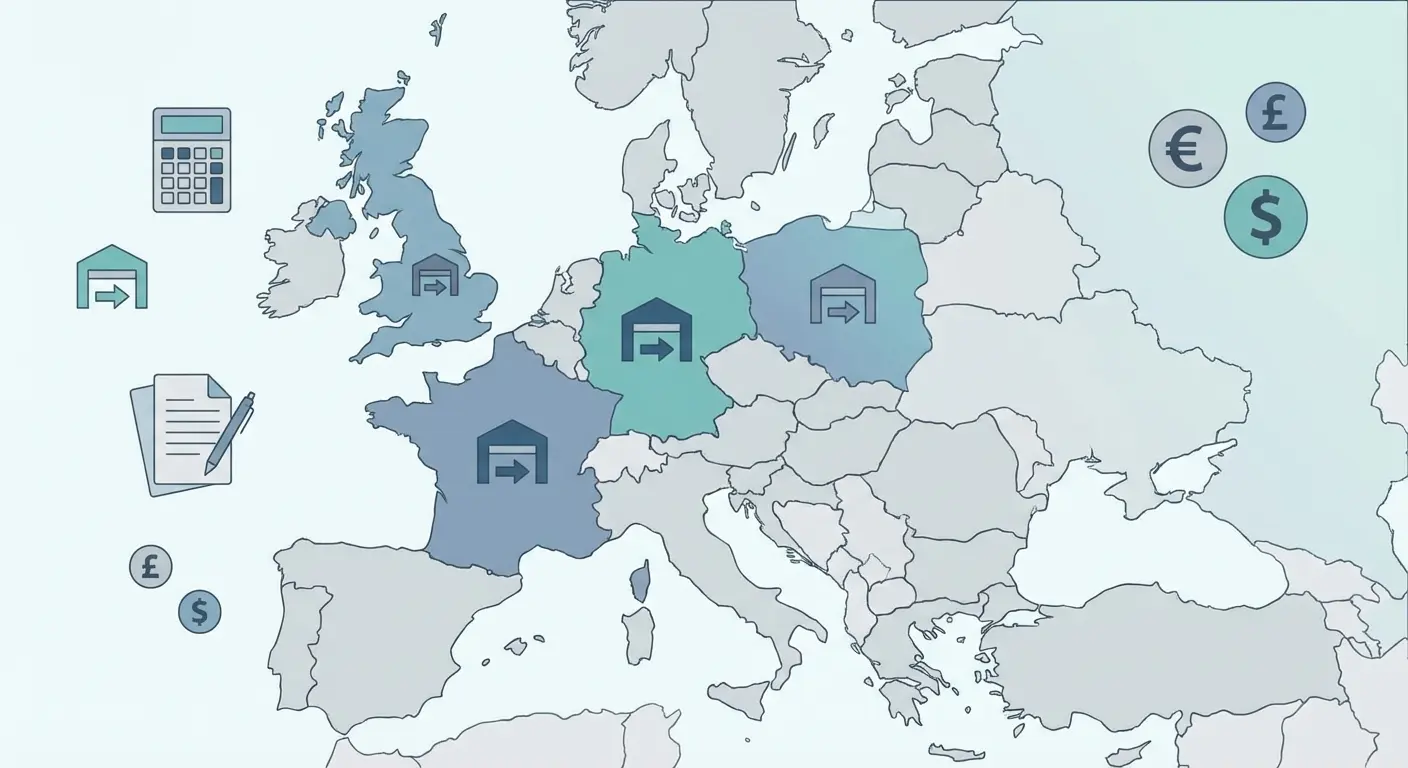
Europe is where expansion often derails.
If you store inventory in the EU or UK, you can trigger VAT obligations. If you use Pan-European FBA, inventory may move between participating countries, which can create additional VAT registrations and filings depending on your setup and where inventory is held.
This is where tooling and process discipline matter. You need:
Reliable workflows to automate vat calculation for amazon europe
Clear visibility into where inventory is stored
Reconciliation between Amazon reports, invoices, and tax filings
Before you launch, model economics with an amazon global selling fee calculator software so you understand:
Referral fee differences
Fulfillment fee differences
Currency conversion and settlement effects
VAT-inclusive pricing impacts and price parity constraints
If your net margin drops below your operating threshold after VAT and fees, expansion may be a distraction instead of growth.
3. Inventory Coupling and Stock Risk

Inventory mismanagement is one of the fastest ways to hurt both US and international sales.
Two common models:
Model A: Remote fulfillment (cross-border shipping into Canada or Mexico, or other remote-fulfillment approaches)You keep inventory in the US and serve customers in another marketplace.
Pros:
Lower upfront risk
No foreign warehousing
Often simpler tax exposure than local storage
Cons:
Slower delivery times
Higher per-unit fulfillment or shipping cost
Less Buy Box competitiveness in many categories
Here, cross border fulfillment automation for amazon fba helps reduce oversells and order-routing errors, especially when returns and replacement units start to compound.
Model B: Local FBA storage (Canada, UK, EU)You ship inventory into foreign fulfillment centers.
Pros:
Faster delivery and Prime eligibility where available
Higher conversion rates in many categories
Stronger competitive position
Cons:
VAT, customs, and compliance exposure
Inventory fragmentation
Cash flow tied up in multiple regions
If you go this route, an amazon international fba inventory management tool becomes central to execution. You need to:
Forecast demand per region
Monitor stranded and suppressed inventory signals per marketplace
Track aging inventory and storage fee exposure by country
Without consolidated visibility, you will overstock one region and stock out in another.
4. Listing Translation and Compliance Control

Bad translation is not just a conversion issue. It can be a compliance issue.
Many sellers automate amazon international listing translation to move faster, especially across large catalogs. Automation can work well for structure and coverage, but it needs review.
Machine translation can misstate product claims, usage instructions, ingredients, or regulated terms. In tightly regulated categories, small wording differences can matter.
A reliable pattern looks like this:
Use automation for structure and initial translation.
Manually review compliance-sensitive sections (claims, warnings, ingredients, certifications, age ranges).
Localize for local search behavior and category conventions, not just literal translation.
Software accelerates deployment. Humans still manage risk.
5. Data Visibility Across Marketplaces
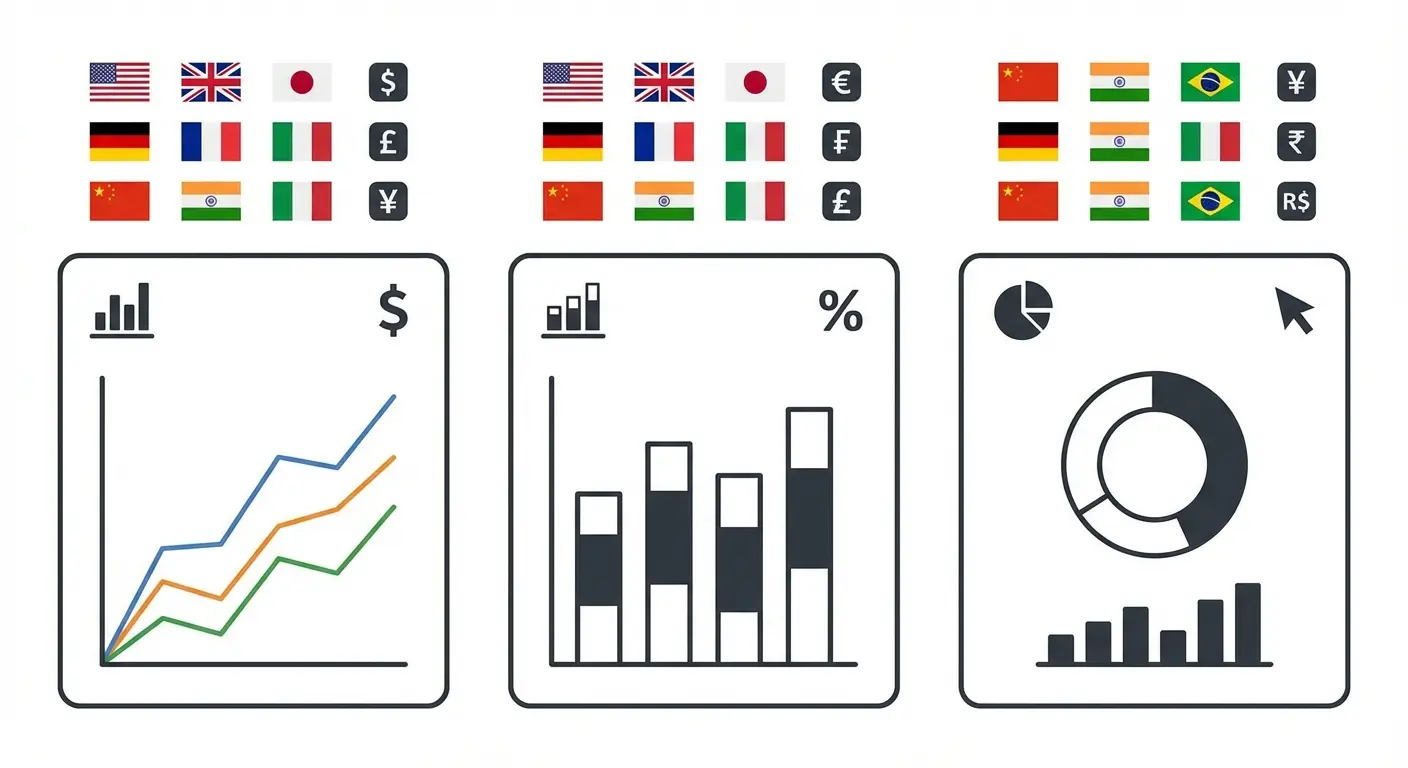
Once you operate in multiple regions, your reporting fragments.
You need software to track amazon global sales data in a unified view. Not just revenue, but:
Contribution margin by marketplace
Ad performance and TACoS by region
Inventory turns per country
Currency-adjusted profit and refund impacts
Without consolidated visibility, you optimize for the loudest marketplace instead of the most profitable one.
If your analytics stack cannot segment by region cleanly, global expansion becomes guesswork.
6. Market Selection and Sequencing
For US sellers, sequence matters.
A common progression is:
Canada
UK
Germany
Broader EU (sometimes via Pan-EU participation)
For Canada, many teams start by prioritizing tools for selling on amazon canada from us that support cross-border fulfillment, returns visibility, and clean mapping between US and CA SKUs.
For the EU, amazon pan european fba management software can reduce operational friction when inventory is allowed to move across countries, but you still need tax registration, invoicing, and compliance processes to match your footprint.
The mistake is launching everywhere at once. Every new marketplace multiplies compliance, listing management, customer service expectations, and inventory complexity.
Start with one. Stabilize. Then layer in the next.
Scenario-Based Decision Guidance
If Your US Sales Are Still Volatile
If your US catalog is under heavy optimization, new SKUs are launching monthly, or you are testing claims and creatives aggressively:
Consider:
Launching Canada via remote fulfillment first
Avoiding EU multi-country storage until your tax and compliance stack is proven
Limiting automated listing sync
In this phase, prioritize operational separation. The goal is learning without systemic risk.
If You Have 2 to 3 Stable Hero SKUs
If a small group of SKUs drives predictable US revenue with stable compliance history:
Consider:
Translating and launching only those SKUs internationally
Using structured tools to sync amazon us listings to international marketplaces where it reduces manual errors
Modeling each SKU through amazon global selling fee calculator software before shipping inventory
This is an ideal expansion profile: concentrated, defensible, and predictable.
If Margins Are Tight in the US
If your net margin is already thin, international expansion can magnify pressure. VAT, currency shifts, returns behavior, and higher fulfillment costs can erode profitability.
In this case:
Test via remote fulfillment
Avoid local warehousing until margin resilience is proven
Use fee and tax automation before committing inventory
Expansion should strengthen your business, not dilute it.
If You Want True Risk Diversification
If your objective is to reduce dependency on the US marketplace, you typically need some local inventory placement in at least one foreign region. Remote fulfillment alone often keeps you dependent on US inventory, US shipping performance, and US operational constraints.
This can mean:
VAT and import planning
A strong amazon international fba inventory management tool
Clear cross-region cash flow modeling
Diversification requires structural separation, not just mirrored listings.
Where Sellers Get Hurt
Over-Syncing Too Early
Automating everything at once feels efficient. It also spreads errors instantly.
If you use bulk tools to replicate listings, review compliance-sensitive fields manually before publishing. That includes regulated claims, safety language, materials, and any attributes tied to category restrictions.
Ignoring VAT Until After Launch
Sellers often assume Amazon handles everything.
Amazon may calculate, collect, or remit certain taxes in specific scenarios depending on marketplace rules and your setup. That does not eliminate your responsibility to register, file, and maintain VAT records when required, especially when inventory is stored locally.
Failing to automate vat calculation for amazon europe and reconcile reports can create backdated liabilities and operational disruption.
Fragmented Inventory With No Central Control
Shipping 500 units to Canada, 500 to the UK, and 1,000 to Germany without unified forecasting is a common mistake.
Inventory in one region usually cannot quickly rescue stockouts elsewhere. Without an integrated amazon international fba inventory management tool, you lose flexibility and pay for it in storage, stockouts, and emergency replenishment.
Treating Translation as Cosmetic
Literal translation without localization leads to weak indexing and low conversion.
Automate structure. Localize intent. Verify compliance language.
Not Modeling Fees Before Expansion
Assuming similar margins across regions is risky.
Use amazon global selling fee calculator software before launch. Model downside cases with currency moves, storage fees, and higher return rates.
If your numbers only work in a best-case scenario, delay expansion.
Two Practical Walkthroughs
Walkthrough 1: Private Label Supplement Brand
Hypothetical scenario:
3 SKUs
Stable US revenue
Strong margin buffer
Compliance-sensitive claims
Decision process:
Canada launched first using remote fulfillment and tools for selling on amazon canada from us to reduce new inventory risk.
UK listings were translated, but claims and instructions were reviewed manually to reduce regulatory and policy risk.
Germany was delayed until VAT infrastructure and a process to automate vat calculation for amazon europe were in place.
Inventory was shipped to the UK only, not Pan-EU, to limit multi-country VAT complexity.
Resulting structure:
Gradual expansion
Tight SKU control
No full catalog replication
Managed tax complexity
The US operation stayed insulated because aggressive global syncing was not implemented early.
Walkthrough 2: Home Goods Brand With 50 SKUs
Hypothetical scenario:
Large catalog
Moderate margins
Predictable replenishment cycles
Decision process:
Identified top 10 SKUs by contribution margin.
Used software to manage international amazon marketplaces to control listings centrally, but staged rollouts by category.
Implemented an amazon international fba inventory management tool to monitor aging inventory across regions.
Modeled Pan-EU participation using amazon pan european fba management software, while limiting initial inventory depth per country.
Used consolidated software to track amazon global sales data to compare region-level profitability monthly.
Key difference from the supplement brand: catalog breadth required stronger automation and centralized control earlier.
What Expansion Looks Like When It’s Done Right
International growth that does not threaten US sales usually has these traits:
Only proven SKUs expand first
Fee and VAT impact is modeled before inventory ships
Translation is automated but compliance-reviewed
Inventory is tracked centrally across marketplaces
Automation is phased, not all-or-nothing
The right tools to expand amazon fba globally are not about convenience. They are about limiting risk exposure while increasing operational clarity. For teams that need tighter execution, that can also include software to manage international amazon marketplaces, an amazon international fba inventory management tool, and software to track amazon global sales data that reconciles performance across currencies and regions.
Practical Principles to Keep in Mind
Expand SKUs, not catalogs.
Automate structure, not judgment.
Separate testing from scaling.
Model margins with taxes included, not assumed away.
Keep inventory visibility centralized across regions.
Add marketplaces sequentially, not simultaneously.
Selling internationally on Amazon is not inherently risky. Poor system design is.
When you need deeper integration, choose systems that reduce manual error, including tools to expand amazon fba globally, workflows that automate amazon international listing translation, and processes that sync amazon us listings to international marketplaces without pushing unreviewed compliance fields.
For sellers operating across regions at scale, the stack usually includes an amazon global selling fee calculator software, methods to automate vat calculation for amazon europe, and an amazon pan european fba management software setup that matches your VAT registrations and inventory footprint. The operational layer matters too, including cross border fulfillment automation for amazon fba, tools for selling on amazon canada from us, software to track amazon global sales data, and the right software to manage international amazon marketplaces so your US business stays the funding engine for disciplined expansion.