Fix Amazon Negative Review Impact Safely

Sarah Johnson

How to Fix Amazon Negative Review Impact Without Tanking Your Conversion Rate

You wake up, check Seller Central, and there it is: a 1-star review on your best-selling SKU. Sales dip over the next 48 hours. PPC ACoS creeps up. Now you are wondering whether you need to fix Amazon negative review impact immediately, or if you are overreacting.
For experienced sellers, this is rarely about emotion. It is about math and momentum. One bad review does not automatically kill a listing. Under the wrong conditions, it can drag down your conversion rate, slow velocity, and weaken rank enough to start a decline.
The real decision is not “How do I remove this review?” It is “What is the smartest way to improve Amazon conversion rate after bad review damage without creating bigger problems?”
Let’s break that down properly.
When One Review Actually Becomes a Real Threat

Not all negative reviews carry the same weight. The impact depends on listing maturity, review volume, traffic levels, and category sensitivity.
You are usually deciding between three broad paths:
Try to remove negative feedback on Amazon seller central.
Counterbalance it operationally through conversion, pricing, traffic mix, and volume.
Escalate to outside help such as an Amazon review management agency or an Amazon listing recovery service.
Before acting, diagnose the real risk.
If your product has:
300+ reviews and a 4.4 average rating, one 1-star review is often limited impact.
12 reviews and a 4.7 rating, a single 1-star can swing your average dramatically.
A safety-sensitive use case (baby, supplements, electronics), even one alarming claim can reduce buyer trust and depress conversion.
The mistake most sellers make is treating every bad review like an emergency. The correct move depends on structural vulnerability.
A bad review hurts most when it confirms a buyer’s hidden fear. If your category already carries skepticism, that review can amplify hesitation.
What Actually Matters Most When Deciding Your Next Move
If you are trying to mitigate bad reviews on Amazon FBA, prioritize these factors.
1. Review-to-Order Ratio
If you are generating strong order volume relative to reviews, dilution can reduce the impact over time. The highest leverage move is often accelerating qualified sales velocity while protecting margin.
If review inflow is slow, the negative rating can stay prominent longer. That increases urgency.
2. The Nature of the Complaint
There is a big difference between:
“Arrived late” (often a fulfillment or carrier experience)
“Did not fit my needs” (expectation mismatch)
“Stopped working after 3 days” (quality failure)
“This is unsafe” (trust-destroying, and potentially compliance sensitive)
If the complaint signals a systemic defect, no amount of professional Amazon listing optimization will fully offset it. You have an operational issue, not a marketing issue.
If it signals confusion, you likely have a listing clarity problem.
3. Placement and Visibility
Some reviews sit buried. Others become the “most helpful” and stay near the top.
If the negative review gains helpful votes, the recovery plan should include visible counter-signals such as clearer images, better FAQs, and legitimate improvements that lead to more satisfied customers leaving reviews over time. Avoid any approach that pressures buyers for positive-only reviews.
4. Listing Conversion Strength Before the Review
If your baseline conversion rate was already weak, the review is not necessarily the root cause. It may be exposing fragility.
In that case, this becomes a broader Amazon brand reputation management and conversion optimization project, not just review triage.
5. Account Risk
If the review alleges safety issues, restricted claims, or other policy-sensitive problems, loop in an expert Amazon account health consultant early. Even if the claim is exaggerated or incorrect, treat potential compliance flags seriously.
Matching the Response to the Situation

Here is how experienced sellers think through recovery scenarios.
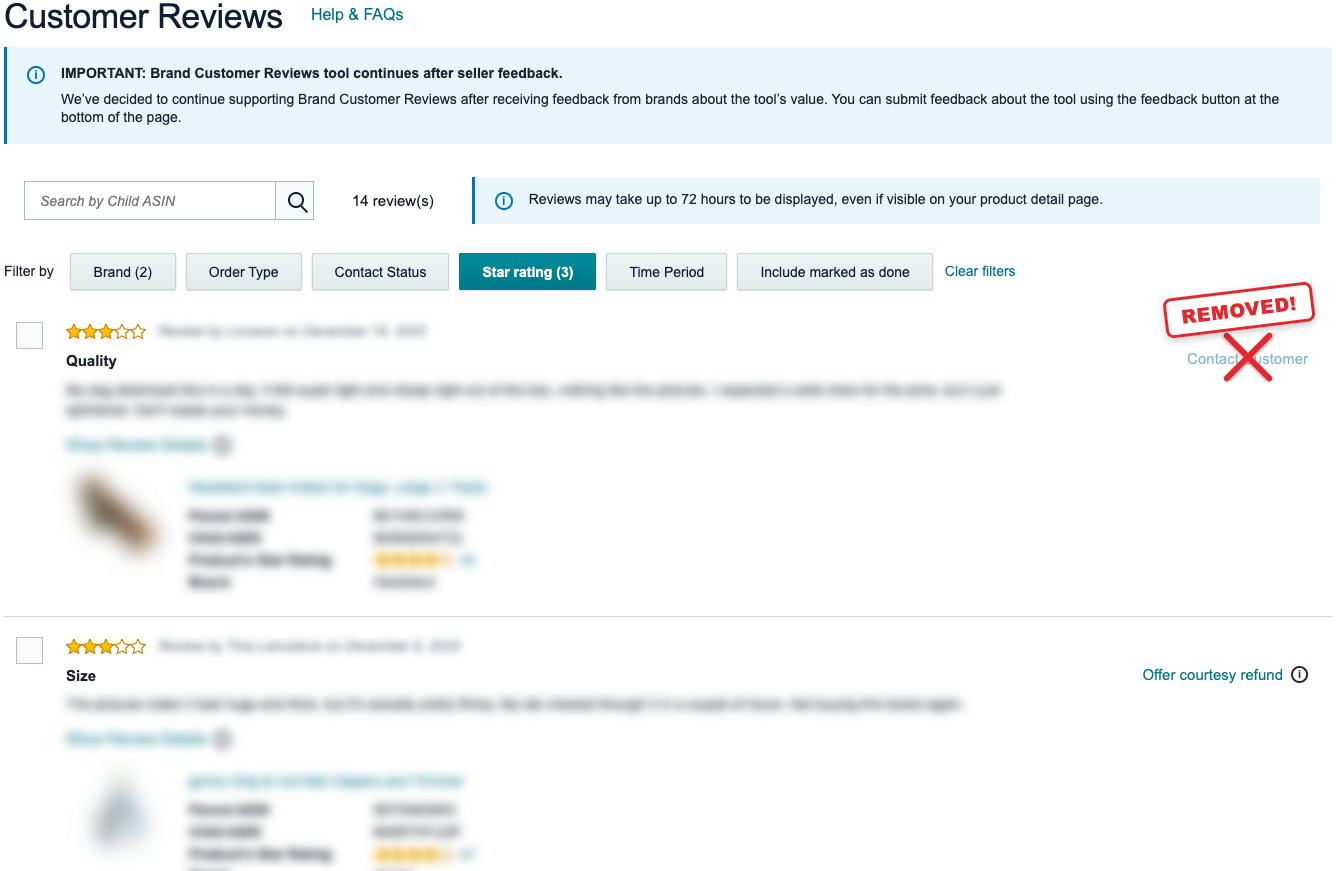
If the review clearly violates Amazon policy, for example profanity, personal information, or content that is not about the product experience, then attempting to remove negative feedback on Amazon seller central is justified. Document the issue precisely and keep the request factual. Many removal requests are denied, so treat removal as a bonus outcome, not the main plan.
If the review describes real but fixable confusion, the fastest win is visual clarification. Update secondary images to address the complaint. Add comparison charts, sizing graphics, compatibility callouts, or setup steps. This is often more effective than debating in public.
If the review highlights a legitimate product flaw, you have two tracks:
Fix the issue in the next manufacturing batch and validate it with inspection and test data.
Adjust your listing to prevent misaligned expectations, and stop making claims the product cannot reliably meet.
In this case, trying to bury the review with ads alone often wastes money. Conversion friction can simply inflate PPC costs.
If your listing is new and fragile (for example, under 20 reviews), it may make sense to run a temporary price or coupon strategy to stimulate volume and reduce buyer risk perception while you rebuild rating stability. Stay within your margin logic, and avoid pricing moves that create long-term positioning problems.
If the review triggers a visible drop in session conversion, and you cannot identify the cause quickly, a structured audit from an Amazon listing recovery service can help. The value is in diagnosing where the conversion leak is coming from and what to fix first.
If the negative review mentions account-level compliance or restricted claims, involve an expert Amazon account health consultant before making edits that could introduce new policy risk.
If your brand spans multiple ASINs and the issue risks spreading, broader Amazon brand reputation management becomes necessary. That can include consistent messaging, better packaging and instructions, and compliant post-purchase support processes. Avoid any insert language that asks for only positive reviews or offers incentives for reviews.
Common Overreactions That Make Things Worse

When sellers try to fix Amazon negative review impact, the damage often comes from the response, not the review.
Obsessing over removal Spending weeks chasing deletion rarely produces results unless there is a clear violation. Meanwhile, sales velocity drops and competitors gain rank.
Freezing ads Turning off PPC to “wait it out” reduces traffic. Lower traffic can mean fewer new orders and fewer future reviews, which may keep the negative review more prominent.
Publicly arguing with the reviewer A defensive reply can signal instability to future buyers. A short, calm, solution-oriented response can build trust. A long rebuttal often does the opposite.
Hiring black-hat review services Some so-called Amazon review management agency providers promise guaranteed removals or guaranteed positive reviews. If they use prohibited methods, you risk enforcement action. No conversion rate is worth that tradeoff.
Ignoring root causes If future reviews repeat the same complaint, the issue was never the first reviewer. It was your product, your QC, or your positioning.
Keeping pricing static out of pride If hesitation increases, a strategic price or offer adjustment can restore momentum. Stubborn pricing can prolong stagnation.
Two Realistic Decision Walkthroughs
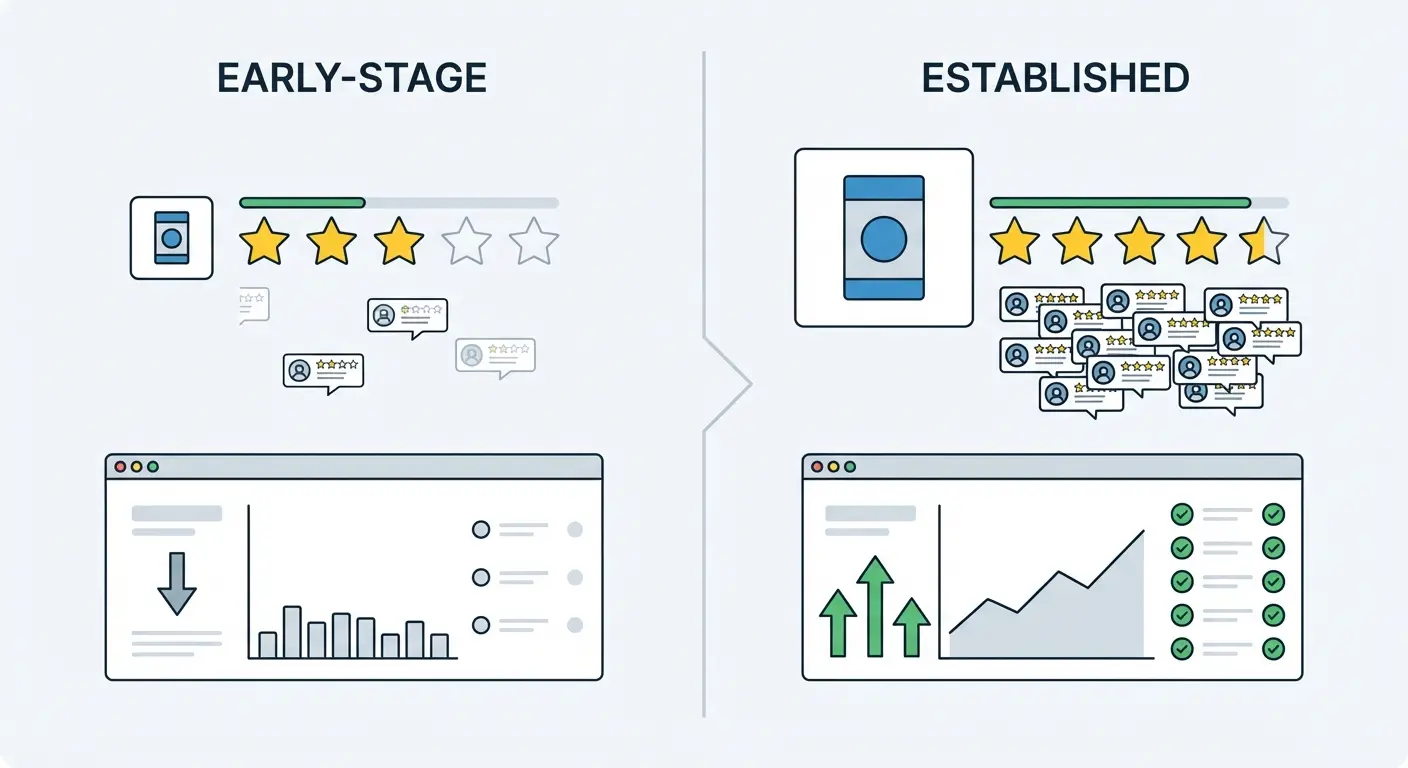
Walkthrough 1: Early-Stage Private Label Product
Hypothetical case:
18 reviews, 4.8 average.
One new 1-star review claiming “feels cheap and smaller than expected.”
Conversion drops from strong to noticeably weaker over one week.
Step one is not removal. The review does not obviously violate policy.
The key risk is expectation mismatch. With only 18 reviews, the average rating can drop sharply, and buyers will read that 1-star carefully.
The highest leverage move is professional Amazon listing optimization focused on expectation control:
Add a dimension comparison image.
Include a “what it is / what it is not” bullet.
Show in-hand scale photos with consistent references.
At the same time, a temporary and controlled offer can increase order velocity for a few weeks. The goal is to improve Amazon conversion rate after bad review shock by reducing uncertainty and rebuilding statistical stability.
If sales rebound and new reviews confirm accurate sizing expectations, the core issue was messaging, not necessarily product quality.
Walkthrough 2: Established FBA Product With Quality Complaint
Hypothetical case:
420 reviews, 4.4 average.
New 1-star review: “Stopped working after a week.”
Two older 3-star reviews mention durability.
This is a pattern signal.
Here, trying to mitigate bad reviews on Amazon FBA through ads or price alone will not solve the structural problem.
First, audit return reasons, refund comments, and defect-related signals you can see in your business reports. If failure rates are rising, address supplier quality immediately.
Second, adjust listing copy to clarify usage limits if misuse is contributing, and remove any claims you cannot support consistently.
Third, publicly respond briefly and professionally, offering support and resolution through official channels.
If quality concerns escalate or performance signals point to account health risk, consult an expert Amazon account health consultant before the situation becomes harder to contain.
If you cannot diagnose the conversion decline clearly, an Amazon listing recovery service can help analyze listing structure, traffic alignment, and on-page friction to isolate the cause.
The review is not the disease. It is a symptom.
When Outside Help Actually Makes Sense

Not every seller needs an Amazon review management agency. Some situations justify outside support.
Consider external help if:
Your internal team lacks conversion optimization depth.
The review references compliance or safety claims.
Multiple ASINs are affected and brand perception is slipping.
You need an objective audit instead of reactive decisions.
A credible Amazon brand reputation management partner focuses on process: listing clarity, review response SOPs, compliant customer outreach, and long-term product improvement loops.
Be cautious of any provider who guarantees removal of legitimate reviews or promises outcomes that require policy violations.
Reliable Patterns for Protecting Conversion Long-Term
Bad reviews are inevitable at scale. The goal is resilience, not perfection.
What consistently works:
Build review velocity early so no single review dominates.
Over-communicate product limitations to prevent expectation gaps.
Use images and FAQs to preempt objections raised in past reviews.
Monitor review themes monthly, not only when something goes wrong.
Treat negative reviews as inputs for product iteration and quality control.
A strong Amazon product review strategy is proactive. It includes post-purchase education, compliant follow-ups, and consistent upstream QC.
The best way to fix Amazon negative review impact is to build a listing and operation that can absorb it.
What Experienced Sellers Keep in Mind
One review rarely kills a healthy listing. Fragility does.
Removal is generally limited to policy violations, not honest criticism.
Conversion drops after a bad review often reveal deeper issues.
Pricing, clarity, and volume are usually faster levers than arguments.
If compliance is hinted at, involve an expert Amazon account health consultant early.
Agencies help most when they build systems, not shortcuts.
If you need a fast triage plan, an Amazon listing recovery service can stabilize the page while you address root causes, and a focused Amazon review management agency can help coordinate policy-safe responses. Done correctly, remove negative feedback on Amazon seller central becomes an occasional win, not the foundation of your approach.