Mastering Amazon FBA Storage Limits Framework

Olivia Reyes

Mastering Your Amazon FBA Storage Limit: A Practical Framework for Serious Sellers
Are you trying to fix Amazon FBA storage limit issues by sending removals, running discounts, and still finding your inbound shipments blocked next month?
Most storage problems are not about raw “space” alone. They are about inventory quality, timing, and how Amazon evaluates inventory performance over time. If you want to increase Amazon FBA capacity limits consistently, you need to understand how the system responds to sell-through, aging, stranded units, and storage utilization trends.
This is a decision framework for experienced sellers who want predictable capacity, fewer overage fees, and less firefighting.

The Real Decision: What Belongs in FBA, and What Doesn’t?
At surface level, the problem looks simple: you hit your storage cap and need more space.
In practice, the real decision is ongoing:
How much inventory should live inside FBA at any given time?
Which SKUs deserve that space?
When does it make sense to bid for more capacity?
When should you shift to an Amazon AWD and 3PL strategy instead?
Amazon’s capacity controls, including IPI and Capacity Manager (when available to an account), function like a feedback loop. They tend to favor strong sell-through, low aging, and fewer listing and inventory defects. They also tend to reduce flexibility when the network sees higher storage risk, such as persistent aging or unresolved stranded units.
If you approach storage limits tactically, you will constantly chase the problem. If you approach it structurally, you can often prevent the problem altogether.
What Actually Drives Your Capacity (Ranked by Impact)
When sellers ask how to increase Amazon FBA capacity limits, they often focus on one lever. In reality, several factors interact. Here’s how they tend to matter operationally.
1. Sell-Through Rate and Aged Inventory

This is a core signal.
Amazon generally evaluates how efficiently storage is converted into shipped units. High sell-through and lower aged inventory indicate that you are using the network for fulfillment, not long-term storage.
If you are consistently carrying older inventory across multiple SKUs, tactical shipment juggling rarely sustains a fix Amazon FBA storage limit outcome. The account can continue to be assessed as higher risk for storage utilization.
Seller insight: Every SKU in FBA should justify its space in a defined coverage window. The right window varies by category and lead times, but the key is consistency and measurement. If it cannot justify the footprint, it likely belongs in AWD, a 3PL, or it needs a different pricing and replenishment plan.
2. IPI Score as a Composite Health Metric
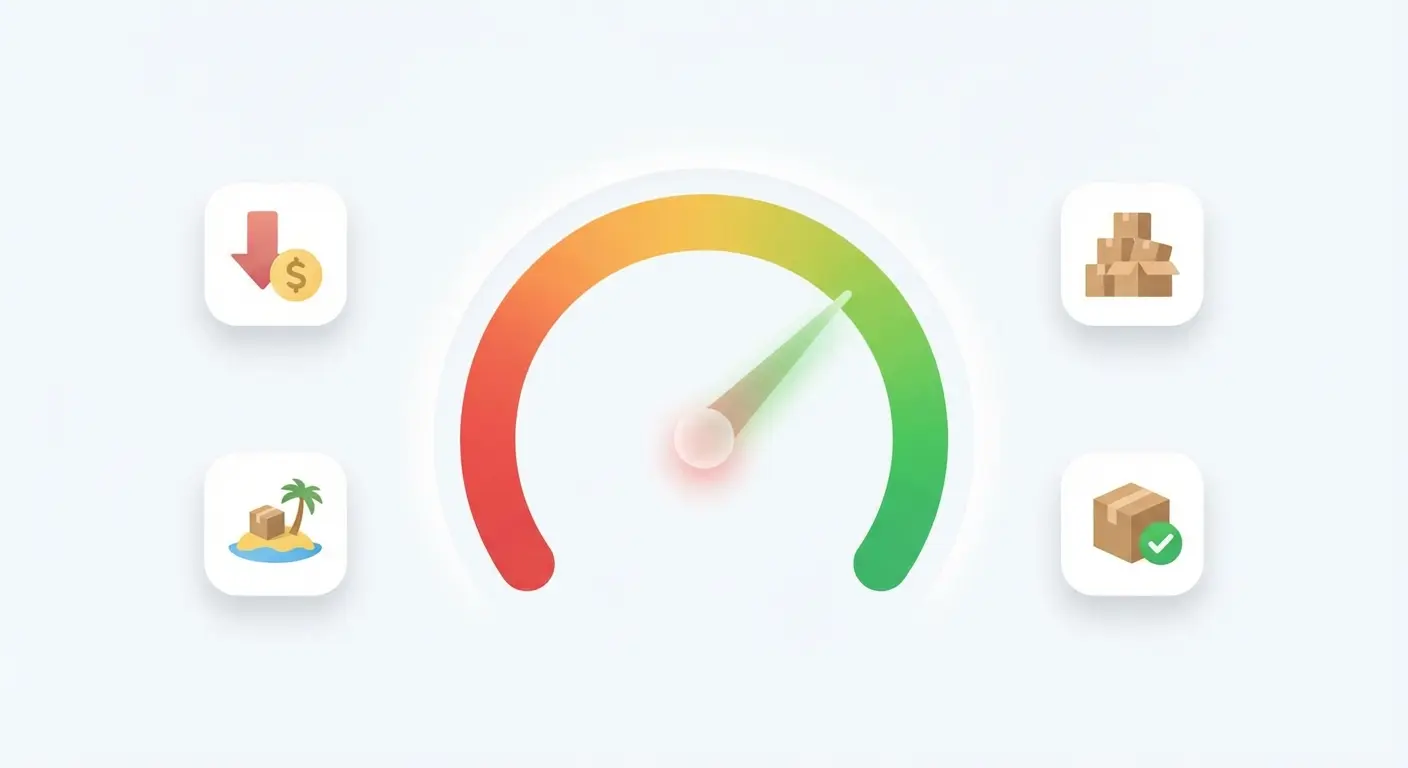
Your IPI is not just a number to monitor. It is a composite indicator tied to inventory signals such as sell-through, excess inventory, stranded inventory, and in-stock rate for popular products. Amazon can also change the exact components or thresholds over time, so treat IPI as a directional metric and focus on the underlying drivers.
An improve Amazon IPI score service can help diagnose drivers, but internally you should be able to pinpoint which SKUs and processes are pulling the score down. If your IPI drops below the relevant thresholds for your account, capacity can tighten and storage economics can worsen.
A common failure mode is improving IPI temporarily through aggressive discounting, then reverting to the same replenishment behavior. Amazon’s systems typically respond more to sustained patterns than a single short-term spike.
3. Stranded and Unsellable Inventory

Amazon stranded inventory resolution is often one of the fastest ways to recover capacity, but advanced sellers still neglect it because it feels purely operational.
Stranded units:
Do not generate revenue
Occupy storage
Can contribute to excess and aging signals
Common causes include listing issues, variation relationship problems, compliance or category restrictions, hazmat classification reviews, or detail page changes that create sellability blocks.
A practical mitigation pattern is simple but must be systematic: weekly stranded audits, clear ownership, documented root causes, and fast resolution or removal when required.
Stranded units are silent capacity killers.
4. Storage Type and SKU Mix
Standard-size, oversize, apparel, and hazmat each behave differently in fees and storage utilization. Oversize SKUs with slow velocity are particularly risky because they consume disproportionate cubic volume and can contribute to overage exposure quickly.
Expectation vs reality:
Expectation: “It sells eventually.”
Reality: It can block replenishment for your best sellers during peak demand.
If you need Amazon FBA overage fee reduction, start by reviewing cubic-foot efficiency by SKU, not just unit sales or top-line revenue.
5. Capacity Manager Bidding Strategy

Amazon Capacity Manager bidding strategy becomes relevant when organic capacity is insufficient and the tool is offered for your account. The mechanics and availability can change, so decisions should be based on what Seller Central currently shows for your marketplace and account type.
Operational nuance:
Overbidding without realistic sell-through can mean paying for capacity you cannot monetize.
Underbidding during a predictable peak can mean missed revenue that cannot be recovered later.
A useful filter before bidding:
Do I have proven demand signals for the SKU set?
Can I turn the incremental inventory within a defined time window that matches my cash cycle and seasonality?
Does incremental contribution margin justify the bid and the carrying risk?
Capacity bidding is best treated as a scaling lever, not a rescue tool for slow inventory.
6. External Storage Strategy: AWD and 3PL
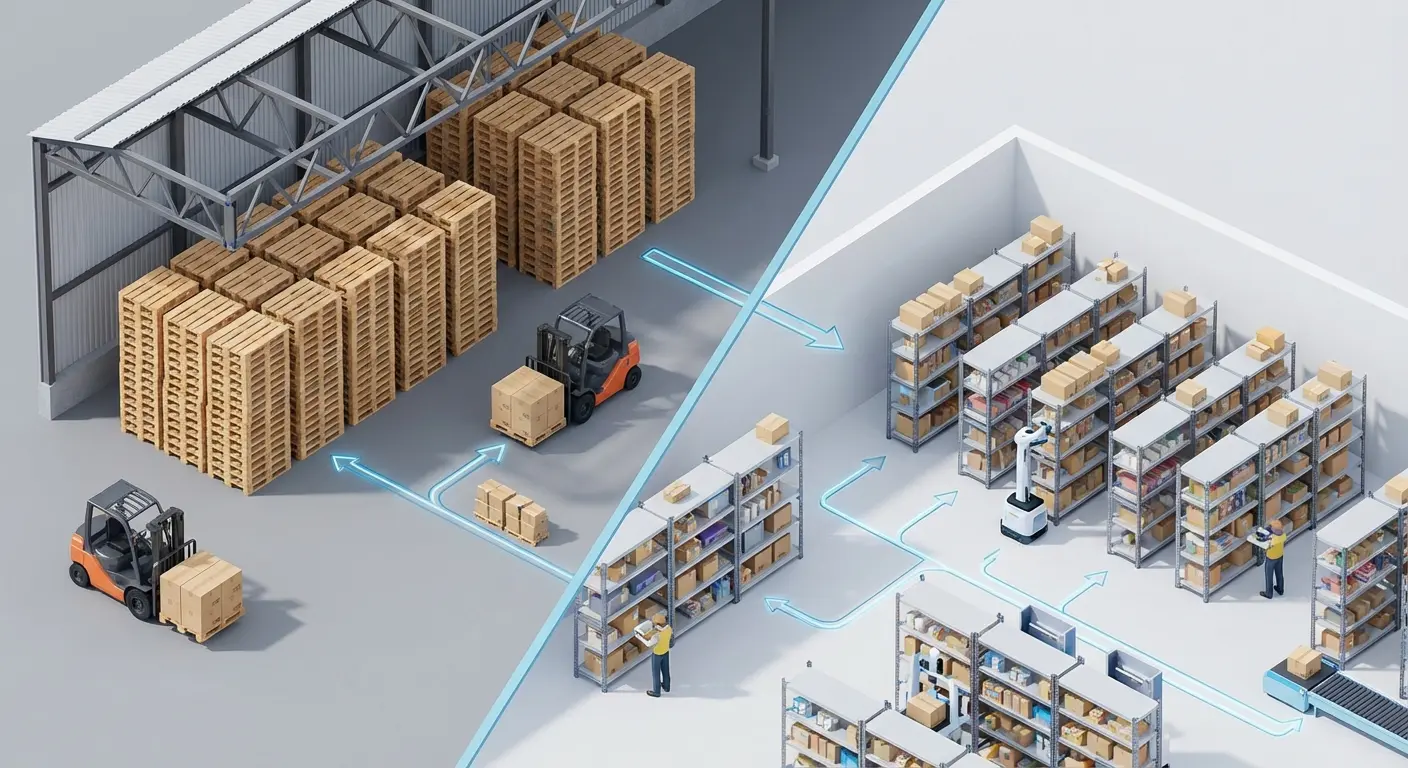
An Amazon AWD and 3PL strategy is often the structural answer to recurring storage pressure, especially for brands with bulk imports or volatile lead times.
AWD and third-party logistics providers can allow you to:
Hold bulk inventory outside FBA capacity constraints
Feed FBA in smaller, controlled replenishments
Reduce aging risk inside fulfillment centers
The tradeoff is tighter forecasting and coordination. Poor demand planning does not disappear with AWD. It simply relocates the risk.
A common pattern for mature brands is:
A defined coverage window in FBA for fast sellers
Buffer stock in AWD or 3PL
Frequent, data-driven replenishment cycles
This structure reduces the need to constantly fix Amazon FBA storage limit problems reactively.
When Different Situations Call for Different Moves
There is no single best approach. Your decision depends on your stage, catalog structure, and growth model.
If You Are a High-Velocity, Narrow Catalog Brand
With 5 to 20 strong SKUs and consistent demand, your main constraint is often stockouts, not slow inventory.
In this case:
Capacity bidding can make sense before peak season when demand is predictable.
Prioritize high in-stock rates on top SKUs.
Keep aging low through disciplined replenishment.
Your risk is underestimating demand and being blocked by capacity limits. Forecasting accuracy becomes critical.
If You Have a Wide Catalog with Long-Tail SKUs
Many advanced sellers carry dozens or hundreds of SKUs with uneven velocity.
Here, the risk is accumulation through small inefficiencies:
Small quantities of many slow SKUs quietly consuming capacity
Variations that no longer perform but still occupy space
Seasonal inventory left behind after the season
In this scenario, catalog rationalization is often more impactful than bidding.
Clear aged Amazon FBA inventory decisively. If a SKU has not justified its footprint across multiple replenishment cycles, it needs a serious review, including pricing, bundling, advertising, liquidation, or removal.
If You Are Scaling Aggressively
Rapid growth often breaks inventory systems.
Common pattern:
Larger inbound shipments
Forecast optimism
Temporary spike in utilization
IPI deterioration in a later cycle
Here, investing in expert Amazon account management or an Amazon FBA inventory management agency can make sense, especially for forecasting, replenishment governance, and capacity modeling. The goal is to build a system that prevents repeat constraints, not just to execute tasks.
If You Are Frequently Paying Overage Fees
Overage fees are not just a cost problem. They are a signal that your FBA footprint is misaligned with sales velocity and storage utilization.
An Amazon FBA overage fee reduction plan typically includes:
Immediate action on aged or low-velocity SKUs through removal orders, liquidation options where available, or controlled discounting
Pausing inbound on low-margin products that do not turn
Temporary rebalancing to AWD or 3PL
Resetting replenishment quantities based on sell-through and lead times
Paying overage fees repeatedly while keeping the same SKU mix and coverage targets is usually a sign that the operating model needs adjustment.
Common Mistakes That Keep Sellers Trapped
Treating FBA as Default Storage
FBA is designed for fulfillment. Using it as a long-term warehouse increases aging risk and can pressure capacity. If you routinely send multiple months of coverage to FBA “just to be safe,” you are often trading perceived security for structural inefficiency.
Fixing IPI at the Last Minute
Many sellers scramble right before limits update.
IPI improvement generally requires sustained behavior:
Consistent sell-through
Low stranded inventory
Disciplined replenishment cycles
Short-term liquidation can help in some cases, but it is rarely a durable strategy by itself.
Ignoring Stranded Inventory Because Revenue Is Strong
High revenue can mask operational issues. Even large brands can leak capacity through:
Suppressed or restricted listings
Variation errors
Inactive or non-buyable offers
Amazon stranded inventory resolution should be routine, not reactive.
Bidding Emotionally in Peak Season
During major events, fear can drive overbidding.
If margins are thin and forecasts are uncertain, paying aggressively for space can compress profit more than a controlled stockout would have. Capacity only matters if it converts to profitable sell-through.
Two Realistic Decision Walkthroughs
Walkthrough 1: Mid-Sized Private Label Brand Before Q4
Hypothetical situation:
12 SKUs
3 account for 70 percent of revenue
IPI slightly above the relevant threshold
Capacity projected to tighten in October
Options:
Bid for more capacity
Push more inventory into FBA early
Use AWD for buffer stock
Decision logic:
Top SKUs have proven Q4 spikes
Long-tail SKUs have uneven velocity
A balanced approach:
Allocate FBA space primarily to top SKUs
Move slower SKUs to AWD or 3PL
Bid moderately for incremental capacity tied to proven sellers
Clear aged Amazon FBA inventory before the seasonal ramp to reduce risk
Result: Capacity is concentrated where velocity justifies it, reducing the chance of both stockouts and overage fees.
Walkthrough 2: Large Catalog Reseller with Chronic Storage Pressure
Hypothetical situation:
300+ SKUs
Wide velocity range
Repeated overage fees
IPI declining
Initial instinct: increase Amazon FBA capacity limits via bidding.
Better first step:
Rank SKUs by cubic volume consumed vs contribution margin
Identify the bottom group consuming disproportionate space
Remove, liquidate, or re-price inventory that is aging and unprofitable
Tighten reorder logic to smaller, more frequent shipments
Only after structural cleanup should bidding be considered.
In many cases, sellers discover they did not need more capacity. They needed stricter SKU discipline.
Practical Patterns That Hold Up Over Time
If you want fewer surprises and fewer emergency fixes, these principles tend to work:
Keep a defined coverage window in FBA for strong sellers, not “as much as possible.”
Audit stranded inventory weekly.
Treat IPI as a trailing indicator of system quality, not a target to game.
Remove aged inventory decisively rather than waiting for a turnaround that is not supported by data.
Use Amazon AWD and 3PL strategy to separate bulk storage from fulfillment speed.
Bid for capacity only when demand and margin are validated.
Review cubic-foot efficiency by SKU, not just revenue.
Storage limits are not arbitrary. They are a forcing function that rewards operational clarity. When your catalog, forecasting, and replenishment systems are aligned, you rarely need to scramble to fix Amazon FBA storage limit problems. Capacity becomes something you manage strategically, not something you fight every month.
For teams that want a repeatable operating cadence, an Amazon FBA inventory management agency can also formalize weekly controls, while an improve Amazon IPI score service can support diagnosis and prioritization. Pair that with Amazon stranded inventory resolution as a standing SOP, and you create the conditions to increase Amazon FBA capacity limits with fewer costly surprises.