How to Sell Beauty Products on Amazon in 2026

Olivia Reyes

How to Sell Beauty Products on Amazon in 2026 Without Getting Tripped Up by Gating, Compliance, or Conversion Gaps
Is your beauty SKU actually underperforming, or is Amazon limiting visibility because the listing, ingredients, hazmat profile, or category approval path was never clean to begin with?
That is the real decision brand owners face when they enter beauty on Amazon. It is not just whether to launch, but how to launch in a way that can withstand category restrictions, documentation checks, prep failures, and the less obvious issue of low shopper trust. If you are working through how to get ungated in amazon beauty 2026, deciding between selling professional beauty vs premium beauty on amazon, or trying to avoid a future compliance mess, the early setup choices matter more than most sellers expect.

The real fork in the road for beauty brands
Beauty is one of the Amazon product areas where operational details and merchandising quality are closely connected. A weak image set hurts conversion. A vague ingredient panel can contribute to a review or compliance issue. Packaging that leaks can create stranded or unsellable inventory. A serum with alcohol or other flagged components may end up in an amazon fba hazmat review for beauty products guide situation before the listing has any chance to rank.
The decision is rarely whether to sell on Amazon at all. For many established brands, the platform is too important to ignore. The better question is what structure gives you the highest odds of staying live, staying compliant, and converting profitably.
For some brands, the issue starts with gating. They need a practical path for how to get ungated in amazon beauty 2026 and need to know whether the standard Beauty path is enough. For others, the harder call is category placement. Selling professional beauty vs premium beauty on amazon changes what documentation you may need, how shoppers perceive the brand, and how much operational friction you accept. Premium positioning may protect perception, but restricted access can slow rollout. Professional Beauty can be attractive for some product types, but not every brand should force that fit.
Then there is the compliance layer. Beauty founders often assume Amazon is mostly checking titles, images, and customer feedback. In practice, Amazon may also evaluate ingredient claims, packaging integrity, expiration handling, hazmat status, and supporting documents. That is why amazon topical category approval requirements checklist work should happen before launch, not after the first suppression notice.
What matters most before you scale a single SKU
Experienced sellers usually do better in beauty when they rank decisions by downside risk, not by launch excitement.
Start with claim risk, not demand potential
The first ranking factor is whether the product can be represented on Amazon without creating unnecessary claim exposure. This is especially important for skincare, acne products, scalp treatments, sunscreens, peels, and anything that sits near the cosmetic or OTC-drug line in shopper language.
A common failure mode is writing copy that sounds conversion-friendly on DTC, then dropping it into Amazon unchanged. Phrases suggesting treatment, prevention, healing, repair, or medical outcomes can attract scrutiny. This is where amazon fba beauty product compliance and fda regulations become operational, not theoretical. If your listing promise requires legal nuance to defend, Amazon may not be the place to test that wording.
If your best-performing marketing message depends on aggressive before-and-after implications, assume it will need to be rewritten for Amazon.
Next, check whether the SKU is physically easy for FBA to handle
The second priority is fulfillment suitability. Beauty products fail in FBA for simple reasons that become expensive fast: leakage, melting, broken pumps, weak seals, damaged cartons, and unreadable date codes.
That makes amazon beauty product packaging to prevent leaks fba more than a packaging conversation. It is a margin-protection issue. A product can have excellent demand and still be a poor Amazon SKU if the unit economics collapse under prep costs, damage rates, and customer complaints.
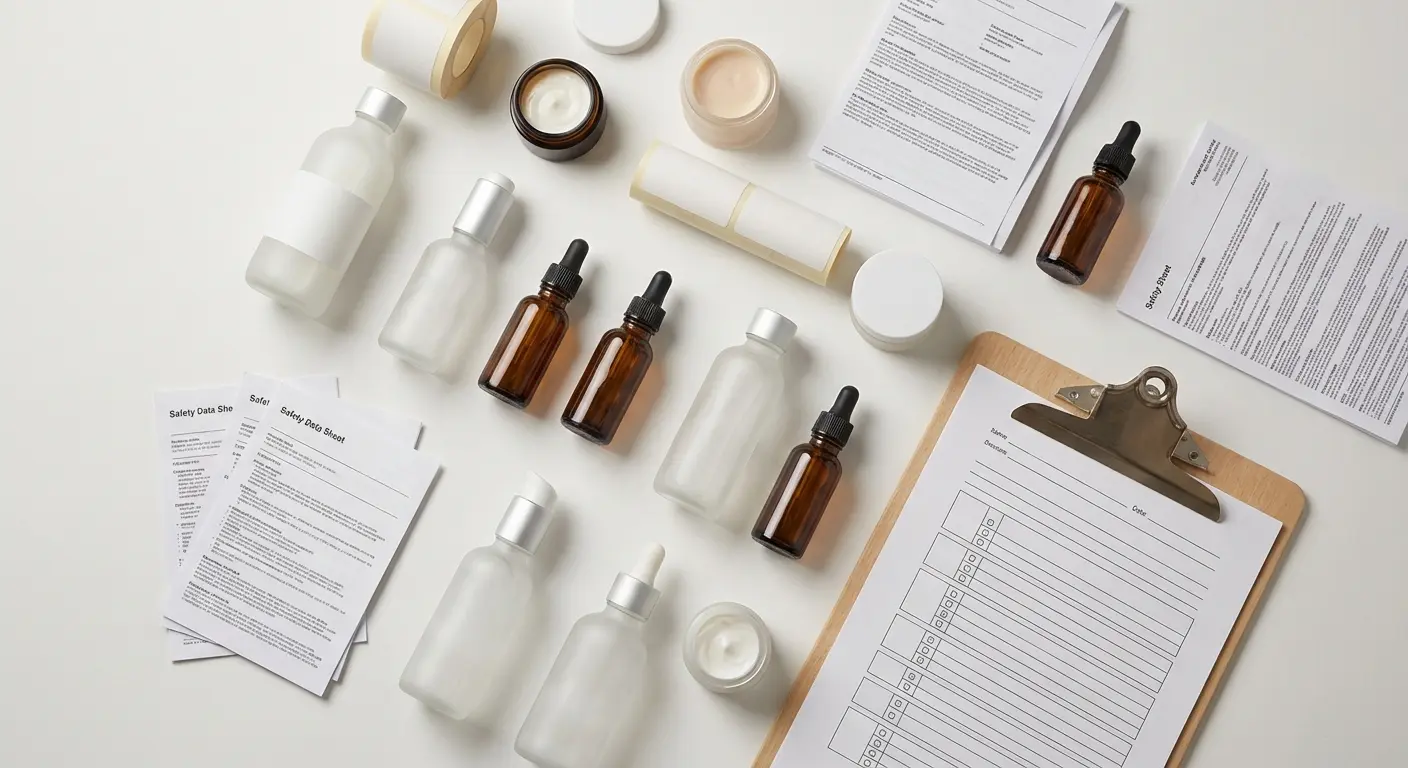
This is also where handling expiration dates and sds for beauty fba enters the picture. If a product has shelf-life sensitivity, active ingredients that trigger extra scrutiny, or components that require a Safety Data Sheet, you need a clean documentation trail before inventory moves. Waiting until Amazon asks is how launches stall.

Then evaluate category access and listing survivability
Third is approval and category fit. Some sellers treat gating as a one-time admin task. In beauty, it is better understood as a listing survivability issue. If the product lives in a restricted path, or if certain ingredients create repeated listing friction, the launch plan has to account for that.
An amazon topical category approval requirements checklist should include, at minimum, whether the product is in the right browse path, whether packaging and invoice details match the listing, whether ingredient disclosure is complete and consistent, and whether supporting documents are current and readable. If you are trying to enter a restricted segment, document quality often matters more than seller urgency.
Only after that should you focus on traffic and conversion
Traffic matters, but beauty brands often try to solve weak conversion with more ad spend. That usually magnifies the problem. If the listing does not clearly answer texture, scent, use case, ingredients, skin type, and results expectations, the detail page leaks conversion even when traffic quality is good.
That is why improving conversion rate for amazon skincare listings deserves higher priority than many PPC plans. In skincare especially, shoppers want proof of fit and safety before they want persuasion. They read ingredient panels, star ratings, critical reviews, and image carousels closely. The listing has to do the trust-building work your DTC brand equity may already handle elsewhere.

Where the decision changes by product type
If the product sits near the cosmetic-drug boundary
If you sell acne treatment, SPF, dandruff solutions, or topical products that imply therapeutic outcomes, expect more scrutiny. In those cases, conservative listing language and strong document hygiene are more important than aggressive keyword targeting. This is where how to fix restricted beauty listing for ingredients becomes relevant, because ingredient-triggered restrictions often come from mismatch: what is on the package, what is in the listing, and what Amazon interprets from the claims.
Expectation: “If the formula is legitimate, the listing should be fine.”
Reality: Amazon often reacts to how the product is classified, described, and documented on-platform, not to your internal belief that the product is straightforward.
If the product has alcohol, aerosols, oils, or other hazmat-adjacent characteristics
These SKUs often live or die on prep planning. Amazon fba hazmat review for beauty products guide issues are not limited to obvious flammables. Ingredient composition, packaging form, and SDS quality all affect whether Amazon flags the product for review.
In this scenario, a slower launch with better documentation is usually the better tradeoff. It is easier to delay inbound inventory than to unwind stranded units, suppressed listings, and relabeling costs after the fact.
If the product is premium-priced or brand-sensitive
Brands with strong positioning often wrestle with selling professional beauty vs premium beauty on amazon because the wrong category or channel structure can cheapen perception. If your product depends on regimen selling, clinical cues, or prestige framing, the listing and storefront need to carry more of the brand story than a commodity beauty SKU would.
That does not mean Amazon is bad for premium. It means premium beauty needs stricter image control, tighter authorized seller management, and better A+ Content. Without that, price becomes the main language shoppers see.
If the product is “clean beauty” or ingredient-led
For ingredient-conscious products, amazon listing optimization for clean beauty keywords can help discovery, but this is one of the easiest places to overreach. “Clean,” “non-toxic,” “free from,” and similar phrases can attract shopper interest, but they can also invite scrutiny if unsupported or inconsistently presented.
A reliable pattern is to lead with factual formulation information and shopper-use language, not vague positioning terms. Ingredient-led shoppers convert when they can verify what the formula is, what it excludes, and who it suits.
What tends to go wrong for beauty brands on Amazon
Treating ungating as the finish line
Getting approval is not the same as having a durable listing. Sellers who focus only on how to get ungated in amazon beauty 2026 often overlook the next layer: sustained compliance. A listing that goes live with weak images, inconsistent ingredients, or claims that drift too far can still be restricted later.
Using DTC copy without Amazon translation
Brand sites often rely on emotional language, broad wellness cues, or implied efficacy. Amazon listings need sharper boundaries. This becomes acute when sellers later need how to fix restricted beauty listing for ingredients because the original copy stretched past what the packaging and support documents clearly showed.
Assuming all beauty inventory belongs in FBA
Some beauty products simply create more FBA friction than they are worth. Temperature sensitivity, leakage risk, or recurring hazmat review can make a hybrid model more practical. Not every SKU deserves the same fulfillment path.
Underestimating packaging stress
Amazon beauty product packaging to prevent leaks fba is one of those subjects sellers revisit only after enough damaged returns pile up. Pumps loosen. Caps crack. Induction seals fail. Cartons scuff and make premium products look used. In beauty, “arrived messy” often translates directly into refund requests and review damage.
Chasing traffic before conversion trust is built
A weak skincare page does not become efficient because you add more spend. Improving conversion rate for amazon skincare listings usually starts with clearer imagery, stronger expectation-setting, ingredient transparency, and better review mining, not with a new campaign structure.
Two short launch decisions, worked through
Hypothetical example: a clean skincare serum with active ingredients
A brand wants to launch a facial serum through FBA. The product has a premium price point, ingredient-led positioning, and a formula that could create shopper questions around irritation and usage frequency.
The first decision is not ad strategy. It is whether the listing can communicate the product safely and clearly. The brand should tighten the ingredient display, make the usage instructions explicit in images and bullets, and review whether the claims create cosmetic or OTC-drug ambiguity. Because the formula is active-led, the team should also prepare for handling expiration dates and sds for beauty fba if Amazon asks for documentation tied to storage or material safety.
On category strategy, forcing “clean” language too heavily may be less useful than building factual trust. For amazon listing optimization for clean beauty keywords, the better path is usually to integrate precise ingredient and formulation terms naturally while keeping the main copy compliant and understandable.
If the packaging uses a glass dropper and premium carton, the next operational check is breakage and leakage risk. This is where amazon beauty product packaging to prevent leaks fba matters before the first shipment, not after the first return wave.

Hypothetical example: a salon-oriented hair treatment considering restricted segments
A haircare brand is deciding whether to enter through standard Beauty or pursue a more restricted path under selling professional beauty vs premium beauty on amazon. The product has strong repeat-purchase potential and salon credibility, but the brand is worried about channel conflict and unauthorized sellers.
The first filter is whether category restriction actually helps the business model or just adds admin. If the product can perform in standard Beauty with strong brand control, clean documentation, and good conversion assets, that may be the lower-friction option. If the brand needs stricter channel positioning and can support the documentation burden, a restricted path may be justified.
Because salon treatments sometimes include ingredients or formats that trigger extra checks, the team should also pre-review the amazon topical category approval requirements checklist and assess the chance of amazon fba hazmat review for beauty products guide issues. If approval risk and hazmat friction are both high, a slower rollout with a narrower SKU set is usually smarter than launching the full line at once.
How off-Amazon demand actually helps beauty on Amazon
Beauty is one of the categories where external traffic can work well, but only when the Amazon page is ready to convert. Marketing beauty brands on amazon via tiktok and influencers is most effective when the creator message matches what the listing proves. If the influencer talks texture, finish, scent, or routine placement, the product page should show those things immediately.
A common mistake is sending creator traffic to a page that still reads like a technical draft. The result is expensive awareness and weak retail payoff. External traffic amplifies detail page quality, whether that quality is strong or weak.
For beauty specifically, TikTok and influencer activity tend to help most when they do one of three jobs: demonstrate use, reduce uncertainty, or create social proof around a routine. They help much less when they only generate curiosity. Curiosity clicks are easy. Qualified conversion is harder.

What sellers new to beauty usually underestimate
Even brands searching for selling cosmetics on amazon fba for beginners 2026 often are not true beginners. Many are established operators entering a category with unfamiliar friction. The most common underestimation is how often beauty problems are cross-functional.
A listing issue may actually be a packaging issue. A hazmat delay may be a document-formatting issue. A low-converting clean beauty page may really be a trust-language issue. A restriction around ingredients may be caused by inconsistent backend data, not the formula itself.
That is why beauty launch work is best done as a system: regulatory review, detail-page copy, packaging engineering, prep instructions, and advertising sequencing. If one of those lags, the others get less efficient.
The patterns that hold up over time
If you want the short version, these are the patterns that tend to survive contact with the category:
Treat how to get ungated in amazon beauty 2026 as the start of the process, not the win.
Build an internal amazon topical category approval requirements checklist before Amazon asks for one.
If the SKU is topical, active-led, or claim-sensitive, review copy through the lens of amazon fba beauty product compliance and fda regulations before launch.
For anything liquid, oil-based, pump-based, or fragile, prioritize amazon beauty product packaging to prevent leaks fba ahead of ad planning.
Be ready for handling expiration dates and sds for beauty fba if the formula, storage profile, or ingredients suggest Amazon may ask.
If there is any hazmat ambiguity, assume the amazon fba hazmat review for beauty products guide path may apply and build launch timing accordingly.
Use amazon listing optimization for clean beauty keywords carefully, with factual support and controlled language.
Focus on improving conversion rate for amazon skincare listings before scaling paid traffic.
Think carefully about selling professional beauty vs premium beauty on amazon. The right answer depends on channel strategy, documentation strength, and how much friction your team can absorb.
Marketing beauty brands on amazon via tiktok and influencers works best when the listing already answers the questions the creator content raises.
Beauty rewards disciplined operators more than aggressive launchers. That is useful, because discipline is easier to scale than cleanup.