Selling Refurbished Items on Amazon Renewed

Olivia Reyes

Selling Refurbished Items on Amazon Renewed: What Experienced Sellers Need to Know
Most sellers do not struggle in Renewed because demand is weak. They struggle because their operations were built for new inventory, not for variability, grading risk, and warranty exposure. If you plan to sell refurbished items on Amazon, the constraints are different, and they usually matter more than the upside story.
Amazon Renewed can be a strong channel for refurbished electronics on Amazon and other categories, but it is not simply used listings with better branding. It is a controlled program with eligibility thresholds, program policies, and ongoing performance monitoring that will expose weak refurb processes quickly. This guide covers what actually matters: how the Amazon Renewed seller program works, what the Amazon Renewed product requirements mean in practice, how pricing and warranty obligations shape margin, and where experienced sellers get tripped up.
What “Amazon Renewed” Actually Is (and Isn’t)
Amazon Renewed is a program that allows approved sellers to list qualifying refurbished, pre-owned, and open-box products that have been inspected, tested, and verified to work as expected, with program-backed customer protections. It is not the same as simply selecting a standard used condition like “Used, Like New.”
Participation is gated, and approval requirements can vary by product type and marketplace. Once approved, you are expected to meet Amazon Renewed guarantee requirements. These customer protections typically include a return window and a program warranty for Renewed items. The exact duration and terms can vary by category, marketplace, and offer type, so your SOPs should be tied to the current program policy for the SKUs you sell.
You may also hear the phrase Amazon Certified Refurbished program. That phrasing is not consistently used as an official, seller-facing program name across marketplaces, so avoid treating it as a separate enrollment path unless Amazon documentation for your region explicitly defines it. In practice, the operational reality most third-party sellers work under is the Amazon Renewed seller program.
Eligible selection is broad. Refurbished electronics on Amazon are the most visible segment, including phones, laptops, tablets, and audio devices, but the program can also include tools, home and kitchen products, and other categories. Category-specific standards determine whether your operation scales or stalls.
The Operational Reality Behind the Badge
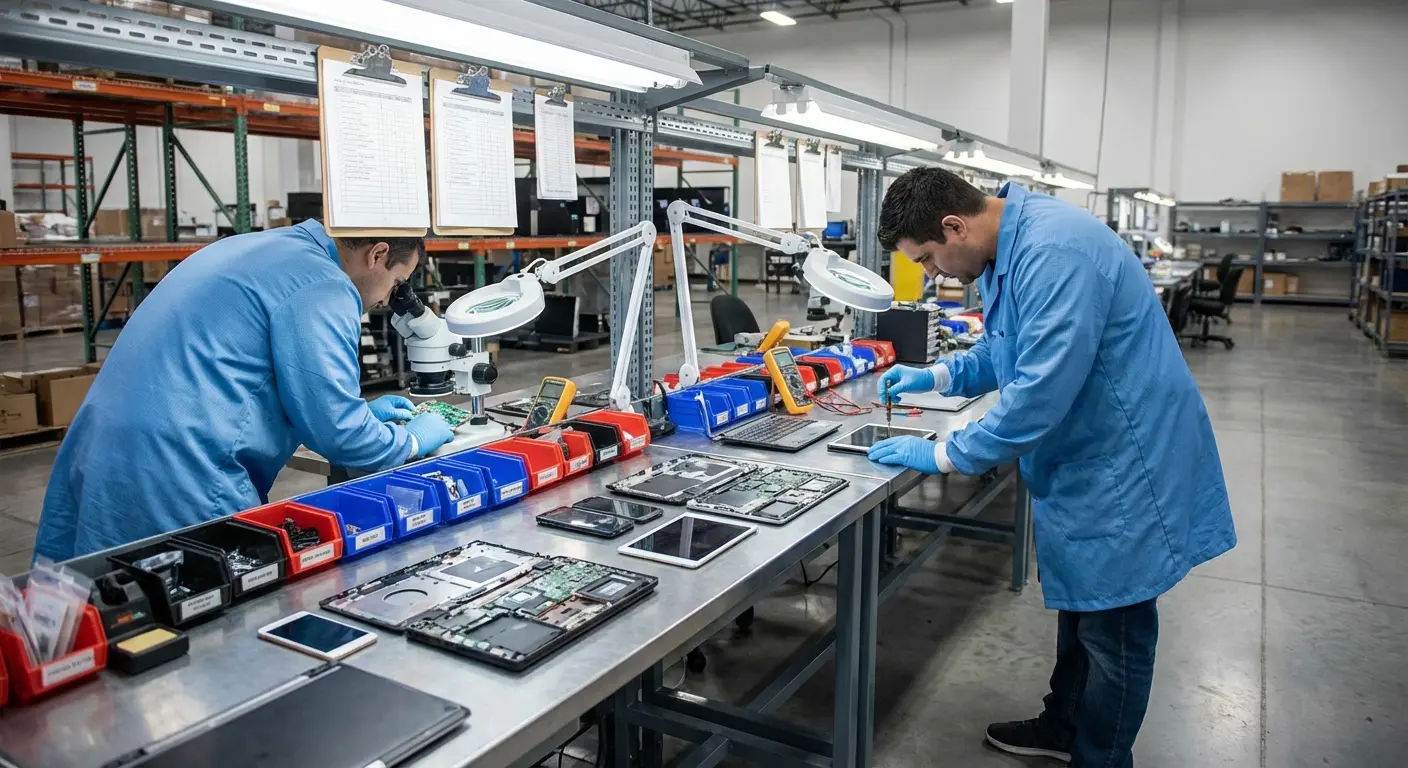
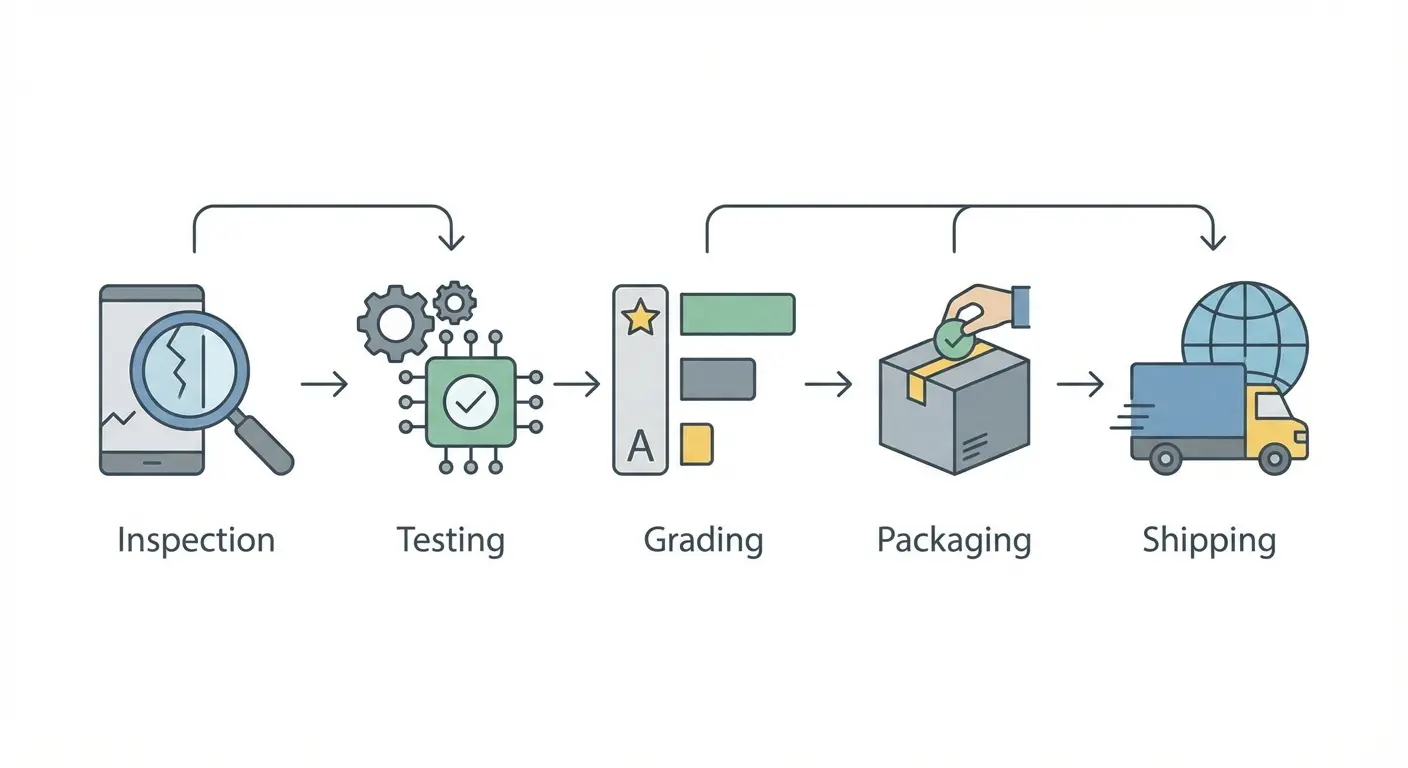
On paper, selling refurbished inventory sounds simple. Source returns or overstock, test, clean, repackage, list at a discount. In practice, the model only works if refurbishment runs like a controlled production process rather than a liquidation workflow.
Approval and the Amazon Renewed Application Process
The Amazon Renewed application process generally requires evidence that you can refurbish at scale and maintain consistent quality. Amazon may ask for business documentation such as invoices, evidence of refurbishment experience, and details on your testing and quality control process. Requirements can differ by category and region, and Amazon can update them.
Approval is not a permanent safety net. Renewed performance is monitored. If your return performance, customer complaints, or product quality trends degrade, Amazon can take action on Renewed selling privileges even if other account metrics look stable.
Treat Renewed as its own operational line with its own SOPs, defect taxonomy, and feedback loop. Blending it into new inventory processes tends to hide root causes until customers surface them.
Product Standards: Where Most Sellers Underestimate Risk
Amazon Renewed product requirements are specific and can be stricter for certain device types. The common themes are consistent:
Verifiable functional testing and confirmation that the item works as expected.
Cosmetic and grading standards that align with the program’s condition expectations.
Safe, appropriate packaging for transit and a presentation consistent with Renewed policy.
Inclusion of required components and accessories for the product type.
Device data handling steps for products that may contain prior user data.
Be careful with absolute statements about parts, batteries, or cosmetic thresholds because requirements vary by category and marketplace and can change. For example, some device types may have explicit battery health expectations in policy, while others are evaluated more broadly based on performance and customer outcomes. If you sell refurbished electronics on Amazon, your test plan should catch issues that only show up under real-world use, such as battery sag, thermal throttling, intermittent charging, or unstable wireless connectivity.
Warranty Exposure and the Amazon Renewed Guarantee
Amazon Renewed guarantee requirements affect margin in two ways. First, they create a defined customer protection period where returns, replacements, or refunds can rise if quality is inconsistent. Second, they shift your refurb standard from “passes a bench test” to “survives normal use without surprises.”
Build your unit economics around a reserve for returns and replacements, not just around refurb cost and selling fees. A Renewed operation that prices aggressively but underfunds warranty exposure often looks profitable until the first major return wave.
If you pursue Amazon Renewed Premium criteria, validate the current Premium requirements for your category and marketplace before investing. Premium often involves tighter condition expectations and stronger customer protection terms than standard Renewed. Those can support higher ASP, but they also reduce your failure tolerance.

Pricing Refurbished Inventory Without Killing Margin
The biggest misconception about Amazon Renewed pricing strategy is that it equals “X percent below new.” In reality, pricing is a function of condition trust, competitive density, and your total cost to remediate returns.
Amazon does not publish a single universal discount rule that applies to all Renewed products. Still, shoppers expect a meaningful discount relative to new, and conversion can drop fast when Renewed pricing crowds new offers without clear value.
A constraint-based pricing method is safer:
Start with your fully loaded refurb cost: inbound, triage, parts, labor, testing, packaging, and selling fees.
Add an expected return rate and a warranty reserve based on your own historical data by SKU family.
Add write-offs for units that fail refurbishment or downgrade into other channels.
Only then set a floor price and a target price.
Example modeling assumptions you can stress-test:
Batch attrition from failed refurbishment.
A subset requiring parts replacement.
A post-sale return rate tied to the SKU’s historical defect modes.
If your model ignores attrition and warranty exposure, your margin can disappear after the first cycle of customer returns.
Amazon Renewed Premium criteria can justify higher pricing, but only if your grading and test coverage are consistent enough to reduce variability. Otherwise Premium becomes a cost amplifier.

Listing, Tooling, and Day-to-Day Management
Once approved, listings are created and managed through Seller Central according to Renewed policy for the category. Some sellers refer to an Amazon Renewed seller dashboard. In practice, Renewed visibility may appear through a combination of program tools, performance views, and account health metrics depending on the marketplace and the seller’s enrollment status. The operational takeaway is the same: program performance is monitored, and you should review the relevant quality indicators frequently.
When creating and maintaining Renewed offers:
Use the correct Renewed listing pathway and match the correct ASIN structure for Renewed where applicable.
Do not attach Renewed inventory to a new-condition offer.
Use accurate condition notes that align with Renewed policy and your actual grading.
Ensure images and content do not misrepresent what the customer will receive.
Include required accessories and components for the product type.
Accessories are a common, preventable return driver. Missing chargers, cables, adapters, trays, or proprietary components can generate negative feedback even when the core unit works perfectly. If consumables are included, follow Amazon policy for what must be new versus what may be replaced.
FBA versus FBM remains a strategic decision. FBA can improve delivery experience and may improve conversion. It also increases the importance of protective packaging that survives Amazon handling. FBM can provide more control over packing and inspection on outbound and returns, but it increases operational load and requires consistent customer experience.

Three Real-World Scenarios
Case 1: Open-Box Audio Devices
A seller wants to sell open box items on Amazon, specifically returned headphones from a retail partner. The units are cosmetically clean, but packaging varies.
Failure mode: inconsistent accessory inclusion leads to complaints about missing cables or ear tips.
Mitigation: build a standardized kitting process with a verified accessory checklist and a clear reboxing standard. Even in open-box supply, consistency drives reviews and reduces returns.
Case 2: Refurbished Smartphones
A seller focuses on refurbished electronics on Amazon, primarily smartphones. Initial sales are strong, but returns spike later due to battery complaints.
Failure mode: relying on a quick diagnostic screen without validating battery behavior under load.
Mitigation: add stress testing, charge-cycle validation, and an internal battery acceptance threshold that is stricter than your minimum viable quality standard for customer satisfaction.
Case 3: Transitioning to Renewed Premium
An experienced seller considers meeting Amazon Renewed Premium criteria for laptops to access higher conversion and price points.
Failure mode: underestimating the operational cost of tighter grading standards and stronger customer protection terms.
Mitigation: pilot Premium on a narrow SKU set, track return reasons by defect type, and update grading, test coverage, and parts sourcing before scaling.
What Sellers Commonly Get Wrong
A frequent misunderstanding is assuming that refurbished success is mainly a pricing game. In reality, trust and predictability drive conversion. If reviews mention variability in condition or missing parts, discounting rarely fixes it.
Another mistake is treating the Amazon Renewed seller program as a workaround for brand restrictions. Brand gating, restricted products, and intellectual property policies still apply. Depending on the category and brand, you may need additional approvals or documentation beyond Renewed enrollment.
Some sellers also try to push their worst customer returns into Renewed. That approach often backfires because Renewed customers are value-driven but defect-sensitive. They will tolerate minor cosmetic wear within policy, but not functional surprises.
Data handling is another common risk area. For devices that can store user data, you need a repeatable process for data removal and verification that aligns with policy and local law. Document the process and keep records that connect device identifiers to wipe verification where appropriate.
Where the Model Breaks Down
Renewed is not ideal for every inventory type.
Low-ASP products with high testing cost can fail the math quickly. If labor and inspection time consume too much of resale value, margin compresses.
Highly volatile SKUs, such as fast-depreciating electronics, create pricing pressure. When new prices drop, your Amazon Renewed pricing strategy has to adjust quickly or conversion will suffer.
Sourcing inconsistency is another constraint. If refurbishable supply is irregular, it is harder to maintain stable sales velocity and predictable customer outcomes.
International expansion adds complexity. Electrical standards, plugs, labeling, and regulatory requirements vary. A unit acceptable in one marketplace may not be compliant in another.
The Practical Rules That Keep You Out of Trouble
If you plan to sell refurbished items on Amazon through the Amazon Renewed seller program, keep these principles front and center:
Treat refurbishment as a documented, auditable process with clear test coverage and grading standards.
Model margin after returns, replacements, and write-offs, not before.
Set internal standards that meet or exceed Amazon Renewed product requirements for your category and marketplace.
Standardize accessory inclusion and packaging to reduce preventable returns.
Pilot Amazon Renewed Premium criteria on limited SKUs before scaling.
Monitor Renewed performance signals frequently and isolate them from new-inventory metrics for faster diagnosis.
Treat data handling, sanitization, and compliance as mandatory controls, not optional steps.
Amazon Renewed can be a durable revenue stream, especially for refurbished electronics on Amazon and structured open-box supply. It rewards operational discipline and consistent outcomes. If your systems are tight, the program can expand your catalog and monetize returns effectively. If they are loose, Renewed will surface every weak link in your process.