Top E-commerce Challenges for FBA Sellers in 2026

Sarah Johnson

Top E-commerce Challenges for FBA Sellers 2026: What Actually Breaks as You Scale
If your Amazon business is growing but margins feel tighter, operations feel noisier, and your DTC channel still looks fragile, the problem is usually not traffic alone. The top e-commerce challenges for FBA sellers 2026 are increasingly about coordination: acquisition costs rising across Amazon and social, inventory becoming harder to place across channels, and brand-building requiring systems that many marketplace-first businesses did not need in the early phase.

Why strong Amazon sellers still hit a wall off-marketplace
Experienced sellers rarely struggle because they do not understand product-market fit. A more common issue is scope creep. A business that worked as a focused Amazon operation starts acting like a multi-channel brand before it has the data, team structure, or inventory controls to support that move.
That matters because Amazon compresses complexity. It handles much of the traffic, trust layer, checkout flow, and, for FBA orders, a large share of fulfillment. Once you start scaling Amazon brand to DTC website strategy, those hidden functions become your responsibility. Customer acquisition, conversion, retention, support, attribution, merchandising, and fulfillment all become separate operating problems.
For that reason, many headline challenges are not isolated. Rising PPC costs increase pressure on contribution margin. That margin pressure changes reorder timing. Reorder timing affects stock availability. Stock availability then damages ad efficiency, ranking stability, and customer experience. Sellers who scale well tend to see these as linked constraints, not separate departments.
A useful scope definition is this: the challenge is not “how do I sell online?” It is “how do I keep unit economics, inventory, and customer experience stable while adding channels, team members, and fulfillment paths?”
The shift from seller account to brand system
Transitioning from Amazon seller to D2C brand is often described as a marketing shift. In practice, it is an operating model shift.
On Amazon, demand capture dominates. Customers are already shopping. On DTC, demand generation matters more. You are not just harvesting existing intent. You are creating and reactivating it. That changes what counts as a good customer. On Amazon, a profitable first order can be enough. On DTC, the business often depends on repeat purchase behavior, email or SMS capture, and a clean post-purchase experience.
Expectation vs. reality:
Expectation: launching a Shopify site gives the brand a safer growth path and better margins. Reality: the site only creates an option. Whether it becomes an asset depends on retention, attribution discipline, and operational consistency.
This is why building brand loyalty off Amazon platform is harder than many sellers expect. Marketplace buyers often remember the product more than the brand. They may trust Amazon’s delivery promise more than your own site. Moving them into a direct relationship requires a reason beyond “buy here instead.”
The practical implication is that your website should not start as a copy of your Amazon catalog. It should start as a selective merchandising environment. Lead with products with repeat potential, margin room, manageable return complexity, and a clear story. If every SKU is listed immediately, operational complexity arrives before learning does.

Customer acquisition is getting more expensive, and weaker traffic makes everything look broken
Reducing customer acquisition costs in e-commerce is usually framed as a channel optimization task. It is partly that, but experienced sellers know CAC is also a product, offer, and conversion problem.
Overcoming rising PPC costs on Amazon and social media now requires acknowledging that ad inflation is not the only issue. Weak traffic quality, poor landing page continuity, and low repeat rates can make acceptable click costs look catastrophic. A campaign is not expensive just because CPC rose. It is expensive when the full funnel cannot support that CPC.
The first decision rule is simple: separate first-order profitability from customer payback logic. If a product has high reorder probability, a breakeven or slightly negative first order may be acceptable on DTC. If reorder behavior is weak, acquisition has to work much harder on the first sale.
The second decision rule is stricter: do not compare Amazon ads and Meta ads as if they perform the same job. Amazon advertising usually captures demand near purchase. Social often creates or warms demand. Their attribution windows, intent levels, and expected conversion rates differ. Blending them into one marketing ROAS number hides what is actually happening.
When CAC rises, many brands cut spend too quickly on upper-funnel channels and overconcentrate on bottom-funnel traffic. That can improve short-term efficiency while shrinking future demand and making retargeting pools weaker. A better move is often narrower targeting, stronger offer architecture, and more disciplined landing pages, not a blanket retreat.
For FBA brands adding DTC, one of the cleanest ways to lower acquisition pressure is to improve conversion on owned traffic before scaling paid budgets. Site speed, mobile merchandising, product page clarity, subscription logic where appropriate, and post-purchase capture flows matter more than most sellers admit. It is usually cheaper to convert existing intent better than to buy more uncertain traffic.

Retention is where marketplace-first brands discover whether they have a real brand
Improving customer retention for Amazon private label is difficult because Amazon controls much of the customer relationship. You can see what sold, but your ability to market directly to Amazon buyers is limited by Amazon policy and data access. That creates a structural gap when you launch DTC.
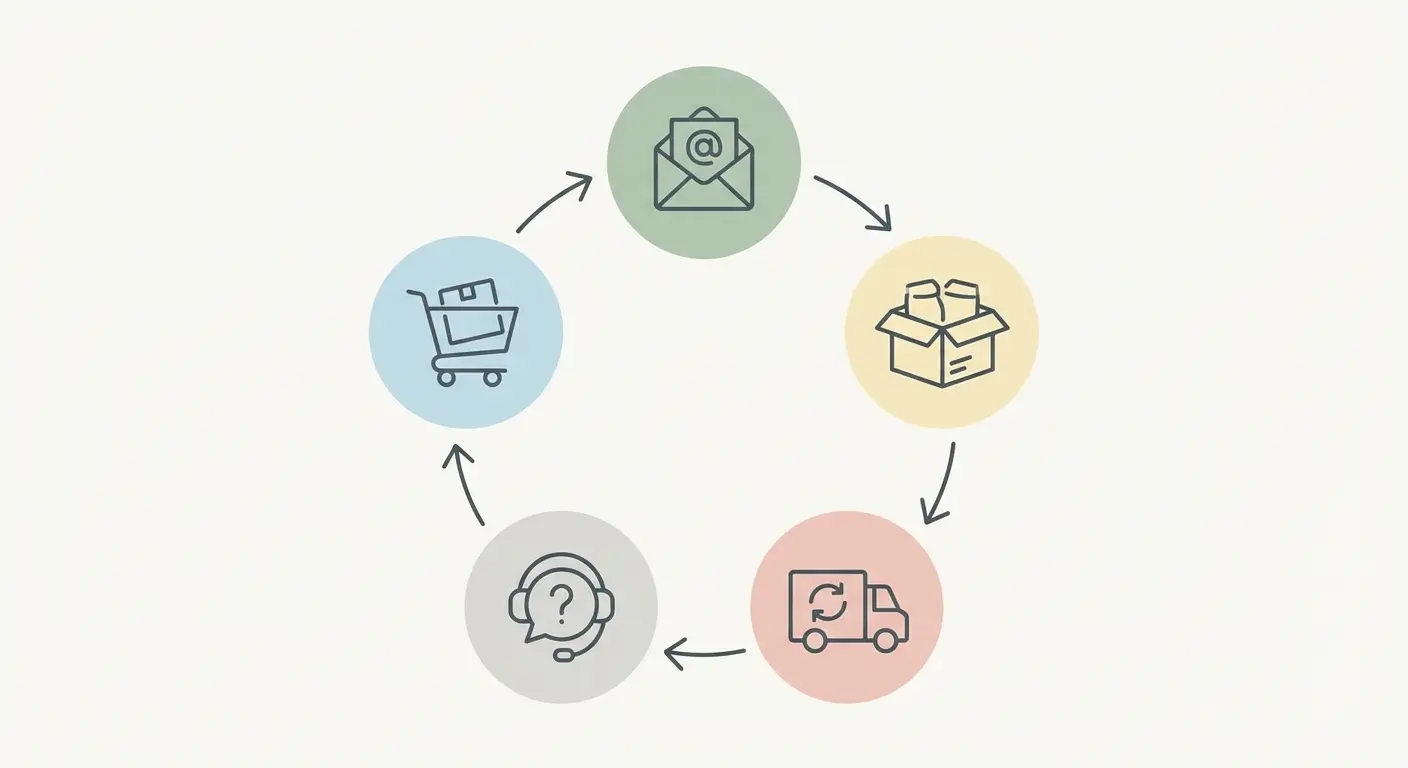
The fix is not to force customers off Amazon aggressively. It is to build retention mechanics where you control the experience. That usually includes email capture on DTC, post-purchase education, replenishment reminders, bundles, subscriptions where product behavior supports them, and support processes that reduce friction.
Not every category has the same retention profile. Consumables, routine-use products, and accessories with natural replenishment or expansion paths are retention-friendly. One-time durable goods are not, unless the brand creates follow-on attachment products or content that supports repeat interaction.
A common misunderstanding is that loyalty equals social engagement. In operational terms, loyalty is more usefully defined as repeat purchase behavior, lower support friction, stronger direct conversion, and tolerance for price variation relative to substitutes. Social engagement can help, but it is not the same thing.
Building brand loyalty off Amazon platform usually works best when the value exchange is specific. Examples include product education, reorder convenience, warranty registration where appropriate, community utility, or member-only bundles. Generic “join our list for updates” rarely changes behavior.
Inventory gets harder the moment you add one more channel
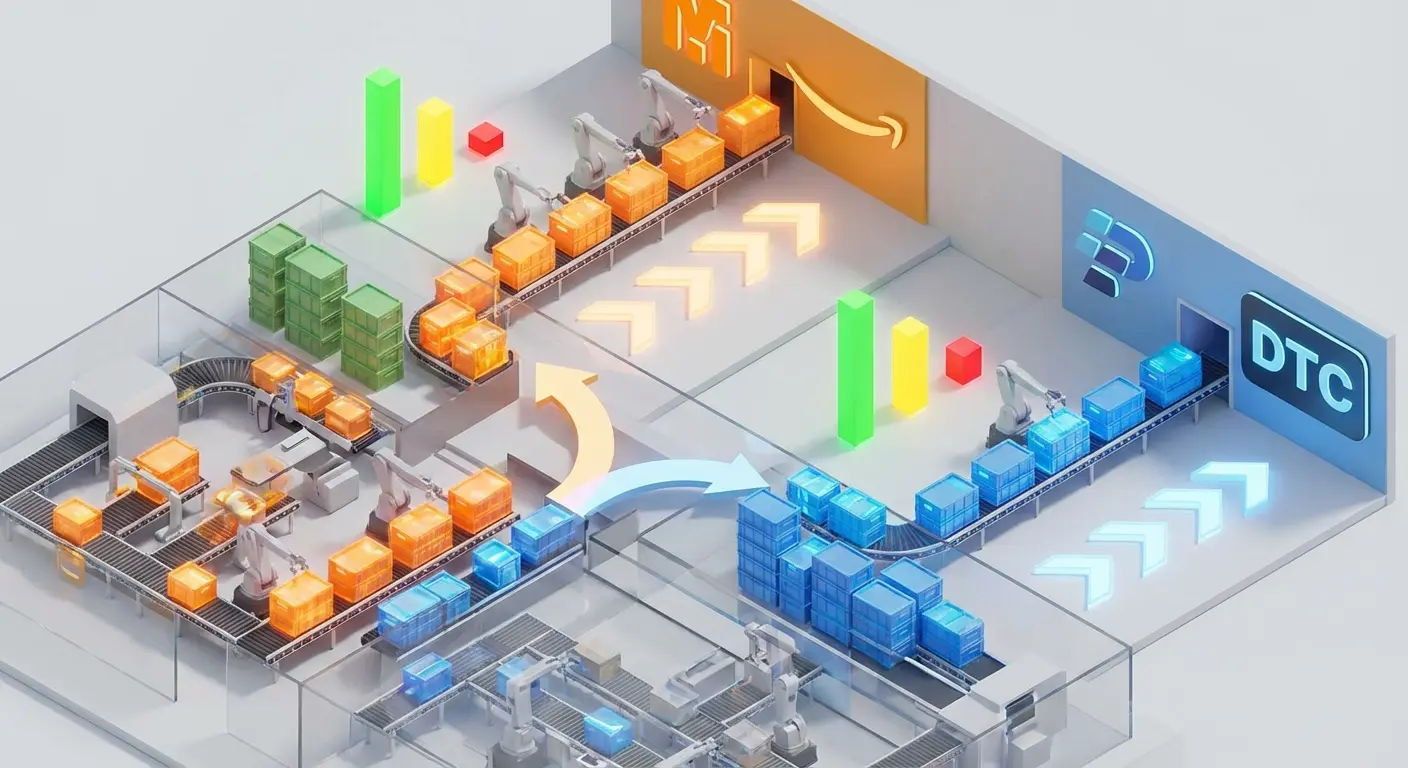
Multi-channel inventory management challenges 2026 are not just software problems. They start with policy decisions. Which channel gets priority when stock is short? How much inventory is reserved for DTC versus Amazon? What service-level drop is acceptable in one channel to protect the economics of another?
Those decisions matter because channel conflict is real. A stockout on Amazon can hurt ranking, ad efficiency, and Buy Box performance. A stockout on DTC wastes paid traffic and weakens customer trust. Sellers often try to solve this by equal allocation, but equal is not always optimal.
A more effective approach is channel-weighted allocation. Reserve inventory according to replacement difficulty and downstream damage. If losing stock on Amazon will impair ranking recovery, that inventory may deserve more protection. If DTC traffic is expensive and tied to a campaign window, DTC may deserve temporary priority. This is not a fixed rule. It should be reviewed around lead times, seasonality, and ad plans.
Handling omnichannel fulfillment for small businesses also forces a decision between simplicity and control. Using Amazon’s Multi-Channel Fulfillment for some non-Amazon orders can simplify operations, but fees, packaging limitations, and customer experience tradeoffs may not fit every brand. A hybrid model, with FBA for Amazon and either a 3PL or merchant-managed fulfillment for DTC, often gives better control, but it introduces split inventory risk and more forecasting work.
The hidden failure mode is inventory accuracy lag. If your systems do not sync quickly, the business starts overselling slow-moving SKUs and underinvesting in fast movers. This is where data analytics for scaling ecommerce business stops being a dashboard exercise and becomes a control function. Clean inventory position, lead-time assumptions, sell-through by channel, and inbound risk visibility matter more than vanity reporting.
Supply chain issues are now margin issues, not just in-stock issues
Managing supply chain disruptions for FBA brands is no longer only about avoiding stockouts. It is about preserving margin while staying available.
When freight timing slips, unit costs change, or inbound receiving slows, most sellers focus first on whether they will run out. That is reasonable, but incomplete. Delays can also force rushed replenishment, reactive ad cuts, stock transfers, and poor promotional decisions. The financial cost of disruption often exceeds the visible logistics cost.
A practical framework is to track supply chain risk in three layers:
supplier concentration risk
transit and receiving variability
inventory placement and channel allocation risk
Diversifying suppliers can reduce concentration risk, but it also adds quality-control complexity. Holding more safety stock can reduce stockout risk, but it ties up cash and can become dangerous in trend-sensitive categories. Faster freight can protect continuity, but it can erase margin if used too often. There is no universal best practice here, only tradeoffs.
For FBA-heavy brands, the edge case is being technically in stock overall but unavailable where demand exists. Inventory can be tied in transit, delayed in receiving, or sitting in the wrong node relative to channel demand. This is why operational planning has to connect purchasing, ad calendars, and channel strategy. Buying decisions made in isolation from marketing plans usually create expensive surprises.
Team growth usually creates more drag before it creates leverage
Streamlining operations for growing FBA teams is often mistaken for hiring more people. Headcount helps only when decision rights are clear.
In a small seller operation, one founder can reconcile demand, reorder timing, ads, and listing changes informally. As the business grows, that breaks. Marketing launches promotions without checking inventory. Operations delays PO decisions because finance wants tighter cash control. Customer support sees return reasons that never make it back to product development.
The answer is usually not enterprise bureaucracy. It is tighter operating cadence. Weekly inventory risk review, campaign calendar tied to inventory status, clear SKU ownership, and a single source of truth for contribution margin can remove a surprising amount of friction.
One useful heuristic: every recurring exception should either become a documented rule or trigger a process change. If your team repeatedly asks whether a SKU should be paused, discounted, expedited, or shifted across channels, you do not have an execution problem. You have an ambiguity problem.

Three short cases that show how these issues stack
Case 1: The profitable SKU that became less profitable after channel expansion
Hypothetical: a private label supplement brand performs well on Amazon and launches DTC. The team copies the full catalog onto its website and starts paid social. CAC looks high, but management assumes repeat purchase will cover it.
What happened: repeat rates are strongest on two hero SKUs, but ad spend is spread across six products. Inventory is split evenly between Amazon and DTC. One hero SKU goes thin on Amazon, organic rank softens, and blended margin drops.
What fixed it: the brand narrowed paid acquisition to the top repeatable SKUs, reallocated inventory based on contribution and channel sensitivity, and treated DTC as a curated funnel rather than a mirror of the Amazon storefront.
Case 2: PPC inflation was real, but the larger problem was conversion continuity
Hypothetical: a home goods seller sees rising Amazon CPCs and rising Meta CPMs. The conclusion is that traffic has become too expensive to scale.
What happened: creative and search traffic were landing on pages with weak image hierarchy, unclear product comparison, and little bundle logic. Click costs did rise, but conversion rate and average order value were underperforming what the category could support.
What fixed it: better landing pages, clearer merchandising, and bundle offers improved session economics enough that the same traffic became viable again. The lesson was not “ads are cheap.” It was “traffic quality and site continuity must be judged together.”
Case 3: Inventory software was installed, but allocation logic was missing
Hypothetical: a brand adopts a multi-channel inventory tool to solve oversells. Oversells decrease, but service problems continue.
What happened: the software synced stock levels, but the business never defined which channel should receive priority under constraint. During a supply delay, DTC orders consumed inventory needed to preserve Amazon rank.
What fixed it: the team set channel reservation thresholds and campaign pause rules tied to weeks of cover. The system did not solve strategy. It only executed it.
What sellers often get wrong about e-commerce challenges
One common misunderstanding is treating DTC as a margin rescue plan. In some cases it can become that, but early-stage DTC often carries higher acquisition and service costs than expected. It should be evaluated as a strategic asset with a learning curve, not an immediate profit replacement for Amazon.
Another is assuming data analytics for scaling ecommerce business means buying more tools. Most scaling problems come from weak definitions, not weak dashboards. If teams disagree on contribution margin, reorder point logic, or channel attribution, adding software mostly makes disagreement faster.
A third mistake is assuming omnichannel automatically reduces risk. It can diversify revenue, but it also multiplies operational exposure. More channels create more ways to misallocate stock, fragment messaging, and hide true profitability.
Where the model breaks down at the edges
Some categories are naturally better suited to DTC than others. Repeat purchase categories, products with education needs, and brands with strong differentiation usually have more room to absorb acquisition cost and build retention. Commodity products with weak differentiation may struggle to justify off-Amazon CAC.
Small teams face a separate edge case. Handling omnichannel fulfillment for small businesses can become a distraction if order volume is still modest and systems are immature. There is a point where adding a channel creates more complexity than strategic value. If DTC cannot yet be staffed, measured, and fulfilled reliably, waiting can be rational.
There is also a brand maturity edge case. Transitioning from Amazon seller to D2C brand works best when the business already understands which SKUs create retention, which customer segments respond to storytelling, and which operational promises it can consistently keep. Launching a site before those answers exist is possible, but expectations should be lower. The site is then a testing environment, not a second flagship.
Finally, Amazon itself remains a moving variable. Fees, inventory limits, ad dynamics, and fulfillment constraints can shift. Any multi-channel plan that assumes one platform will remain operationally stable should be stress-tested.
What deserves your attention first
If you are prioritizing the top e-commerce challenges for FBA sellers 2026, start with the issues that connect multiple outcomes:
Reducing customer acquisition costs in e-commerce matters most when conversion and repeat rate are weak.
Managing supply chain disruptions for FBA brands matters most when allocation rules are unclear.
Multi-channel inventory management challenges 2026 matter most when inventory visibility and fulfillment ownership are loose.
Building brand loyalty off Amazon platform matters most when retention mechanics do not exist outside Amazon.
Streamlining operations for growing FBA teams matters most when decisions still depend on founder memory.
Data analytics for scaling ecommerce business matters most when it informs purchasing, pricing, and channel priority, not just reporting.
Scaling Amazon brand to DTC website strategy works best when the site is built around selective economics, not channel imitation.
Overcoming rising PPC costs on Amazon and social media usually starts with better offers and conversion paths, not just lower bids.
Improving customer retention for Amazon private label becomes more realistic when DTC experience, replenishment logic, and support quality are treated as one system.