How to Appeal an Amazon Account Suspension with a Strong Plan of Action

Olivia Reyes

How to Appeal an Amazon Account Suspension with a Plan of Action That Actually Works
Most failed appeals do not get rejected because sellers do not care. They get rejected because the appeal does not answer the question Amazon is trying to resolve: whether the account still presents risk, and whether the root cause has been controlled.
When you are facing an Amazon account suspension, the instinct is to defend yourself. Amazon is usually looking for something else: proof that you understand the failure that led to the issue and that it is unlikely to happen again. A strong Plan of Action (POA) is less about persuasion and more about operational clarity that maps to what Seller Performance can verify.

This guide breaks down how experienced sellers should approach amazon account suspension reasons, from intellectual property complaints amazon to order defect rate amazon problems, and how to structure an appeal that aligns with how Seller Performance typically evaluates cases.
What an Amazon Suspension Really Means
An Amazon account suspension is not a moral judgment. It is an enforcement and risk decision based on Amazon’s customer experience, catalog integrity, and compliance priorities.
Amazon’s systems and teams look for signals that an account may harm customer trust or create compliance exposure. That risk can stem from:
A policy violation amazon seller teams flagged (listing, fulfillment, product detail accuracy, authenticity, safety, or other policy areas)
Performance metrics like order defect rate amazon trends or late shipment rate issues
intellectual property complaints amazon rights owners submitted
inauthentic product complaints or broader product authenticity issues amazon flags through complaints or documentation review
a related accounts suspension amazon connected via shared data points
a restricted product violation amazon identified through compliance checks
a direct amazon terms of service violation
Each category can imply a different internal failure. If you misdiagnose it, your Plan of Action can read as generic even if it is well written.
The Real Reasons Sellers Get Suspended (and What’s Usually Behind Them)
Amazon can suspend accounts for a single serious issue, but many cases involve patterns, repeated signals, or unresolved risk factors. The visible violation is often a symptom of a process gap.

Intellectual Property Complaints and Rights Owner Claims
When you receive intellectual property complaints amazon forwards from a rights owner, the immediate allegation is often trademark misuse, copyright concerns, or unauthorized sale. In practice, many escalations come down to how well you can document sourcing and how accurately your offer matches the listing.
Common internal failures:
No clear evidence of a legitimate supply chain for the specific product sold
Invoices that do not clearly match the product, brand, quantities, or dates Amazon expects
Offering against a detail page that does not match the exact product variant (model, bundle components, region, or packaging)
Amazon does not evaluate authenticity based on intent. It typically evaluates whether documentation and listing alignment support the offer.
Inauthentic Product Complaints
inauthentic product complaints are a frequent trigger among amazon account suspension reasons. Sellers sometimes assume it automatically means “counterfeit,” but the allegation can also be driven by mismatch, condition, or customer expectations.
“Inauthentic” can involve:
Packaging or labeling differences from what customers expect for that listing
Region-specific versions or parallel import items that create confusion
Condition mismatches (for example, listing as New when the item is not factory-sealed or has signs of handling)
Product revisions or minor design changes not reflected in the listing
The root cause is often offer and catalog control, not fraud. product authenticity issues amazon flags often point to weak receiving inspections, weak supplier verification, or poor listing discipline.

Performance Metric Failures
Metrics like order defect rate amazon and late shipment rate issues are operational signals.
Late shipment rate issues often trace back to:
Cutoff times not aligned with actual warehouse capacity
Inventory sync problems across channels or systems
No assigned owner for daily exception handling and monitoring
order defect rate amazon spikes can be driven by:
A-to-z Guarantee claims
Negative feedback tied to fulfillment or product condition
Customer service delays that turn solvable issues into claims or defects (depending on how Amazon counts them in your account)
The visible metric breach is often a lagging indicator. The leading indicator is process ownership and exception control.
Related Accounts Suspension
A related accounts suspension amazon action can feel arbitrary, but it is usually based on linkage signals. Amazon does not publicly disclose every linkage method, and results can vary by case.
Examples of signals that can create linkage risk include:
Shared IP addresses or networks
Shared devices or browser sessions
Shared bank accounts, cards, or payout details
Overlapping business ownership, control, or operators that were not disclosed or were inconsistent
The underlying failure is usually structural. Either the accounts were not authorized under Amazon’s rules, or separation controls and disclosure were not handled in a way Amazon accepts.
Restricted Product Violation
A restricted product violation amazon flag often involves compliance gaps, category restrictions, or documentation requirements.
Common patterns:
Hazmat or dangerous goods issues without required handling or classification steps
Topicals, ingestibles, medical, or regulated items without required approvals or documentation
Missing safety documentation, testing reports, or certifications when required for the product type
A recurring mistake is assuming that because a product exists in the catalog, it is automatically approved for every seller to list. Availability in the catalog does not guarantee that your account is approved to sell it.
How to Build a Plan of Action That Survives Review
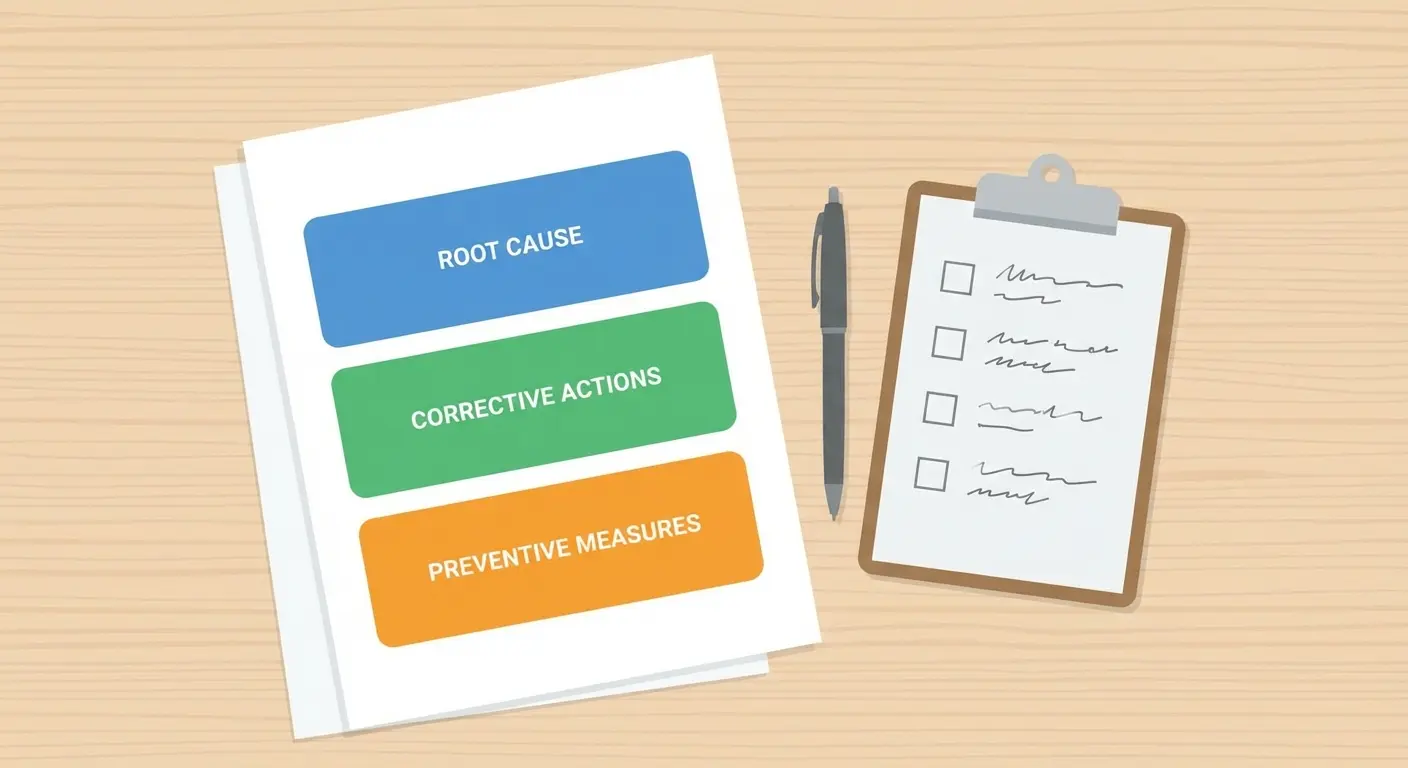
Amazon’s Plan of Action expectation typically includes three components:
Root cause
Immediate corrective actions
Long-term preventive measures
Structure helps, but the quality of reasoning and controls matters more than formatting.
Step 1: Dissect the Suspension Notice
Before writing anything, analyze:
The cited ASINs and any referenced order IDs
The violation category and what Amazon is asking for (documents, POA, or both)
The timeline of incidents and complaints
Do not assume the notice tells the whole story. Cross-check:
Account Health and Performance Notifications
Voice of the Customer and return reasons where applicable
Customer messages and your response timestamps
Inventory receiving records, supplier documents, and internal QC notes
You are looking for the operational breakdown behind the cited policy issue, including the specific policy violation amazon seller teams referenced.
Step 2: Identify the Real Root Cause
The root cause is not “we received complaints.”
Weak root cause:
> We received intellectual property complaints because the brand reported us.
Stronger root cause:
> We sourced inventory without a documented authorization and did not verify that the exact product version and packaging matched the detail page we listed against. Our intake process did not require a product-to-invoice match check, and we did not quarantine units when listing mismatch risk was identified.
A good root cause is specific, verifiable, and tied to a controllable process.
Step 3: Immediate Corrective Actions
These actions address current risk. Depending on the issue, that may include:
Removing or closing affected listings
Quarantining or removing inventory tied to the complaint
Refunding or proactively resolving impacted orders when appropriate
Stopping purchases from suppliers that cannot support traceability
Correcting detail page mismatches through appropriate catalog processes
Be specific. “We reviewed our listings” is vague. “We removed offers for the cited ASINs, quarantined remaining units, and created a receiving checklist that requires matching brand, model, and packaging to the listing before units are made available” is actionable.
Step 4: Preventive Systems, Not Promises
Many POAs fail here because they describe intentions rather than controls.
Weak:
> We will be more careful with Amazon policies.
Stronger:
> We implemented a pre-listing compliance checklist requiring (1) supplier verification and traceability documentation, (2) invoice and product attribute matching to the ASIN, and (3) a second-person review before the offer is activated. We also added a weekly audit of top-selling ASINs for listing mismatch risk and a quarantine workflow for any inbound units with packaging or labeling differences.
Preventive measures should name:
An owner (who is responsible)
A cadence (daily, weekly, per shipment)
A control mechanism (checklist, ticketing, audit log, quarantine bin, or software rule)
Step 5: Submit Once, Cleanly
Submit your Plan of Action through Seller Central where the case or notification requests it. Avoid repeated submissions before you receive a response unless Amazon requests clarification or additional documents.
Multiple emotional or inconsistent submissions can weaken clarity and create contradictions in the record.
Three Realistic Scenarios Sellers Face

Case 1: Inauthentic Product Complaints on a Wholesale SKU
Hypothetical scenario: A seller sources branded supplements from a secondary distributor. After scaling, they receive multiple inauthentic product complaints.
Initial reaction: “Our products are real.”
Operational issue: The packaging changed months earlier, and the listing images now reflect the new packaging. Customers interpret the older packaging as suspicious.
Resolution required:
Documentation that supports traceability for the units sold
A documented product-to-listing match process at receiving
Removal or separate handling of older packaging inventory when it does not match the listing customers see
A restocking rule that requires verification before replenishment
Even when items are legitimate, authenticity complaints can be triggered by mismatch and traceability gaps.
Case 2: Late Shipment Rate Issues in FBM
A mid-sized FBM seller experiences a spike in late shipment rate issues during Q4.
Root cause analysis reveals:
Orders were batch-synced to shipping software rather than continuously monitored
No staff member was assigned to exception handling for same-day dispatch
Cutoff times and handling times were not aligned with real warehouse throughput
Fixes:
More frequent order sync and exception alerts
Dedicated daily metric monitoring and escalation rules
Adjusted cutoff and handling settings to match capacity, with a buffer for peak days
Metrics-based enforcement often comes down to workflow design and exception control.
Case 3: Related Accounts Suspension
A seller opens a second account under a separate LLC but uses the same home IP and bank information.
Months later, both accounts are suspended due to a related accounts suspension amazon action.
The appeal should:
Disclose the ownership and operational structure accurately and consistently
Provide documentation Amazon requests, if any
Explain operational controls and separation where applicable
Take corrective steps that align with Amazon’s rules for operating multiple accounts, including closing an account if required
Here, clarity and compliance matter more than arguing intent.
Where Sellers Misread the Situation
Several recurring mistakes weaken appeals.
Blaming customers customer complaints amazon seller teams consider are signals. Even if a complaint is unfair, the appeal should focus on process improvement and risk control.
Arguing technicalities Saying “we did not intend an amazon terms of service violation” does not address operational risk. Amazon is assessing whether the issue can recur.
Overloading documents without explanation Invoices without a narrative do not help. Documentation should clearly support the root cause and the specific corrective controls you implemented.
Confusing symptoms with causes order defect rate amazon is not caused by “negative feedback.” It is usually driven by fulfillment failures, product condition mismatches, quality issues, or slow resolution that escalates to claims.
The Practical Limits of the Appeal Process
Not every suspension is easily reversible, and outcomes depend on the evidence Amazon can verify.
If you cannot produce documentation that supports traceability in cases involving intellectual property complaints amazon or authenticity allegations, reinstatement can be difficult.
If your account has repeated violations, including repeated instances of policy violation amazon seller enforcement, Amazon may expect stronger controls and clearer proof of implementation.
If product authenticity issues amazon flagged involve supply chain gaps you cannot document, operational changes alone may not resolve the core risk in Amazon’s view.
Also note that some restricted product violation amazon cases involve regulatory compliance beyond Amazon policy. In those situations, external legal or compliance guidance may be appropriate.
Finally, if the suspension cites a policy area broadly, it can help to explicitly state what you changed to prevent the specific amazon terms of service violation or policy breach that triggered the action, without making claims you cannot document.
Practical Principles to Guide Your Appeal
Diagnose the system failure, not just the cited violation.
Align your root cause to a specific process breakdown and describe it plainly.
Tie each corrective action to that root cause.
Build preventive measures as enforceable controls with owners and cadence.
Use documentation strategically to support your narrative, not to replace it.
Avoid emotional language and focus on risk reduction.
Many suspensions come down to preventable operational gaps, including restricted product violation amazon errors, related accounts suspension amazon linkage risk, and performance breakdowns such as late shipment rate issues and order defect rate amazon spikes. When your POA shows controlled processes, documented sourcing, and a credible prevention system, you give Amazon a clear, low-risk reason to reinstate.