How to Fix a Suppressed Amazon Listing in 2026

Sarah Johnson

How to Fix a Suppressed Amazon Listing in 2026: The Hidden Triggers Sellers Miss

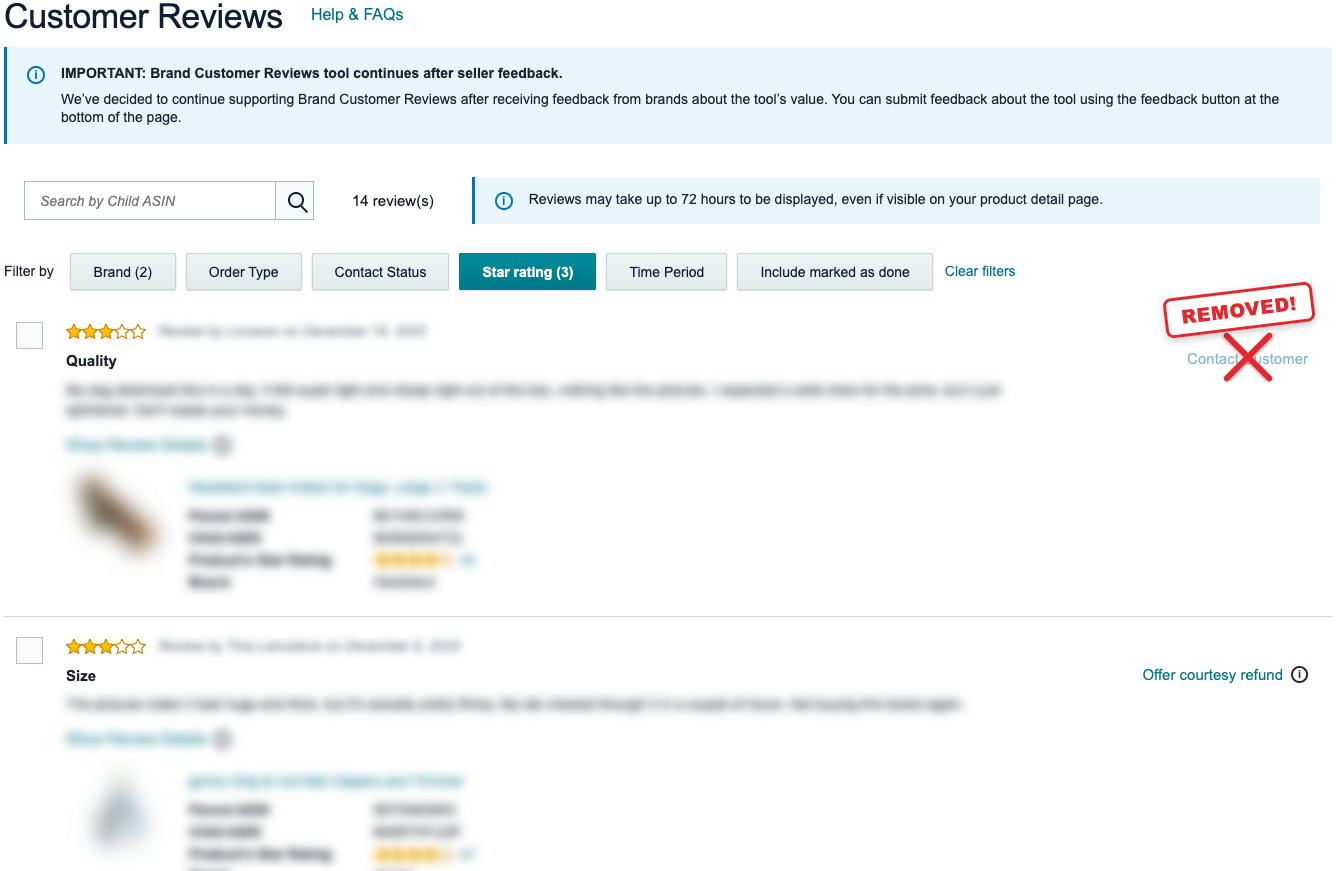
Checking for suppression only after traffic drops is usually too late. A suppressed Amazon listing often starts as a catalog compliance issue before it becomes a clear revenue problem.
Experienced sellers usually know the visible causes: no main image, missing title, or invalid attributes. The harder part in 2026 is that amazon search suppressed listing missing attributes issues, title enforcement, image standards, pricing alerts, and variation conflicts can appear unevenly across detail pages, marketplaces, or child ASINs. A listing can look mostly fine and still lose discoverability or show reduced detail page quality in ways that are easy to misread.
If you are trying to understand how to fix suppressed amazon listing 2026 problems, the useful question is not just what got flagged. It is what changed in the listing data, and which Amazon system is enforcing it. That distinction matters because the fastest fix differs for search suppression, detail page suppression, and pricing-related restrictions.
Why suppressed listings are usually a systems problem, not a single-field problem

Most sellers approach suppression as one bad field. Amazon generally evaluates listings across multiple systems, including title quality, image compliance, category attributes, pricing, contribution conflicts, parent-child relationships, and policy-sensitive wording.
That is why a listing may appear active in one place but still lose search visibility or show content-related restrictions elsewhere. One system may still show the ASIN as active, another may hide it from search, and another may block or ignore certain contributions until a required attribute is corrected. This is also why recovering suppressed amazon fba listings can take longer than expected, even when the edit seems simple.
Expectation vs. reality:
Expectation: Seller Central will clearly identify the exact issue and one edit will restore the listing. Reality: Seller Central often points to the symptom, not the root cause. The visible error may say missing main image, while the underlying issue is a variation mismatch, category remap, or contribution conflict.
For experienced sellers, the practical takeaway is simple: suppression is rarely solved by random editing. It is solved by identifying which catalog layer is rejecting the listing data.
Start with the business impact, not the warning message
When a listing gets suppressed, the first thing to rank is not the wording of the alert. It is the business cost of getting the diagnosis wrong.
Here is the order that usually matters most:
Revenue concentration on the affected ASIN
A top seller with stable conversion and active ad spend deserves immediate attention. If the ASIN is carrying rank or seasonality, delay is expensive. In that case, speed matters more than perfect documentation on day one.
Whether the issue affects discoverability, buyability, or only content quality
A search-suppressed ASIN is different from an ASIN that still receives traffic but has incomplete detail page content. Likewise, a high price alert can leave the listing visible while limiting offer competitiveness or purchase eligibility at the current price.
Whether the suppression is isolated or systemic
If one child ASIN breaks after a single edit, that is probably local. If dozens of listings fail after a flat file upload, category template refresh, image sync, or variation update, assume a process-level issue first. The fix then shifts from repairing one ASIN to stopping the repeated bad input.
Whether the issue sits in a high-conflict field
Title, main image, brand, variation theme, size and color attributes, and policy-sensitive wording tend to be high-conflict fields. Changes in these areas are more likely to trigger suppression or create contribution battles.
Whether there is a timing dependency
Sometimes the right move is not immediate escalation. If the listing was just updated, there may be a delay before the suppression clears or before all child ASINs reconcile. But waiting only makes sense after you confirm the edit was actually accepted and reflected in the catalog.
If the issue is unclear, check what changed in the last 72 hours before touching anything else. Most suppressions are easier to diagnose from recent change history than from the alert itself.
The fields that usually matter most when a listing disappears or gets limited
Missing attributes are still the most common quiet failure
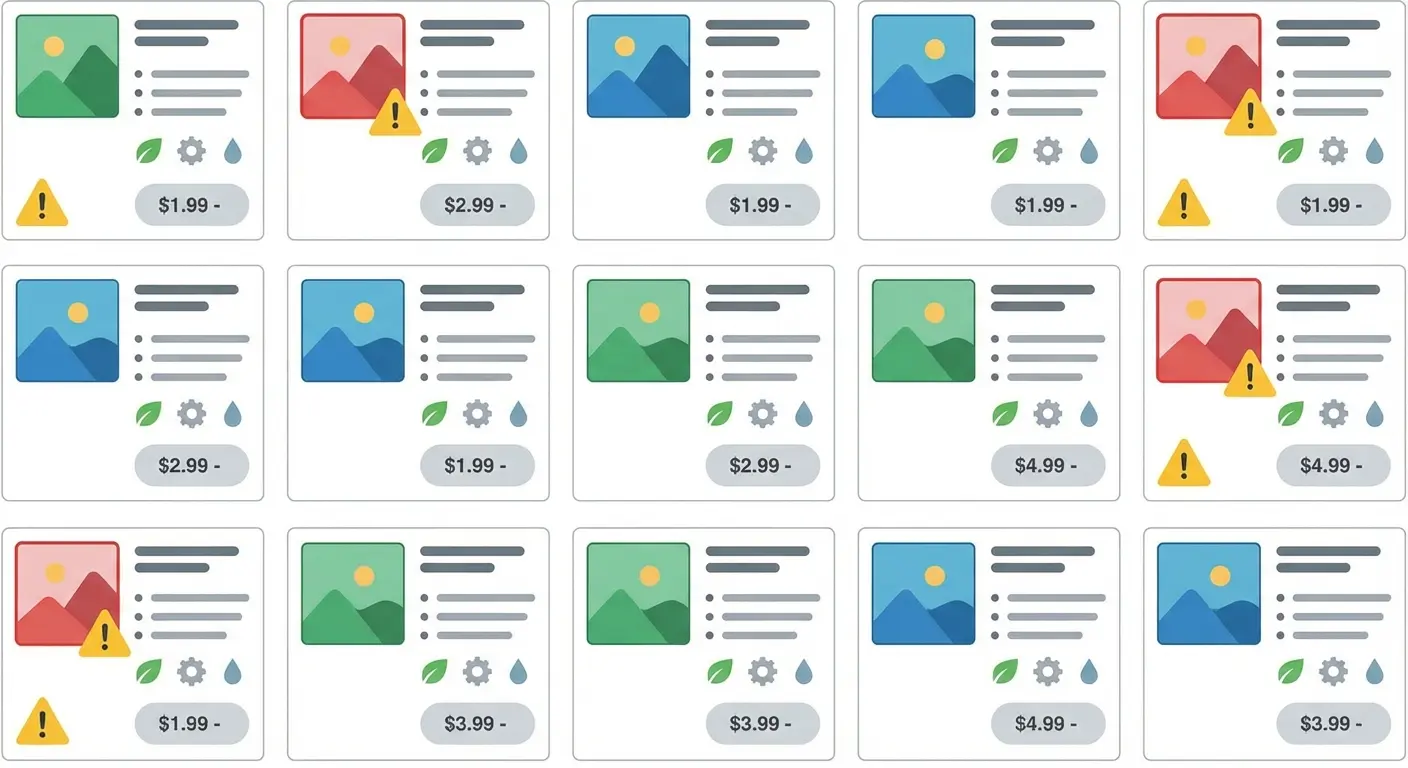
The phrase missing mandatory attributes amazon 2026 may sound basic, but it still sits behind many suppressed listings because mandatory fields can change by product type, category mapping, or template requirements. Amazon can tighten category requirements, remap browse paths, or begin enforcing attributes that were previously tolerated as blank.
This creates a common scenario: the listing was live for months, then a category rule or template changed, and now the ASIN is partially or fully suppressed. The seller assumes Amazon made an error, but the category schema changed underneath the listing.
What matters in practice is not whether the field used to be optional. What matters is whether the current product type now requires it.
Main image suppression is usually about technical compliance, not aesthetics
When sellers are fixing amazon listing suppressed for main image issues, they often focus on whether the image looks good enough. Amazon typically evaluates more specific standards, such as white background compliance in categories that require it, whether the image matches the product being sold, whether text or graphics were added, whether the product is obscured, and whether a child ASIN is showing an inaccurate image for that variation.
A common failure mode is that an image was previously accepted, then gets rejected or stops rendering correctly after a reprocessing event, contribution overwrite, or image update. Another is that a child ASIN inherits or displays an image that does not accurately represent that exact variation.
If the listing is variation-heavy, the image issue may not be on the parent at all. One child can create a poor customer experience and trigger suppression at the child level while making the family look unstable overall.
Title enforcement is less about length alone than about structure and terms
Sellers looking for an amazon listing suppressed for title length solution often assume they only need to cut characters. Sometimes that works. Often the real issue is title composition: promotional language, repeated keywords, unusual special characters, inaccurate pack-count wording, or category-specific formatting violations.
In 2026, title enforcement is better understood as structured compliance. Length is one signal. Clarity, duplication, prohibited wording, and category conventions are others. A title can be under the character limit and still trigger suppression or reduced search visibility because the wording appears non-compliant.
Pricing alerts create a different type of suppression logic

The amazon listing suppressed high price alert fix path is different because Amazon may be reacting to its own high pricing thresholds, recent offer history, or comparison signals tied to the same product. This is not always a listing content problem. It can be an offer-pricing problem.
If your catalog is stable and only pricing changed, random title or image edits will not help. You need to determine whether Amazon is reacting to your own recent offer history, the current offer setup, or other pricing signals associated with the ASIN.
How experienced sellers actually find suppressed listings in Seller Central

If you are trying to learn how to find suppressed listings in seller central, the answer is broader than checking one page.
Manage All Inventory is the obvious starting point, because suppressed or incomplete listings may be flagged there. But experienced sellers also cross-check:
Listing quality or content-completion alerts
Search visibility changes for ASINs that still show as active
Child ASINs inside variation families, not just the parent
Marketplace-specific status if selling internationally
Feed processing reports after bulk uploads
Recent inventory, pricing, and image update history
This matters because some suppressions are visible operationally before they are labeled clearly. If traffic, sessions, or ad impressions drop sharply and the ASIN still says Active, search suppression or attribute-related suppression is still possible.
A practical pattern is to keep a watchlist of high-value ASINs and compare active status against search presence, buy box status, and content completeness signals. Seller Central often contains the answer, just not in one place.
What to consider based on the kind of suppression you are seeing
If the listing is missing from search but still appears active, amazon search suppressed listing missing attributes is a strong possibility. In that scenario, attribute completeness and product type alignment deserve more attention than cosmetic copy edits.
If the listing was recently updated through a flat file or API feed and multiple ASINs broke at once, bad input at scale is often the better explanation. That points toward template mapping, field formatting, or accidental overwrite of valid values.
If one variation child is suppressed and the parent looks normal, consider image mismatch, invalid child-specific attributes, or broken variation-theme consistency. Variation issues rarely stay isolated if left unresolved.
If the listing disappears after a title refresh, do not assume the problem is only character count. It may be a prohibited phrase, duplicate term pattern, or category formatting rule. This is where amazon listing suppressed for title length can be the visible symptom but not the root cause.
If the offer lost buyability after a sharp repricing move, review pricing logic first. An amazon listing suppressed high price alert fix often involves checking recent offer history and pricing configuration rather than editing the product detail page.
If the listing is FBA and the suppression coincides with inbound changes, relabeling, or catalog merges, the listing issue may overlap with inventory attachment problems. Recovering suppressed amazon fba listings in those cases often requires separating listing health from inventory health. They may look linked from the seller side, but Amazon handles them through different systems.
The anti-patterns that make suppression last longer
Editing too many fields at once
This is one of the most common seller-created delays. If you change title, bullets, image, backend attributes, and variation structure in one pass, you lose the ability to see which edit resolved or worsened the issue. You also increase the chance of contribution conflicts.
Treating Seller Support as the diagnostic engine
Support can help, but it is usually better at confirming a known issue than discovering a hidden one. If you open a case without a precise hypothesis, you often get generic policy language back. Escalation works better after you narrow the likely field or system.
Ignoring category remaps
A listing that suddenly requires new attributes may have been moved, explicitly or implicitly, into a different product type or browse path. Sellers often keep fixing the old template logic while Amazon is validating against a different one.
Rebuilding a variation family too early
Sometimes rebuilding parentage is necessary. Sometimes it creates collateral damage, including review separation, image confusion, and temporary indexing issues. If the underlying problem is a child-level missing attribute or image noncompliance, a full parent rebuild may be unnecessary and risky.
Assuming accepted feed equals fixed listing
Feed accepted only means Amazon processed the submission. It does not guarantee the contribution won, displayed, or satisfied current category requirements.
Two short decision walkthroughs
Hypothetical case: search disappears after a category refresh
A seller notices that a strong ASIN still appears active in inventory, but branded and generic search impressions have fallen sharply. Ads are underdelivering. The listing shows no dramatic takedown message.
The likely path is not pricing or image first. It is attribute enforcement. The seller checks recent category or template changes, reviews required fields for the current product type, and finds a previously tolerated attribute now missing. After completing the missing value and confirming the contribution sticks, search presence begins to improve.
The useful lesson is that active does not always mean search eligible. For amazon search suppressed listing missing attributes issues, search visibility is often the first symptom.
Hypothetical case: suppression after a title cleanup and image update
A seller shortens titles across a variation family and refreshes hero images at the same time. One child ASIN becomes suppressed, two others lose conversion, and the parent looks unstable.
Instead of rewriting everything again, the seller separates the variables. The child-level main image is reviewed first and found to show packaging that does not match the selected variation. The title also contains wording that is within a general length range but formatted in a way the category appears to reject. The image is corrected first, then the child title is simplified using a category-consistent structure.
The lesson here is that fixing amazon listing suppressed for main image and amazon listing suppressed for title length can overlap, but they should not be handled as one undifferentiated problem. One field at a time gives a cleaner recovery path.
A steadier way to recover suppressed listings without creating new ones
If you are working through how to fix suppressed amazon listing 2026 issues, the more reliable pattern is usually this:
First, isolate whether this is search suppression, listing suppression, or an offer-level limitation. Those are related but not identical.
Then identify the most recent meaningful change. Bulk edits, image uploads, category remaps, variation rebuilds, and repricing shifts are common triggers.
Next, repair the highest-probability field with the least invasive edit. If the issue is likely missing attributes, complete the required field correctly before rewriting copy. If it is likely image-related, fix the exact child image before rebuilding the family.
After that, verify whether the contribution actually took effect. If it did not, you may be dealing with a contribution conflict rather than a bad field.
Only after those checks does escalation usually make sense. Support is most useful when you can say that the ASIN is suppressed, the required attribute is populated, the feed was accepted, the value is not rendering, and the listing remains restricted. That gives the case a concrete direction.
One operational rule saves time here: keep snapshots of listing content before major edits. When suppression hits, the fastest path is often comparing the last known good state to the new one.
What experienced sellers keep in mind
Suppression is often a catalog-system issue, not just a bad title or image.
Active can still mean search-limited, incomplete, or commercially weakened.
missing mandatory attributes amazon 2026 problems often appear after category or template changes, not just seller mistakes.
how to find suppressed listings in seller central is really a cross-check process, not a single page.
fixing amazon listing suppressed for main image usually requires technical compliance and variation accuracy, not just a better-looking hero shot.
amazon listing suppressed for title length is often really a title-structure or wording problem.
amazon listing suppressed high price alert fix belongs in pricing review before content editing.
recovering suppressed amazon fba listings may require separating listing suppression from inventory attachment or inbound issues.
The safest recovery path is controlled edits, one variable at a time.
Accepted updates are not the same as winning the contribution or clearing the suppression.