Sell Home Improvement Products on Amazon

Olivia Reyes

How to Sell Home Improvement Products on Amazon Without Creating Operational Headaches

Most sellers do not struggle to launch in Tools & Home Improvement. They struggle six months later when returns rise, variations break, inventory goes out of sync, and the catalog becomes harder to control than the warehouse.
If you want to sell home improvement products on Amazon successfully, the real decision is not “Is there demand?” Demand is strong across many subcategories. The decision is how you will structure your catalog, operations, and compliance from day one so growth does not create fragility.
This category rewards discipline. It punishes shortcuts.
Below is a practical decision framework based on what commonly goes wrong in Home Improvement, and how experienced sellers reduce avoidable risk.
What You’re Really Deciding When Entering Home Improvement
On the surface, the decision looks simple. Enter the category because demand can be steady across the year.
Underneath, you are deciding:
How much technical complexity you are willing to manage
How precise your catalog management needs to be
Whether FBA, FBM, or hybrid fulfillment makes operational sense for your cost structure
How much return risk your margins can absorb
Whether you need Amazon catalog management services or can handle it in-house
How scalable your variation structure is across marketplaces
Home Improvement is not fashion. Buyers care about compatibility, dimensions, voltage, load limits, materials, installation method, and country-specific requirements. If any of that is unclear, returns tend to follow.
It is also important to separate “open category” from “no restrictions.” In many cases, you can list without Amazon home improvement category approval, but specific brands, product types, and condition types can still be restricted. Documentation requests and safety-related reviews can happen even when a subcategory looks accessible.
What Actually Matters Most (Ranked for Real-World Impact)
If you prioritize the wrong variables, you can grow revenue while weakening your foundation. Here is what tends to matter most in practice.
1. Catalog Structure and Variation Integrity

Broken parent-child relationships are one of the most expensive silent problems in this category.
If you cannot:
fix Amazon broken variations quickly
control who can attach to your listings (where Amazon policy and contribution rules allow)
maintain standardized attributes across marketplaces
Then scaling can fragment your traffic and reviews.
In Home Improvement, variations are often based on:
Size (length, diameter, capacity)
Color or finish
Voltage or region
Pack quantity
If these attributes are inconsistent or misclassified, Amazon can split your listing, suppress it, or merge it in ways you did not intend, including merges driven by shared attributes or catalog contributions.
Seller insight: In technical categories, variation integrity can matter more than design aesthetics. A clean catalog structure often outperforms better branding.
If your internal team does not understand flat files, attribute mapping, and suppression diagnostics, this is where Amazon catalog management services can reduce long-term damage.
2. Return Prevention Through Listing Precision
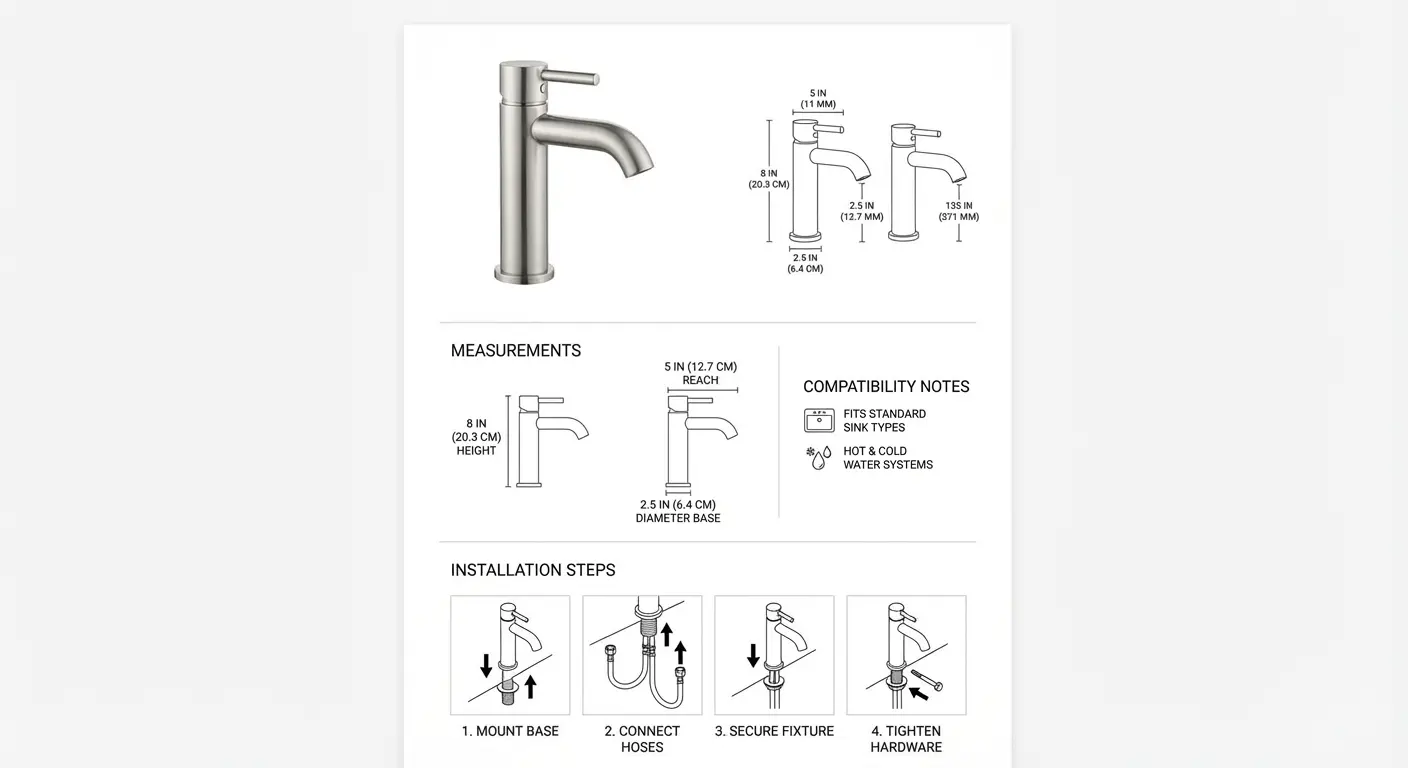
If you want to reduce Amazon returns for tools and fixtures, focus less on marketing language and more on technical clarity.
High-return drivers in Home Improvement:
Missing compatibility details
Incomplete dimensions (only inches, no metric)
Unclear installation requirements
No reference to existing system constraints (pipe size, wiring type, mounting pattern)
Expectation: “The photos look good, it will convert.”
Reality: A buyer guesses compatibility, installs it incorrectly, and returns it.
To reduce returns:
Include exact dimensions in both imperial and metric where applicable
Specify compatible systems, models, or standards you can support accurately
Add installation diagrams where possible
Use A+ Content for step-by-step visuals when eligible
Clearly state what is not included in the box
In this category, detailed listings are not optional for most products. They are a margin protection tool.
3. Fulfillment Strategy and Inventory Discipline

Amazon FBA inventory management help becomes critical when your products are:
Heavy
Oversized
Fragile
Seasonal (for example, heaters and outdoor lighting)
FBA can increase conversion through Prime eligibility and delivery speed. But storage fees, aged inventory charges, and removals can erode margin quickly, especially for bulky items.
A common pattern:
A seller sends aggressive FBA inventory before peak season.
Sales underperform the forecast.
Storage-related costs reduce profit.
Inventory limits and restock constraints restrict new SKUs.
For heavy or oversized products, a hybrid model can work:
FBA for core SKUs with consistent velocity
FBM for oversized or low-velocity items
Third-party prep that understands packaging and labeling requirements
Inventory strategy is not just logistics. It affects ranking stability, ad efficiency, and account health metrics.
4. Compliance and Safety Discipline

Many Home Improvement listings do not require formal category-level approval. However, compliance expectations still apply.
Electrical products often need market-specific standards and labeling.
Items that pose safety risks can trigger documentation requests or listing removal.
Recalled, prohibited, or non-compliant products can lead to enforcement actions.
If you are selling electrical, plumbing, gas-related, or load-bearing items, documentation discipline matters.
Keep:
Test reports where applicable
Compliance certificates where applicable
Manufacturer documentation
Clear, consistent product specifications
You may never be asked to submit them. If a performance notification appears, response quality and speed matter. This is where expert Amazon account management supports risk control, not just growth.
5. Advertising Efficiency Depends on Catalog Cleanliness
Ad performance in Home Improvement is closely linked to listing accuracy.
If your:
variations are split
attributes are incomplete
titles, bullets, and backend attributes conflict
Then ads often compensate for structural issues instead of scaling profitably.
Amazon home improvement listing optimization should prioritize:
High-intent, long-tail keywords aligned to actual use cases
Clear compatibility targeting
Accurate attribute completion for the product type
Example:
Instead of “kitchen faucet,” target “stainless steel kitchen faucet with pull-out sprayer single hole,” but only when the product truly matches those specifications.
Precision improves both conversion and ad efficiency.
6. Operational Bandwidth
If you are trying to scale Amazon home organization brand operations or a tools portfolio with a small internal team, catalog sprawl can outpace your ability to manage it.
Signals you may need Amazon seller agency services:
Frequent suppressed listings
Parent-child relationships breaking repeatedly
International catalogs misaligned
High ad spend with inconsistent ACOS
Repeated case logs without durable resolution
Agencies are not magic. But Amazon seller agency services, paired with structured Amazon catalog management services and expert Amazon account management, can stabilize systems that internal teams are too busy to untangle.
The decision is not whether you can do it yourself. It is whether your time is best spent there.
Situational Plays: What to Consider Based on Your Setup
Different sellers face different constraints. Here is how the decision shifts depending on your starting point.
If You Are Launching a Private Label Tool
You should prioritize:
Clear differentiation (material, durability, bundle)
Defensive variation setup that matches Amazon’s variation rules for the category
Review strategy that follows Amazon policy (no incentives, no gating, no manipulation)
Conservative FBA forecasting
Avoid launching multiple sizes immediately unless you can manage variations correctly. A single hero SKU with strong Amazon home improvement listing optimization often performs better than five poorly structured children.
If You Are Reselling Established Brands
Your leverage is price, availability, and Buy Box control.
Focus on:
Inventory depth
Repricing discipline
FBM backup to avoid stockouts
Monitoring unexpected variation merges or attribute changes
In this case, Amazon FBA inventory management help can matter more than branding.
If You Are Scaling a Home Organization Brand

Home organization often involves:
Multiple sizes
Color variations
Bundled sets
Cross-sell opportunities
As you scale Amazon home organization brand portfolios, catalog standardization becomes a bottleneck. Without disciplined attribute naming and correct variation themes, you will eventually need to fix Amazon broken variations across dozens of SKUs.
International expansion multiplies complexity. Units of measurement, language localization, and compliance labeling must be consistent. This is where many brands bring in Amazon seller agency services to consolidate listings and align global catalogs.
If You Sell Electrical or Technical Products
Your listing must answer technical objections before they arise.
Include:
Voltage and wattage
Plug type when applicable
Certification statements only if they are accurate and supported by documentation
Installation environment (indoor, outdoor, wet-rated) when applicable
Clarity reduces returns and helps protect your account.
Common Failure Patterns in the Home Improvement Category
Most problems are preventable and compound over time.
Over-Aggressive Variation Creation
Too many child SKUs too early can lead to:
Thin review distribution
Confusing dropdown menus
Backend attribute errors and mismatched item types
Scale variations once the parent listing has traction and your data model is stable.
Ignoring Suppressed Listings
A suppressed listing in this category is often tied to missing technical attributes, compliance fields, or image requirements.
If ignored:
Organic ranking drops
Competitors gain share
Advertising can become inefficient if traffic is being sent to a weakened detail page
Suppression resolution should be treated as a revenue risk, not an admin task.
Underestimating Returns on DIY Products
DIY buyers are optimistic. They assume compatibility.
If your listing does not clearly state requirements, you will pay for that optimism.
To reduce Amazon returns for tools:
Use comparison charts where helpful
Include “check before buying” bullet points
Show measurement guides and use-case diagrams in images
Treating Inventory as a Growth Lever Instead of a Risk Variable
Sending more units to FBA does not create demand.
Inventory without velocity increases storage-related costs and reduces flexibility. Inventory discipline is a profit strategy.
Two Decision Walkthroughs
Walkthrough 1: Launching a Mid-Weight Power Tool (Hypothetical)
A seller plans to launch a private label cordless drill.
Key considerations:
FBA can improve conversion due to Prime.
Battery-related documentation should be organized, especially for transport and compliance.
Variations for different battery capacities can complicate early traction.
Returns may increase if compatibility with accessories is unclear.
Decision approach:
Launch one core model.
Clearly state battery type, charging time, and included accessories.
Include detailed images of chuck size and torque settings.
Use long-tail keywords in listing optimization, tied to accurate specs.
Forecast conservatively for FBA to avoid excess inventory.
Result: Controlled launch with clean catalog structure and manageable return risk.
Walkthrough 2: Scaling a Storage Rack Line (Hypothetical)
A home organization brand wants to scale from 3 SKUs to 12 across multiple sizes and finishes.
Risks:
Variation complexity increases quickly.
International expansion introduces metric conversions and localization.
Bulky SKUs can increase FBA storage-related costs.
Decision approach:
Standardize attribute naming across all SKUs before expansion.
Map variation themes carefully, with size as the primary axis when appropriate.
Use hybrid fulfillment for oversized units.
Invest in Amazon catalog management services to avoid structural errors.
Align all listings before scaling ads aggressively.
Result: Growth without fragmentation.
Practical Patterns That Hold Up Over Time
If you want to sell home improvement products on Amazon sustainably, the reliable patterns are not glamorous.
Clean variation architecture before scaling SKU count.
Write listings to prevent returns, not just to increase clicks.
Keep compliance documentation organized even if not immediately required.
Use FBA strategically, not reflexively.
Audit suppressed listings weekly.
Treat catalog management as infrastructure, not maintenance.
Bring in expert Amazon account management when operational complexity exceeds internal bandwidth.
When category or product-type restrictions appear, resolve Amazon home improvement category approval and related documentation early to avoid stalled launches.
Home Improvement rewards sellers who respect technical detail and operational discipline. It is one of the more resilient retail segments on Amazon when managed well, but resilience comes from structure.
If your systems are tight, growth compounds. If they are loose, growth exposes every weak point.